Self-Portrait as the Allegory of Painting in the context of Cesare Ripa


Self-Portrait as the Allegory of Painting in the context of Cesare Ripa

⭐ Core Definition: Self-Portrait as the Allegory of Painting

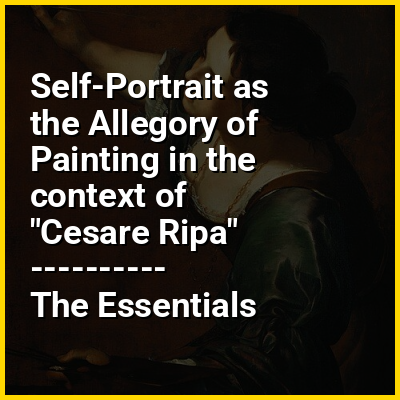
Self-Portrait as the Allegory of Painting, also known as Autoritratto in veste di Pittura or simply La Pittura, was painted by the Italian Baroque artist Artemisia Gentileschi. The oil-on-canvas painting measures 98.6 by 75.2 centimetres (38.8 in × 29.6 in) and was probably produced during Gentileschi's stay in England between 1638 and 1639. It was in the collection of Charles I and was returned to the Royal Collection at the Restoration (1660) and remains there. In 2015 it was put on display in the "Cumberland Gallery" in Hampton Court Palace.

The scene depicts Gentileschi painting herself, who is in turn represented as the “Allegory of Painting” illustrated by Cesare Ripa. It is now in the British Royal Collection.
↓ Menu
HINT:

In this Dossier

Self-Portrait as the Allegory of Painting in the context of Old Master

In art history, "Old Master" (or "old master") refers to any painter of skill who worked in Europe before about 1800, or a painting by such an artist. An "old master print" is an original print (for example an engraving, woodcut, or etching) made by an artist in the same period. The term "old master drawing" is used in the same way.

In theory, "Old Master" applies only to artists who were fully trained, were Masters of their local artists' guild, and worked independently, but in practice, paintings produced by pupils or workshops are often included in the scope of the term. Therefore, beyond a certain level of competence, date rather than quality is the criterion for using the term.

View the full Wikipedia page for Old Master
↑ Return to Menu