Sea anemone in the context of "Dinoflagellate"

Play Trivia Questions online!

or

Skip to study material about Sea anemone in the context of "Dinoflagellate"

Ad spacer

⭐ Core Definition: Sea anemone

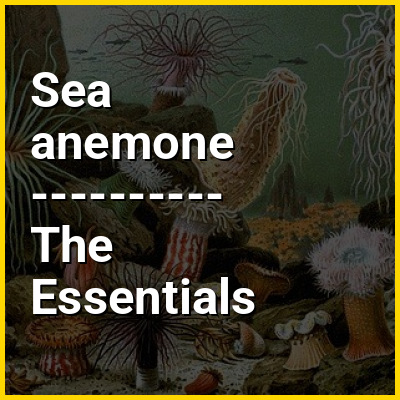
Sea anemones (/əˈnɛm.ə.ni/ ə-NEM-ə-nee) are a group of predatory marine invertebrate animals constituting the order Actiniaria. Because of their colourful appearance, they are named after the Anemone, a terrestrial flowering plant. Sea anemones are classified in the phylum Cnidaria, class Anthozoa, subclass Hexacorallia.As cnidarians, sea anemones are related to corals, jellyfish, tube-dwelling anemones, and Hydra. Unlike jellyfish, sea anemones do not have a medusa stage in their life cycle.

A typical sea anemone is a single polyp attached to a hard surface by its base, but some species live in soft sediment, and a few float near the surface of the water. The polyp has a columnar trunk topped by an oral disc with a ring of tentacles and a central mouth. The tentacles can be retracted inside the body cavity or expanded to catch passing prey. They are armed with cnidocytes (stinging cells). In many species, additional nourishment comes from a symbiotic relationship with single-celled dinoflagellates, with zooxanthellae, or with green algae, zoochlorellae, that live within the cells. Some species of sea anemone live in association with clownfish, hermit crabs, small fish, or other animals to their mutual benefit.
↓ Menu

>>>PUT SHARE BUTTONS HERE<<<
In this Dossier

Sea anemone in the context of Coral reef

A coral reef is an underwater ecosystem characterized by reef-building corals. Reefs are formed of colonies of coral polyps held together by calcium carbonate. Most coral reefs are built from stony corals, whose polyps cluster in groups.

Coral belongs to the class Anthozoa in the animal phylum Cnidaria, which includes sea anemones and jellyfish. Unlike sea anemones, corals secrete hard carbonate exoskeletons that support and protect the coral. Most reefs grow best in warm, shallow, clear, sunny and agitated water. Coral reefs first appeared 485 million years ago, at the dawn of the Early Ordovician, displacing the microbial and sponge reefs of the Cambrian.

↑ Return to Menu

Sea anemone in the context of Symbiosis

Symbiosis is any close and long-term biological interaction between two organisms of different species. In 1879, Heinrich Anton de Bary defined symbiosis as "the living together of unlike organisms". The term is sometimes more exclusively used in a restricted, mutualistic sense, where both symbionts contribute to each other's subsistence. This means that they benefit each other in some way.

Symbiosis is diverse and can be classified in multiple ways. It can be obligate, meaning that one or both of the organisms depend on each other for survival, or facultative, meaning that they can subsist independently. When one organism lives on the surface of another, such as head lice on humans, it is called ectosymbiosis; when one partner lives inside the tissues of another, such as Symbiodinium within coral, it is termed endosymbiosis. Where the interaction reduces both parties' fitness, it is called competition; where just one party's fitness is reduced, it is called amensalism. Where one benefits but the other is largely unaffected, this is termed commensalism. Where one benefits at the other's expense, it is called parasitism. Finally, where both parties benefit, the relationship is described as mutualistic.

↑ Return to Menu

Sea anemone in the context of Cnidarian

Cnidaria (/nɪˈdɛəriə, n-/ nih-DAIR-ee-ə, ny-) is a phylum under kingdom Animalia containing over 11,000 species of aquatic invertebrates found both in freshwater and marine environments (predominantly the latter), including jellyfish, hydroids, sea anemones, corals and some of the smallest marine parasites. Their distinguishing features are an uncentralized nervous system distributed throughout a gelatinous body and the presence of cnidocytes or cnidoblasts, specialized cells with ejectable organelles used mainly for envenomation and capturing prey. Their bodies consist of mesoglea, a non-living, jelly-like substance, sandwiched between two layers of epithelium that are mostly one cell thick. Many cnidarian species can reproduce both sexually and asexually.

Cnidarians mostly have two basic body forms: swimming medusae and sessile polyps, both of which are radially symmetrical with mouths surrounded by tentacles that bear cnidocytes, which are specialized stinging cells used to capture prey. Both forms have a single orifice and body cavity that are used for digestion and respiration. Many cnidarian species produce colonies that are single organisms composed of medusa-like or polyp-like zooids, or both (hence they are trimorphic). Cnidarians' activities are coordinated by a decentralized nerve net and simple receptors. Cnidarians also have rhopalia, which are involved in gravity sensing and sometimes chemoreception. Several free-swimming species of Cubozoa and Scyphozoa possess balance-sensing statocysts, and some have simple eyes. Not all cnidarians reproduce sexually, but many species have complex life cycles of asexual polyp stages and sexual medusae stages. Some, however, omit either the polyp or the medusa stage, and the parasitic classes evolved to have neither form.

↑ Return to Menu

Sea anemone in the context of Bilaterian

Bilateria (/ˌbləˈtɪəriə/) is a large clade of animals characterised by bilateral symmetry during embryonic development. This means their body plans are laid around a longitudinal axis with a front (or "head") and a rear (or "tail") end, as well as a left–right–symmetrical belly (ventral) and back (dorsal) surface. Nearly all bilaterians maintain a bilaterally symmetrical body as adults; the most notable exception is the echinoderms, which have pentaradial symmetry as adults, but bilateral symmetry as embryos. With few exceptions, bilaterian embryos are triploblastic, having three germ layers: endoderm, mesoderm and ectoderm, and have complete digestive tracts with a separate mouth and anus. Some bilaterians lack body cavities, while others have a primary body cavity derived from the blastocoel, or a secondary cavity, the coelom. Cephalization is a characteristic feature among most bilaterians, where the sense organs and central nerve ganglia become concentrated at the front end of the animal.

Bilaterians constitute one of the five main lineages of animals, the other four being Porifera (sponges), Cnidaria (jellyfish, hydrozoans, sea anemones and corals), Ctenophora (comb jellies) and Placozoa. They rapidly diversified in the late Ediacaran and the Cambrian, and are now by far the most successful animal lineage, with over 98% of known animal species. Bilaterians are traditionally classified as either deuterostomes or protostomes, based on whether the blastopore becomes the anus or mouth. The phylum Xenacoelomorpha, once thought to be flatworms, was erected in 2011, and has provided an extra challenge to bilaterian taxonomy, as they likely do not belong to either group.

↑ Return to Menu

Sea anemone in the context of Stony coral

Scleractinia, also called stony corals or hard corals, are marine animals in the phylum Cnidaria that build themselves a hard skeleton. The individual animals are known as polyps and have a cylindrical body crowned by an oral disc in which a mouth is fringed with tentacles. Although some species are solitary, most are colonial. The founding polyp settles and starts to secrete calcium carbonate to protect its soft body. Solitary corals can be as much as 25 cm (10 in) across but in colonial species the polyps are usually only a few millimetres in diameter. These polyps reproduce asexually by budding, but remain attached to each other, forming a multi-polyp colony of clones with a common skeleton, which may be up to several metres in diameter or height according to species.

The shape and appearance of each coral colony depends not only on the species, but also on its location, depth, the amount of water movement and other factors. Many shallow-water corals contain symbiont unicellular organisms known as zooxanthellae within their tissues. These give their colour to the coral which thus may vary in hue depending on what species of symbiont it contains. Stony corals are closely related to sea anemones, and like them are armed with stinging cells known as cnidocytes. Corals reproduce both sexually and asexually. Most species release gametes into the sea where fertilisation takes place, and the planula larvae drift as part of the plankton, but a few species brood their eggs. Asexual reproduction is mostly by fragmentation, when part of a colony becomes detached and reattaches elsewhere.

↑ Return to Menu

Sea anemone in the context of Anthozoa

Anthozoa is one of the three subphyla of Cnidaria, along with Medusozoa and Endocnidozoa. It includes sessile marine invertebrates and invertebrates of brackish water, such as sea anemones, stony corals, soft corals and sea pens. Almost all adult anthozoans are attached to the seabed, while their larvae can disperse as plankton. The basic unit of the adult is the polyp, an individual animal consisting of a cylindrical column topped by a disc with a central mouth surrounded by tentacles. Sea anemones are mostly solitary, but the majority of corals are colonial, being formed by the budding of new polyps from an original, founding individual. Colonies of stony corals are strengthened by mainly aragonite and other materials, and can take various massive, plate-like, bushy or leafy forms.

Members of Anthozoa possess cnidocytes, a feature shared among other cnidarians such as the jellyfish, box jellies and parasitic Myxozoa and Polypodiozoa. The two classes of Anthozoa are class Hexacorallia, with members that have six-fold symmetry such as stony corals, sea anemones, tube anemones and zoanthids, and class Octocorallia, with members that have eight-fold symmetry, such as soft corals, gorgonians (sea pens, sea fans and sea whips), and sea pansies. Some additional species are also included as incertae sedis until their exact taxonomic position can be ascertained.

↑ Return to Menu