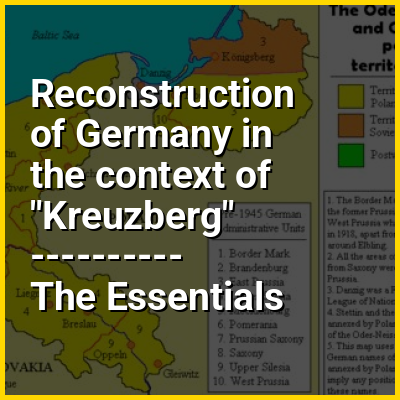
The reconstruction of Germany was the process of rebuilding Germany after the destruction endured during World War II. Germany suffered heavy losses during the war, both in lives and industrial power. Approximately 6.9 to 7.5 million Germans died, representing roughly 8.5 percent of the German population and a significant portion (~10%) of total World War II casualties estimated at 70 to 85 million people. The country's cities were severely damaged from heavy bombing in the closing chapters of the war and agricultural production was only 35 percent of what it was before the war.
At the Potsdam Conference, the victorious Western Allies ceded roughly 25 percent of Germany's pre-Anschluss territory to Poland and the Soviet Union. The German population in this area was expelled, together with the Germans of the Sudetenland and the German populations scattered throughout the rest of Eastern Europe. Between 1.5 and 2 million are said to have died in the process, depending on source. As a result, the population density grew in the "new" Germany that remained after the dismemberment.