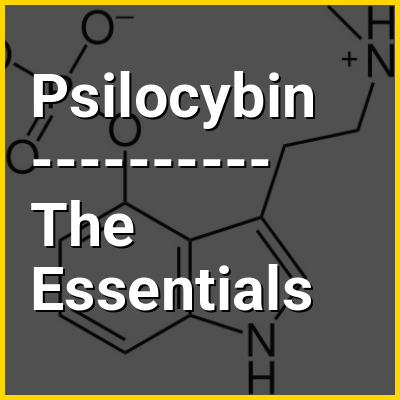
Psilocybin, also known as 4-phosphoryloxy-N,N-dimethyltryptamine (4-PO-DMT), is a naturally occurring tryptamine alkaloid and investigational drug found in more than 200 species of mushrooms, with hallucinogenic and serotonergic effects. Effects include euphoria, changes in perception, a distorted sense of time (via brain desynchronization), and perceived spiritual experiences. It can also cause adverse reactions such as nausea and panic attacks.
Psilocybin is a prodrug of psilocin. That is, the compound itself is biologically inactive but quickly converted by the body to psilocin. Psilocybin is transformed into psilocin by dephosphorylation mediated via phosphatase enzymes. Psilocin is chemically related to the neurotransmitter serotonin and acts as a non-selective agonist of the serotonin receptors. Activation of one serotonin receptor, the serotonin 5-HT2A receptor, is specifically responsible for the hallucinogenic effects of psilocin and other serotonergic psychedelics. Psilocybin is usually taken orally. By this route, its onset is about 20 to 50 minutes, peak effects occur after about 1 to 2 hours, and its duration is about 4 to 6 hours.