Polonnaruwa in the context of "Gal Vihara"

Play Trivia Questions online!

or

Skip to study material about Polonnaruwa in the context of "Gal Vihara"

Ad spacer

⭐ Core Definition: Polonnaruwa

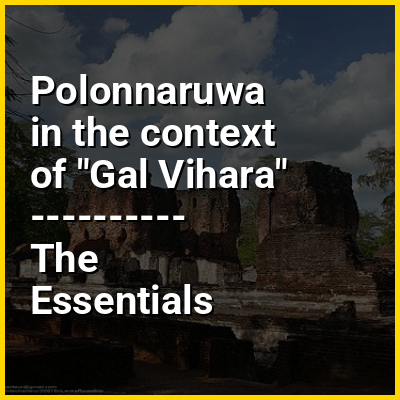
Poḷonnaruwa, (Sinhala: පොළොන්නරුව, romanized: Poḷonnaruva; Tamil: பொலன்னறுவை, romanized: Polaṉṉaṟuvai) also referred as Pulathisipura and Vijayarajapura in ancient times, is the main town of Polonnaruwa District in North Central Province, Sri Lanka. The modern town of Polonnaruwa is also known as New Town, and the other part of Polonnaruwa remains as the royal ancient city of the Kingdom of Polonnaruwa.

The second-oldest of all Sri Lanka's kingdoms, Polonnaruwa was first established as a military post by the Sinhalese kingdom. It was renamed Jananathamangalam by the Chola dynasty after their successful invasion of the country's then capital, Anuradhapura, in the 10th century. The Ancient City of Polonnaruwa has been declared a World Heritage Site.

↓ Menu

>>>PUT SHARE BUTTONS HERE<<<

👉 Polonnaruwa in the context of Gal Vihara

The Gal Vihara (Sinhala: ගල් විහාරය, lit.'rock monastery'), and known originally as the Uttararama (Sinhala: උත්තරාරාමය, lit.'the great monastery'), is a rock temple of the Buddha situated in the ancient city Polonnaruwa, the capital of the ancient Kingdom of Polonnaruwa, now present-day Polonnaruwa, in North Central Province, Sri Lanka. It was fashioned in the 12th century by King Parakramabahu I. The central feature of the temple is four rock relief statues of the Buddha, which have been carved into the face of a large granite gneiss rock. The images consist of a large seated figure, another smaller seated figure inside an artificial cavern, a standing figure, and a reclining figure. These are considered to be some of the best examples of ancient Sinhalese sculpting and carving arts, and have made the Gal Vihara the most visited monument at Polonnaruwa.

The images of Uttararama follow a different style from the images of the previous Anuradhapura period, and show some significant differences. The identity of the standing image is subject to a certain amount of dispute among historians and archaeologists, some of whom argue that it depicts the monk Ananda rather than the Buddha. Each of the images have been carved in a way that uses a maximum possible area of the rock, and their heights seem to have been decided based on the height of the rock itself. Each statue appears to have had its own image house, as indicated by the remains of brick walls at the site. The Uttararama was where Parakramabahu I held a congregation of monks to purify the Buddhist priesthood, and later drew up a code of conduct for them. This code of conduct has been recorded in an inscription on the same rock face containing the images of the Buddha.
↓ Explore More Topics
In this Dossier

Polonnaruwa in the context of Anuradhapura Veddas

Anuradhapura Veddas (Sinhala: අනුරාධපුර වැද්දන්, romanized: Anurādhapura Væddan, Tamil: அனுராதபுரம் வேடர்கள், romanized: Aṉurātapuram Vēṭarkaḷ) are people of North Central Province of Sri Lanka who are descendants of indigenous Vedda people of Sri Lanka who have adopted the culture, religion and language of the dominant Sinhalese residents of the province. By far they are the largest segment amongst the various groups of people who claim Vedda ancestry. They are also ethnically related to Tamil speaking Coast Veddas who live in the minority Sri Lankan Tamil dominant Eastern Province of Sri Lanka who have adopted Tamil and Hindu cultural norms of their neighbors. Settlements of Anuradhapura Veddas also spread into the neighboring Polonnaruwa District and a few villages in the interior of the Trincomalee District.

↑ Return to Menu