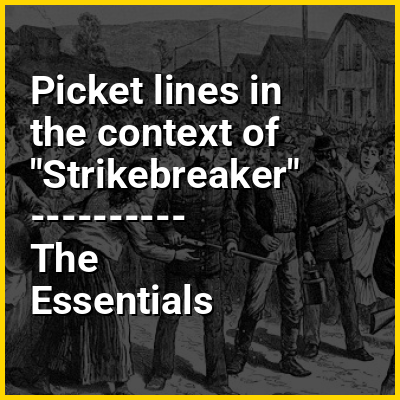
Picketing is a form of protest in which people (called pickets or picketers) congregate outside a place of work or location where an event is taking place. Often, this is done in an attempt to dissuade others from going in ("crossing the picket line"), but it can also be done to draw public attention to a cause. Picketers normally endeavor to be non-violent. It can have a number of aims but is generally to put pressure on the party targeted to meet particular demands or cease operations. This pressure is achieved by harming the business through loss of customers and negative publicity, or by discouraging or preventing workers or customers from entering the site and thereby preventing the business from operating normally.
Picketing is a common tactic used by trade unions during strikes, who will try to prevent dissident members of the union, members of other unions and non-unionised workers from working. Those who cross the picket line and work despite the strike are known pejoratively as scabs.