Parasitic worm in the context of Intestinal worms


Parasitic worm in the context of Intestinal worms

⭐ Core Definition: Parasitic worm

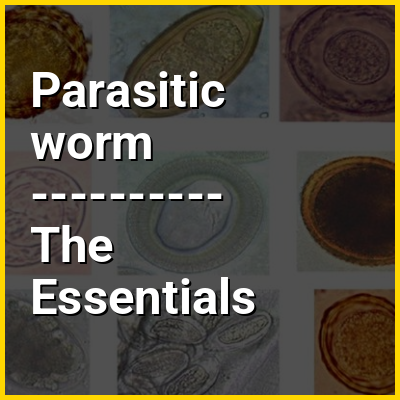
Parasitic worms, also known as helminths, are a polyphyletic group of large macroparasites; adults can generally be seen with the naked eye. Many are intestinal worms that are soil-transmitted and infect the gastrointestinal tract. Other parasitic worms such as schistosomes reside in blood vessels.

Some parasitic worms, including leeches and monogeneans, are ectoparasites – thus, they are not classified as helminths, which are endoparasites.

↓ Menu
HINT:

In this Dossier

Parasitic worm in the context of Reuse of excreta

Reuse of human excreta is the safe, beneficial use of treated human excreta after applying suitable treatment steps and risk management approaches that are customized for the intended reuse application. Beneficial uses of the treated excreta may focus on using the plant-available nutrients (mainly nitrogen, phosphorus and potassium) that are contained in the treated excreta. They may also make use of the organic matter and energy contained in the excreta. To a lesser extent, reuse of the excreta's water content might also take place, although this is better known as water reclamation from municipal wastewater. The intended reuse applications for the nutrient content may include: soil conditioner or fertilizer in agriculture or horticultural activities. Other reuse applications, which focus more on the organic matter content of the excreta, include use as a fuel source or as an energy source in the form of biogas.

There is a large and growing number of treatment options to make excreta safe and manageable for the intended reuse option. Options include urine diversion and dehydration of feces (urine-diverting dry toilets), composting (composting toilets or external composting processes), sewage sludge treatment technologies and a range of fecal sludge treatment processes. They all achieve various degrees of pathogen removal and reduction in water content for easier handling. Pathogens of concern are enteric bacteria, virus, protozoa, and helminth eggs in feces. As the helminth eggs are the pathogens that are the most difficult to destroy with treatment processes, they are commonly used as an indicator organism in reuse schemes. Other health risks and environmental pollution aspects that need to be considered include spreading micropollutants, pharmaceutical residues and nitrate in the environment which could cause groundwater pollution and thus potentially affect drinking water quality.

View the full Wikipedia page for Reuse of excreta
↑ Return to Menu

Parasitic worm in the context of Ascaris lumbricoides

Ascaris lumbricoides is a large parasitic roundworm of the genus Ascaris. It is the most common parasitic worm in humans. An estimated 807 million–1.2 billion people are infected with Ascaris lumbricoides worldwide. People living in tropical and subtropical countries are at greater risk of infection. Infection by Ascaris lumbricoides is known as ascariasis.

It has been proposed that Ascaris lumbricoides and Ascaris suum (pig roundworm) are the same species.

View the full Wikipedia page for Ascaris lumbricoides
↑ Return to Menu

Parasitic worm in the context of Cestoda

Cestoda is a class of parasitic worms in the flatworm phylum (Platyhelminthes). Most of the species—and the best-known—are those in the subclass Eucestoda; they are ribbon-like worms as adults, commonly known as tapeworms. Their bodies consist of many similar units known as proglottids—essentially packages of eggs which are regularly shed into the environment to infect other organisms. Species of the other subclass, Cestodaria, are mainly fish-infecting parasites.

All cestodes are parasitic; many have complex life histories, including a stage in a definitive (main) host in which the adults grow and reproduce, often for years, and one or two intermediate stages in which the larvae develop in other hosts. Typically the adults live in the digestive tracts of vertebrates, while the larvae often live in the bodies of other animals, either vertebrates or invertebrates. For example, Diphyllobothrium has at least two intermediate hosts, a crustacean and then one or more freshwater fish; its definitive host is a mammal. Some cestodes are host-specific, while others are parasites of a wide variety of hosts. Some six thousand species have been described; probably all vertebrates can host at least one species.

View the full Wikipedia page for Cestoda
↑ Return to Menu

Parasitic worm in the context of Immune response

An immune response is a physiological reaction which occurs within an organism in the context of inflammation for the purpose of defending against exogenous factors. These include a wide variety of different toxins, viruses, intra- and extracellular bacteria, protozoa, helminths, and fungi which could cause serious problems to the health of the host organism if not cleared from the body.

In addition, there are other forms of immune response. For example, harmless exogenous factors (such as pollen and food components) can trigger allergy; latex and metals are also known allergens.A transplanted tissue (for example, blood) or organ can cause graft-versus-host disease. A type of immune reactivity known as Rh disease can be observed in pregnant women. These special forms of immune response are classified as hypersensitivity. Another special form of immune response is antitumor immunity.

View the full Wikipedia page for Immune response
↑ Return to Menu

Parasitic worm in the context of Hematophagy

Hematophagy (sometimes spelled haematophagy or hematophagia) is the practice by certain animals of feeding on blood (from the Greek words αἷμα haima "blood" and φαγεῖν phagein "to eat"). Since blood is a fluid tissue rich in nutritious proteins and lipids that can be taken without great effort, hematophagy is a preferred form of feeding for many small animals, such as worms and arthropods. Some intestinal nematodes, such as Ancylostomatids, feed on blood extracted from the capillaries of the gut, and about 75 percent of all species of leeches (e.g., Hirudo medicinalis) are hematophagous. The spider Evarcha culicivora feeds indirectly on vertebrate blood by specializing on blood-filled female mosquitoes as their preferred prey. Some fish, such as lampreys and candirus; mammals, especially vampire bats; and birds, including the vampire finch, Hood mockingbird, Tristan thrush, and oxpeckers, also practice hematophagy.

View the full Wikipedia page for Hematophagy
↑ Return to Menu

Parasitic worm in the context of Constructed wetland

A constructed wetland is an artificial wetland to treat sewage, greywater, stormwater runoff or industrial wastewater. It may also be designed for land reclamation after mining, or as a mitigation step for natural areas lost to land development. Constructed wetlands are engineered systems that use the natural functions of vegetation, soil, and organisms to provide secondary treatment to wastewater. The design of the constructed wetland has to be adjusted according to the type of wastewater to be treated. Constructed wetlands have been used in both centralized and decentralized wastewater systems. Primary treatment is recommended when there is a large amount of suspended solids or soluble organic matter (measured as biochemical oxygen demand and chemical oxygen demand).

Similar to natural wetlands, constructed wetlands also act as a biofilter and/or can remove a range of pollutants (such as organic matter, nutrients, pathogens, heavy metals) from the water. Constructed wetlands are designed to remove water pollutants such as suspended solids, organic matter and nutrients (nitrogen and phosphorus). All types of pathogens (i.e., bacteria, viruses, protozoans and helminths) are expected to be removed to some extent in a constructed wetland. Subsurface wetlands provide greater pathogen removal than surface wetlands.

View the full Wikipedia page for Constructed wetland
↑ Return to Menu