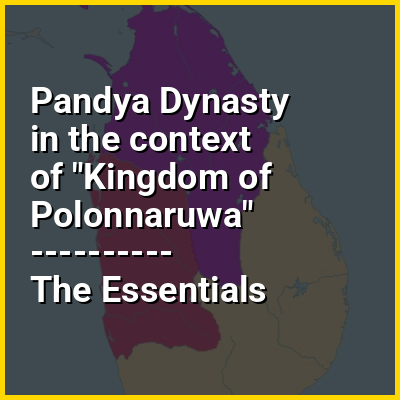
The Kingdom of Polonnaruwa (Sinhala: පොළොන්නරුව රාජධානිය, romanized: Polonnaruwa Rājādhaniya) was the Sinhalese kingdom that expanded across the island of Sri Lanka from 1070 until 1232. The kingdom unified the island and started expanding its overseas influence during the reign of Parakramabahu the Great.
It had an influence in Pandya Nadu since its involvement in a civil war in the Pandya country. During this war, Pandya Nadu was seized as a country administered by the military of Polonnaruwa and Vira Pandyan of Pandya Dynasty. The tributaries of the Chola empire such as Tondi and Pasi came under its and Vira Pandya military rule. Rameshwaram was under Sinhalese and Vira Pandyan Alliance rule till 1182. Its currency Kahapana was struck in these places. During their influence on Pandya Nadu, construction work was undertaken. But Soon after their initial victory, Vira Pandyan army and Polonnaruwa army were defeated by Cholas and lost the control of Pandya Nadu, Tondi, pasi and Rameswaram. According to the Chola record at Tirukkollambudur of the fourth year of Kulottunga III (A.D. 1182) "the Singhalese soldiers had their noses cut off and rushed into the sea. Vira Pandya himself was compelled to retreat. The town of Madura was captured and made over to Vikrama Pandya." The war thus ended in favour of the Cholas, sometime in the 1170s.