Pancreatitis in the context of "Ascites"

Play Trivia Questions online!

or

Skip to study material about Pancreatitis in the context of "Ascites"

Ad spacer

⭐ Core Definition: Pancreatitis

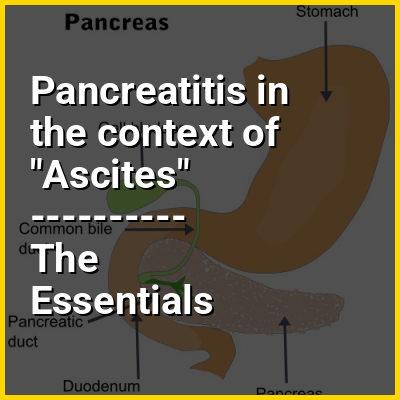
Pancreatitis is a condition characterized by inflammation of the pancreas. The pancreas is a large organ behind the stomach that produces digestive enzymes and a number of hormones. There are two main types, acute pancreatitis and chronic pancreatitis. Signs and symptoms of pancreatitis include pain in the upper abdomen, nausea, and vomiting. The pain often goes into the back and is usually severe. In acute pancreatitis, a fever may occur; symptoms typically resolve in a few days. In chronic pancreatitis, weight loss, fatty stool, and diarrhea may occur. Complications may include infection, bleeding, diabetes mellitus, or problems with other organs.

The two most common causes of acute pancreatitis are a gallstone blocking the common bile duct after the pancreatic duct has joined; and heavy alcohol use. Other causes include direct trauma, certain medications, infections such as mumps, and tumors. Chronic pancreatitis may develop as a result of acute pancreatitis. It is most commonly due to many years of heavy alcohol use. Other causes include high levels of blood fats, high blood calcium, some medications, and certain genetic disorders, such as cystic fibrosis, among others. Smoking increases the risk of both acute and chronic pancreatitis. Diagnosis of acute pancreatitis is based on a threefold increase in the blood of either amylase or lipase. In chronic pancreatitis, these tests may be normal. Medical imaging such as ultrasound and CT scan may also be useful.
↓ Menu

>>>PUT SHARE BUTTONS HERE<<<

👉 Pancreatitis in the context of Ascites

Ascites (/əˈstiz/; Greek: ἀσκός, romanizedaskos, meaning "bag" or "sac") is the abnormal build-up of fluid in the abdomen. Technically, it is more than 25 millilitres (0.88 imp fl oz; 0.85 US fl oz) of fluid in the peritoneal cavity, although volumes greater than one liter may occur. Symptoms may include increased abdominal size, increased weight, abdominal discomfort, and shortness of breath. Complications can include spontaneous bacterial peritonitis.

In the developed world, the most common cause is liver cirrhosis, whose underlying mechanism involves high blood pressure in the portal system and dysfunction of blood vessels. Other causes include cancer, heart failure, tuberculosis, pancreatitis, and blockage of the hepatic vein. Diagnosis is typically based on an examination together with ultrasound or a CT scan. Testing the fluid can help in determining the underlying cause.

↓ Explore More Topics
In this Dossier

Pancreatitis in the context of Pancreas

The pancreas (plural pancreases, or pancreata) is an organ of the digestive system and endocrine system of vertebrates. In humans, it is located in the abdomen behind the stomach and functions as a gland. The pancreas is a mixed or heterocrine gland, i.e., it has both an endocrine and a digestive exocrine function. Ninety-nine percent of the pancreas is exocrine and 1% is endocrine. As an endocrine gland, it functions mostly to regulate blood sugar levels, secreting the hormones insulin, glucagon, somatostatin and pancreatic polypeptide. As a part of the digestive system, it functions as an exocrine gland secreting pancreatic juice into the duodenum through the pancreatic duct. This juice contains bicarbonate, which neutralizes acid entering the duodenum from the stomach; and digestive enzymes, which break down carbohydrates, proteins and fats in food entering the duodenum from the stomach.

Inflammation of the pancreas is known as pancreatitis, with common causes including chronic alcohol use and gallstones. Because of its role in the regulation of blood sugar, the pancreas is also a key organ in diabetes. Pancreatic cancer can arise following chronic pancreatitis or due to other reasons, and carries a very poor prognosis, as it is often only identified after it has spread to other areas of the body.

↑ Return to Menu

Pancreatitis in the context of Delirium tremens

Delirium tremens (DTs; lit.'mental disturbance with shaking') is a rapid onset of confusion caused by withdrawal from alcohol. DT typically occurs 48–72 hours after the last use of alcohol and symptoms last 1–8 days. Typical symptoms include nightmares, confusion, disorientation, heavy sweating, elevated heart rate, and elevated blood pressure. Visual, auditory, and tactile hallucinations are also common. DT can be fatal especially without treatment. Occasionally, a very high body temperature or seizures (colloquially known as "rum fits") may result in death. Other causes of death include respiratory failure and cardiac arrhythmias.

Delirium tremens typically occurs only in people with a high intake of alcohol for prolonged periods of time, followed by sharply reduced intake. A similar syndrome may occur with benzodiazepine and barbiturate withdrawal, however the term delirium tremens is reserved for alcohol withdrawal. In a person with delirium tremens, it is important to rule out other associated problems such as electrolyte abnormalities, pancreatitis, and alcoholic hepatitis.

↑ Return to Menu

Pancreatitis in the context of Pleurisy

Pleurisy, also known as pleuritis, is inflammation of the membranes that surround the lungs and line the chest cavity (pleurae). This can result in a sharp chest pain while breathing. Occasionally the pain may be a constant dull ache. Other symptoms may include shortness of breath, cough, fever, and weight loss, depending on the underlying cause.

Pleurisy can be caused by a variety of conditions, including viral or bacterial infections, autoimmune disorders, and pulmonary embolism. The most common cause is a viral infection. Other causes include bacterial infection, pneumonia, pulmonary embolism, autoimmune disorders, lung cancer, following heart surgery, pancreatitis and asbestosis. Occasionally the cause remains unknown. The underlying mechanism involves the rubbing together of the pleurae instead of smooth gliding. Other conditions that can produce similar symptoms include pericarditis, heart attack, cholecystitis, pulmonary embolism, and pneumothorax. Diagnostic testing may include a chest X-ray, electrocardiogram (ECG), and blood tests.

↑ Return to Menu

Pancreatitis in the context of Acute respiratory distress syndrome

Acute respiratory distress syndrome (ARDS) is a type of respiratory failure characterized by rapid onset of widespread inflammation in the lungs. Symptoms include shortness of breath (dyspnea), rapid breathing (tachypnea), and bluish skin coloration (cyanosis). For those who survive, a decreased quality of life is common.

Causes may include sepsis, pancreatitis, trauma, pneumonia, and aspiration. The underlying mechanism involves diffuse injury to cells which form the barrier of the microscopic air sacs of the lungs, surfactant dysfunction, activation of the immune system, and dysfunction of the body's regulation of blood clotting. In effect, ARDS impairs the lungs' ability to exchange oxygen and carbon dioxide. Adult diagnosis is based on a PaO2/FiO2 ratio (ratio of partial pressure arterial oxygen and fraction of inspired oxygen) of less than 300 mm Hg despite a positive end-expiratory pressure (PEEP) of more than 5 cm H2O. Cardiogenic pulmonary edema, as the cause, must be excluded.

↑ Return to Menu

Pancreatitis in the context of Low blood calcium

Hypocalcemia is a medical condition characterized by low calcium levels in the blood serum. The normal range of blood calcium is typically between 2.1–2.6 mmol/L (8.8–10.7 mg/dL, 4.3–5.2 mEq/L), while levels less than 2.1 mmol/L are defined as hypocalcemic. Mildly low levels that develop slowly often have no symptoms. Otherwise symptoms may include numbness, muscle spasms, seizures, confusion, or in extreme cases cardiac arrest.

The most common cause for hypocalcemia is iatrogenic hypoparathyroidism. Other causes include other forms of hypoparathyroidism, vitamin D deficiency, kidney failure, pancreatitis, calcium channel blocker overdose, rhabdomyolysis, tumor lysis syndrome, and medications such as bisphosphonates or denosumab. Diagnosis should generally be confirmed by determining the corrected calcium or ionized calcium level. Specific changes may also be seen on an electrocardiogram (ECG).

↑ Return to Menu

Pancreatitis in the context of Alipogene tiparvovec

Alipogene tiparvovec, sold under the brand name Glybera, is a gene therapy treatment designed to reverse lipoprotein lipase deficiency (LPLD), a rare recessive disorder, due to mutations in LPL, which can cause severe pancreatitis. It was recommended for approval by the European Medicines Agency in July 2012, and approved by the European Commission in November of the same year. It was the first marketing authorisation for a gene therapy treatment in either the European Union or the United States.

The medication is administered via a series of injections into the leg muscles.

↑ Return to Menu

Pancreatitis in the context of Gallstone

A gallstone is a stone formed within the gallbladder from precipitated bile components. The term cholelithiasis may refer to the presence of gallstones or to any disease caused by gallstones, and choledocholithiasis refers to the presence of migrated gallstones within bile ducts.

Most people with gallstones (about 80%) are asymptomatic. However, when a gallstone obstructs the bile duct and causes acute cholestasis, a reflexive smooth muscle spasm often occurs, resulting in an intense cramp-like visceral pain in the right upper part of the abdomen known as a biliary colic (or "gallbladder attack"). This happens in 1–4% of those with gallstones each year. Complications from gallstones may include inflammation of the gallbladder (cholecystitis), inflammation of the pancreas (pancreatitis), obstructive jaundice, and infection in bile ducts (cholangitis). Symptoms of these complications may include pain that lasts longer than five hours, fever, yellowish skin, vomiting, dark urine, and pale stools.

↑ Return to Menu

Pancreatitis in the context of Chronic pancreatitis

Chronic pancreatitis is a long-standing inflammation of the pancreas that alters the organ's normal structure and functions. It can present as episodes of acute inflammation in a previously injured pancreas, or as chronic damage with persistent pain or malabsorption. It is a disease process characterized by irreversible damage to the pancreas as distinct from reversible changes in acute pancreatitis. Tobacco smoke and alcohol misuse are two of the most frequently implicated causes, and the two risk factors are thought to have a synergistic effect with regard to the development of chronic pancreatitis. Chronic pancreatitis is a risk factor for the development of pancreatic cancer.

↑ Return to Menu