Panama City in the context of Panamá Province


Panama City in the context of Panamá Province

⭐ Core Definition: Panama City

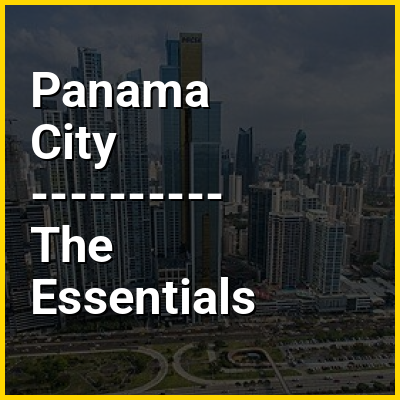
Panama City, also known as Panama, is the capital and largest city of the Republic of Panama. It has a total population of 410,354 in the city proper and 1,086,990 in the Panama District, which includes the outer corregimientos of the city. The metropolitan area has over 2,100,000 people. The city is located at the Pacific entrance of the Panama Canal, in the province of Panama. The city is the political and administrative center of the country, as well as a hub for banking and commerce.

The city of Panama was founded on 15 August 1519, by Spanish conquistador Pedro Arias Dávila. The city was the starting point for expeditions that conquered the Inca Empire of Peru. It was a stopover point on one of the most important trade routes in the American continent, leading to the fairs of Nombre de Dios and Portobelo, through which passed most of the gold and silver that Spain mined from the Americas.
↓ Menu
HINT:

In this Dossier

Panama City in the context of Panama

Panama, officially the Republic of Panama, is a country located at the southern end of Central America, bordering South America. It is bordered by Costa Rica to the west, Colombia to the southeast, the Caribbean Sea to the north, and the Pacific Ocean to the south. Its capital and largest city is Panama City, whose metropolitan area is home to nearly half of the country's over 4 million inhabitants.

Before the arrival of Spanish colonists in the 16th century, Panama was inhabited by a number of different indigenous tribes. It broke away from Spain in 1821 and joined the Republic of Gran Colombia, a union of Nueva Granada, Ecuador, and Venezuela. After Gran Colombia dissolved in 1831, Panama and Nueva Granada eventually became the Republic of Colombia. With the backing of the United States, Panama seceded from Colombia in 1903, allowing the construction of the Panama Canal to be completed by the United States Army Corps of Engineers between 1904 and 1914. The 1977 Torrijos–Carter Treaties agreed to transfer the canal from the United States to Panama on December 31, 1999. The surrounding territory was returned first, in 1979.

View the full Wikipedia page for Panama
↑ Return to Menu

Panama City in the context of Francisco Pizarro

Francisco Pizarro (/pɪˈzɑːr/; Spanish: [fɾanˈθisko piˈθaro]; c. 16 March 1478 – 26 June 1541) was a Spanish conquistador, best known for his expeditions that led to the Spanish conquest of the Inca Empire.

Born in Trujillo, Spain, to a poor family, Pizarro chose to pursue fortune and adventure in the New World. He went to the Gulf of Urabá and accompanied Vasco Núñez de Balboa in his crossing of the Isthmus of Panama, where they became the first Europeans to see the Pacific Ocean from the Americas. He served as mayor of the newly founded Panama City for a few years and undertook two failed expeditions to Peru. In 1529, Pizarro obtained permission from the Spanish crown to lead a campaign to conquer Peru and went on his third, and successful, expedition.

View the full Wikipedia page for Francisco Pizarro
↑ Return to Menu

Panama City in the context of Guna people

The Guna (also spelled Kuna or Cuna) are an Indigenous people of Panama and Colombia. Guna people live in three politically autonomous comarcas or autonomous reservations in Panama, and in a few small villages in Colombia. There are also communities of Guna people in Panama City, Colón, and other cities. Most Guna live on small islands off the coast of the comarca of Guna Yala known as the San Blas Islands. The other two Guna comarcas in Panama are Guna de Madugandí and Guna de Wargandí. They are Guna-speaking people who once occupied the central region of what is now Panama and the neighboring San Blas Islands and still survive in marginal areas.

In the Guna language, they call themselves Dule or Tule, meaning "people", and the name of the language is Dulegaya, literally "people-mouth". The term was in the language itself spelled Kuna prior to a 2010 orthographic reform, but the Congreso General de la Nación Gunadule since 2010 has promoted the spelling Guna.

View the full Wikipedia page for Guna people
↑ Return to Menu

Panama City in the context of Independence Act of Panama

The Declaration of Independence of Panama (Acta de Independencia de Panamá) is the document through which Panama declared its independence from the Spanish Empire on November 28, 1821. It was proclaimed in the Cathedral Plaza of Panama City after a council of leaders had met and drafted twelve points calling for severing Panama's relationship with the Spanish Crown and joining with the newly formed Republic of Gran Colombia.

View the full Wikipedia page for Independence Act of Panama
↑ Return to Menu

Panama City in the context of Panama Canal Zone

The Panama Canal Zone (Spanish: Zona del Canal de Panamá), also known as just the Canal Zone, was a concession of the United States located in the Isthmus of Panama that existed from 1903 to 1979. It consisted of the Panama Canal and an area generally extending five miles (8 km) on each side of the centerline but excluding Panama City and Colón. Its capital was Balboa.

The Panama Canal Zone was created on November 18, 1903, from the territory of Panama; it was established with the signing of the Hay–Bunau-Varilla Treaty, which allowed for the construction of the Panama Canal within the territory by the United States. In 1904, the Isthmian Canal Convention was proclaimed, granting the United States in perpetuity the use, occupation, and control of a zone of land and land underwater for the construction, maintenance, operation, sanitation, and protection of the canal. From 1903 to 1979, the territory was controlled by the United States, which had purchased the land from its private and public owners, built the canal and financed its construction.

View the full Wikipedia page for Panama Canal Zone
↑ Return to Menu

Panama City in the context of Santa María la Antigua del Darién

Santa María la Antigua del Darién—rendered as Dariena in the Latin of De Orbe Novo—was a Spanish colonial town founded in 1510 by Vasco Núñez de Balboa. Located in present-day Colombia approximately 40 miles (64 km) south of Acandí, within the municipality of Unguía in the Chocó Department, it was the first permanent European settlement on the mainland of the Americas and served as the first capital of Castilla del Oro. The settlement was abandoned in 1524 after the capital was transferred to the newly founded Panama City and was subsequently attacked and burned by indigenous peoples.

View the full Wikipedia page for Santa María la Antigua del Darién
↑ Return to Menu

Panama City in the context of Manuel Noriega

Manuel Antonio Noriega Moreno (/mɑːnˈwɛl ˌnɔːriˈɡə/ mahn-WEL NOR-ee-AY-gə, Spanish: [maˈnwel noˈɾjeɣa]; February 11, 1934 – May 29, 2017) was a Panamanian dictator and military officer who was the de facto ruler of Panama from 1983 to 1989. He never officially served as president of Panama, instead ruling as an unelected military dictator through puppet presidents. Amassing a personal fortune through drug trafficking operations by the Panamanian military, Noriega had longstanding ties with American intelligence agencies before the U.S. invasion of Panama removed him from power.

Born in Panama City to a poor pardo family, Noriega studied at the Chorrillos Military School in Lima and at the School of the Americas. He became an officer in the Panamanian army, and rose through the ranks in alliance with Omar Torrijos. In 1968, Torrijos overthrew President Arnulfo Arias in a coup. Noriega became chief of military intelligence in Torrijos's government and, after Torrijos's death in 1981, consolidated power to become Panama's de facto ruler in 1983. Beginning in the 1950s, Noriega worked with U.S. intelligence agencies, and became one of the Central Intelligence Agency's most valued intelligence sources. He also served as a conduit for illicit weapons, military equipment, and cash destined for U.S.-backed forces throughout Latin America.

View the full Wikipedia page for Manuel Noriega
↑ Return to Menu

Panama City in the context of Pedro Arias Dávila

Pedro Arias de Ávila (c. 1440 – 6 March 1531; often Pedro Arias Dávila or Pedrarias Dávila) was a Spanish soldier and colonial administrator. He led the first great Spanish expedition to the mainland of the Americas. There, he served as governor of Panama (1514–1526) and Nicaragua (1527–1531), and founded Panama City (1519). He died in 1531 aged around 90 or 91.

View the full Wikipedia page for Pedro Arias Dávila
↑ Return to Menu