Ottoman illumination in the context of "Tughra"


Ottoman illumination in the context of "Tughra"

Ottoman illumination Study page number 1 of 1

Answer the Ottoman Illumination Trivia Question!

or

Skip to study material about Ottoman illumination in the context of "Tughra"


⭐ Core Definition: Ottoman illumination

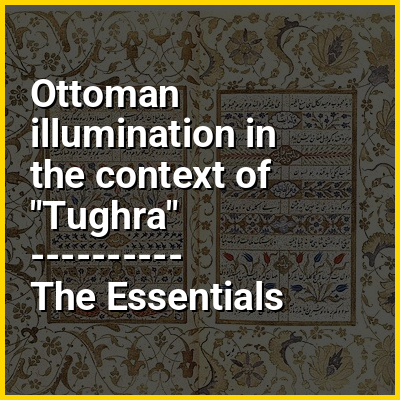
Turkish or Ottoman illumination refers to non-figurative painted or drawn decorative art found in manuscripts or on sheets in muraqqa. In Turkish it is called “tezhip”, meaning “ornamenting with gold”. The Classical Islamic style of manuscript illumination combines techniques from Turkish, Persian, and Arabic traditions. Illumination was central to the traditional arts of the Ottoman Turks, who developed a style of illumination distinct from earlier traditions.

Manuscript illustration, such as the painting of the Ottoman miniature (taswir), was a distinct process from manuscript illumination, and each process was thus carried out by an artist specially trained in that particular craft.
↓ Menu
HINT:

👉 Ottoman illumination in the context of Tughra

A tughra (Ottoman Turkish: طغرا, romanizedṭuġrā; Turkish: tuğra) is a calligraphic monogram, seal or signature of a sultan that was affixed to all official documents and correspondence. Inspired by the tamgha, it was also carved on his seal and stamped on the coins minted during his reign. Very elaborate decorated versions were created for important documents that were also works of art in the tradition of Ottoman illumination, such as the example of Suleiman the Magnificent in the gallery below.

The tughra was designed at the beginning of the sultan's reign and drawn by the court calligrapher or nişancı on written documents. The first tughra examples are from the 14th century.

↓ Explore More Topics
In this Dossier