Organochlorines in the context of "Dichlorodiphenyldichloroethylene"

Play Trivia Questions online!

or

Skip to study material about Organochlorines in the context of "Dichlorodiphenyldichloroethylene"

Ad spacer

⭐ Core Definition: Organochlorines

Organochlorine chemistry is concerned with the properties of organochlorine compounds, or organochlorides, organic compounds that contain one or more carbonchlorine bonds. The chloroalkane class (alkanes with one or more hydrogens substituted by chlorine) includes common examples. The wide structural variety and divergent chemical properties of organochlorides lead to a broad range of names, applications, and properties. Organochlorine compounds have wide use in many applications, though some are of profound environmental concern, with DDT and TCDD being among the most notorious.

Organochlorides such as trichloroethylene, tetrachloroethylene, dichloromethane and chloroform are commonly used as solvents and are referred to as "chlorinated solvents".
↓ Menu

>>>PUT SHARE BUTTONS HERE<<<

👉 Organochlorines in the context of Dichlorodiphenyldichloroethylene

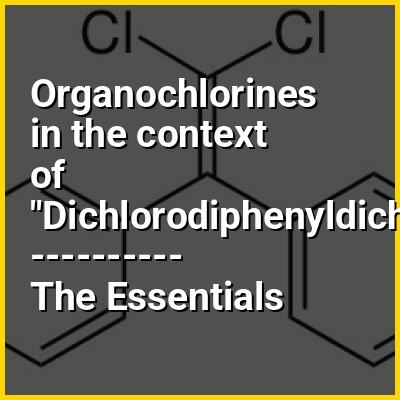
Dichlorodiphenyldichloroethylene (DDE) is a chemical compound formed by the loss of hydrogen chloride (dehydrohalogenation) from DDT, of which it is one of the more common breakdown products. Due to DDT's massive prevalence in society and agriculture during the mid 20th century, DDT and DDE are still widely seen in animal tissue samples. DDE is particularly dangerous because it is fat-soluble like other organochlorines; thus, it is rarely excreted from the body, and concentrations tend to increase throughout life. The major exception is the excretion of DDE in breast milk, which transfers a substantial portion of the mother's DDE burden to the young animal or child. Along with accumulation over an organism's lifetime, this stability leads to bioaccumulation in the environment, which amplifies DDE's negative effects.

↓ Explore More Topics
In this Dossier