Northern Iran in the context of "Rasht"

Play Trivia Questions online!

or

Skip to study material about Northern Iran in the context of "Rasht"


⭐ Core Definition: Northern Iran

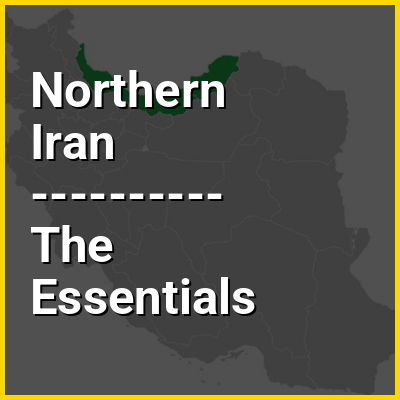
Northern Iran (Persian: شمال, romanizedShomal, lit.'North'), is a geographical term that refers to a relatively large and fertile area, consisting of the southern border of the Caspian Sea and the Alborz mountains.

It includes the provinces of Gilan, Mazandaran, and Golestan (ancient kingdom of Hyrcania, medieval region of Tabaristan). The major provinces, Gilan and Mazandaran, are covered with dense forests, snow-covered mountains and impressive sea shores.
↓ Menu

👉 Northern Iran in the context of Rasht

Rasht (Persian: رشت; [ɾæʃt] ) is a city in the Central District of Rasht County, Gilan province, Iran, serving as the capital of the province, the county, and the district. Known as the "City of Rain" (Shahr-e Bārān), Rasht has, throughout Iran’s history, served as a border city, earning the historical nickname “Dār al-Marz Rasht” or ”Rasht on the Border”. With a population of 679,995 in 2016, it is the most populous city in northern Iran.

Rasht is the largest city on Iran's Caspian Sea coast. Due to being between the coast and the mountains, the local environment is rainy with a humid subtropical climate. It also has a temperate rainforest to its south, in contrast to the rest of Iran, which is mostly arid.

↓ Explore More Topics
In this Dossier

Northern Iran in the context of Medes

The Medes were an Iron Age Iranian people who spoke the Median language and who inhabited an area known as Media between western and northern Iran. Around the 11th century BC, they occupied the mountainous region of northwestern Iran and the northeastern and eastern region of Mesopotamia in the vicinity of Ecbatana (present-day Hamadan). Their consolidation in Iran is believed to have occurred during the 8th century BC. In the 7th century BC, all of western Iran and some other territories were under Median rule, but their precise geographic extent remains unknown.

Although widely recognized as playing an important role in the history of the ancient Near East, the Medes left no written records to reconstruct their history. Knowledge of the Medes comes only from foreign sources such as the Assyrians, Babylonians, Armenians and Greeks, as well as a few Iranian archaeological sites, which are believed to have been occupied by Medes. The accounts related to the Medes reported by Herodotus convey the image of a powerful people, who would have formed an empire at the beginning of the 7th century BC that lasted until the 550s BC, played a pivotal role in the fall of the Assyrian Empire, and competed with the powerful kingdoms of Lydia and Babylonia.

↑ Return to Menu