Neurofibromatosis type II in the context of "Neurofibromatosis"

Play Trivia Questions online!

or

Skip to study material about Neurofibromatosis type II in the context of "Neurofibromatosis"

Ad spacer

>>>PUT SHARE BUTTONS HERE<<<

👉 Neurofibromatosis type II in the context of Neurofibromatosis

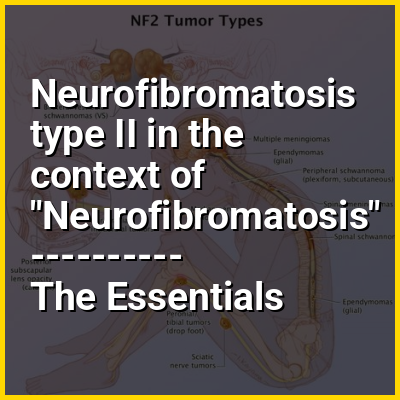
Neurofibromatosis (NF) refers to a group of three distinct genetic conditions in which tumors grow in the nervous system. The tumors are non-cancerous (benign) and often involve the skin or surrounding bone. Although symptoms are often mild, each condition presents differently. Neurofibromatosis type I (NF1) is typically characterized by café au lait spots (light-brown flat patches of skin), neurofibromas (small bumps in or under the skin), scoliosis (side-way curvature of the back), and headaches. Neurofibromatosis type II (NF2), on the other hand, may present with early-onset hearing loss, cataracts, tinnitus, difficulty walking or maintaining balance, and muscle atrophy. The third type is called schwannomatosis and often presents in early adulthood with widespread pain, numbness, or tingling due to nerve compression.

The cause is a genetic mutation in certain oncogenes. These can be inherited, or in about half of cases spontaneously occur during early development. Different mutations result in the three types of NF. Neurofibromatosis arise from the supporting cells of the nervous system rather than the neurons themselves. In NF1, the tumors are neurofibromas (tumors of the peripheral nerves), while in NF2 and schwannomatosis tumors of Schwann cells are more common. Diagnosis is typically based on symptoms, examination, medical imaging, and biopsy. Genetic testing may rarely be done to support the diagnosis.

↓ Explore More Topics
In this Dossier

Neurofibromatosis type II in the context of Spinal tumor

Spinal tumors are neoplasms located in either the vertebral column or the spinal cord. There are three main types of spinal tumors classified based on their location: extradural and intradural (intradural-intramedullary and intradural-extramedullary). Extradural tumors are located outside the dura mater lining and are most commonly metastatic. Intradural tumors are located inside the dura mater lining and are further subdivided into intramedullary and extramedullary tumors. Intradural-intramedullary tumors are located within the dura and spinal cord parenchyma, while intradural-extramedullary tumors are located within the dura but outside the spinal cord parenchyma. The most common presenting symptom of spinal tumors is nocturnal back pain. Other common symptoms include muscle weakness, sensory loss, and difficulty walking. Loss of bowel and bladder control may occur during the later stages of the disease.

The cause of spinal tumors is unknown. Most extradural tumors are metastatic commonly from breast, prostate, lung, and kidney cancer. There are many genetic factors associated with intradural tumors, most commonly neurofibromatosis 1 (NF1), neurofibromatosis 2 (NF2), and Von Hippel–Lindau (VHL) syndrome. The most common type of intradural-extramedullary tumors are meningiomas and nerve-sheath tumors. The most common type of intradural-intramedullary tumors are ependymomas and astrocytomas. Diagnosis involves a complete medical evaluation followed by imaging with a CT or MRI. A biopsy may be obtained in certain cases to categorize the lesion if the diagnosis is uncertain.

↑ Return to Menu