N-Acetylglucosamine in the context of Glucosamine


N-Acetylglucosamine in the context of Glucosamine

⭐ Core Definition: N-Acetylglucosamine

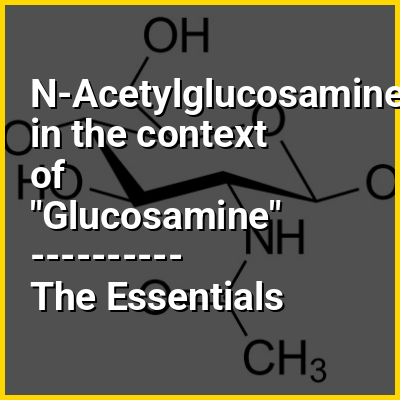
N-Acetylglucosamine (GlcNAc) is an amide derivative of the monosaccharide glucose. It is a secondary amide between glucosamine and acetic acid. It is significant in several biological systems.

It is part of a biopolymer in the bacterial cell wall, which is built from alternating units of GlcNAc and N-acetylmuramic acid (MurNAc), cross-linked with oligopeptides at the lactic acid residue of MurNAc. This layered structure is called peptidoglycan (formerly called murein).

↓ Menu
HINT:

In this Dossier

N-Acetylglucosamine in the context of Chitin

Chitin (C8H13O5N)n (/ˈktɪn/ KY-tin) is a long-chain polymer of N-acetylglucosamine, an amide derivative of glucose. Chitin is the second most abundant polysaccharide in nature (behind only cellulose); an estimated 1 billion tons of chitin are produced each year in the biosphere. It is a primary component of cell walls in fungi (especially filamentous and mushroom-forming fungi), the exoskeletons of arthropods such as crustaceans and insects, the radulae, cephalopod beaks and gladii of molluscs and in some nematodes and diatoms.It is also synthesised by at least some fish and lissamphibians. Commercially, chitin is extracted from the shells of crabs, shrimps, shellfish and lobsters, which are major by-products of the seafood industry. The structure of chitin is comparable to cellulose, forming crystalline nanofibrils or whiskers. It is functionally comparable to the protein keratin. Chitin has proved useful for several medicinal, industrial and biotechnological purposes.

View the full Wikipedia page for Chitin
↑ Return to Menu

N-Acetylglucosamine in the context of Microfungi

Microfungi or micromycetes are fungieukaryotic organisms such as molds, mildews and rusts—which have microscopic spore-producing structures. They exhibit tube tip-growth and have cell walls composed of chitin, a polymer of N-acetylglucosamine. Microfungi are a paraphyletic group, distinguished from macrofungi only by the absence of a large, multicellular fruiting body. They are ubiquitous in all terrestrial and freshwater and marine environments, and grow in plants, soil, water, insects, cattle rumens, hair, and skin. Most of the fungal body consists of microscopic threads, called hyphae, extending through the substrate in which it grows. The mycelia of microfungi produce spores that are carried by the air, spreading the fungus.

Many microfungi species are benign, existing as soil saprotrophs, for example, largely unobserved by humans. Many thousands of microfungal species occur in lichens, forming symbiotic relationships with algae. Other microfungi, such as those of the genera Penicillium, Aspergillus and Neurospora, were first discovered as molds causing spoilage of fruit and bread.

View the full Wikipedia page for Microfungi
↑ Return to Menu

N-Acetylglucosamine in the context of Peptidoglycan

Peptidoglycan, murein or mucopeptide is a unique large macromolecule, a polysaccharide, consisting of sugars and amino acids that forms a mesh-like layer (sacculus) that surrounds the bacterial cytoplasmic membrane. The sugar component consists of alternating residues of β-(1,4) linked N-acetylglucosamine (NAG) and N-acetylmuramic acid (NAM). Attached to the N-acetylmuramic acid is an oligopeptide chain made of three to five amino acids. The peptide chain can be cross-linked to the peptide chain of another strand forming the 3D mesh-like layer. Peptidoglycan serves a structural role in the bacterial cell wall, giving structural strength, as well as counteracting the osmotic pressure of the cytoplasm. This repetitive linking results in a dense peptidoglycan layer which is critical for maintaining cell form and withstanding high osmotic pressures, and it is regularly replaced by peptidoglycan production. Peptidoglycan hydrolysis and synthesis are two processes that must occur in order for cells to grow and multiply, a technique carried out in three stages: clipping of current material, insertion of new material, and re-crosslinking of existing material to new material.

The peptidoglycan layer is substantially thicker in gram-positive bacteria (20 to 80 nanometers) than in gram-negative bacteria (7 to 8 nanometers). Depending on pH growth conditions, the peptidoglycan forms around 40 to 90% of the cell wall's dry weight of gram-positive bacteria but only around 10% of gram-negative strains. Thus, presence of high levels of peptidoglycan is the primary determinant of the characterisation of bacteria as gram-positive. In gram-positive strains, it is important in attachment roles and serotyping purposes. For both gram-positive and gram-negative bacteria, particles of approximately 2 nm can pass through the peptidoglycan.

View the full Wikipedia page for Peptidoglycan
↑ Return to Menu

N-Acetylglucosamine in the context of O-GlcNAc

O-GlcNAc (short for O-linked GlcNAc or O-linked β-N-acetylglucosamine) is a reversible enzymatic post-translational modification that is found on serine and threonine residues of nucleocytoplasmic proteins. The modification is characterized by a β-glycosidic bond between the hydroxyl group of serine or threonine side chains and N-acetylglucosamine (GlcNAc). O-GlcNAc differs from other forms of protein glycosylation: (i) O-GlcNAc is not elongated or modified to form more complex glycan structures, (ii) O-GlcNAc is almost exclusively found on nuclear and cytoplasmic proteins rather than membrane proteins and secretory proteins, and (iii) O-GlcNAc is a highly dynamic modification that turns over more rapidly than the proteins which it modifies. O-GlcNAc is conserved across metazoans.

Due to the dynamic nature of O-GlcNAc and its presence on serine and threonine residues, O-GlcNAcylation is similar to protein phosphorylation in some respects. While there are roughly 500 kinases and 150 phosphatases that regulate protein phosphorylation in humans, there are only 2 enzymes that regulate the cycling of O-GlcNAc: O-GlcNAc transferase (OGT) and O-GlcNAcase (OGA) catalyze the addition and removal of O-GlcNAc, respectively. OGT utilizes UDP-GlcNAc as the donor sugar for sugar transfer.

View the full Wikipedia page for O-GlcNAc
↑ Return to Menu