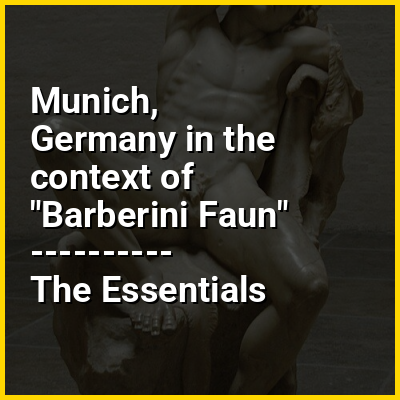
Munich is the capital and most populous city of Bavaria, Germany. As of 30 November 2024, its population was 1,604,384, making it the third-largest city in Germany after Berlin and Hamburg. Munich is the largest city in Germany that is not a state of its own, and it ranks as the 11th-largest city in the European Union. The metropolitan area has around 3 million inhabitants, and the broader Munich Metropolitan Region is home to about 6.2 million people. It is the third largest metropolitan region by GDP in the European Union. Munich is located on the river Isar north of the Alps. It is the seat of the Upper Bavarian administrative region. With 4,500 people per km, Munich is Germany's most densely populated municipality. It is also the second-largest city in the Bavarian dialect area after Vienna.
The first record of Munich dates to 1158. The city has played an important role in Bavarian and German history. During the Reformation, it remained a Catholic stronghold. Munich became the capital of the Kingdom of Bavaria in 1806 and developed as a centre for arts, architecture, culture, and science. The House of Wittelsbach ruled until 1918, when the German revolution of 1918–1919 ended their reign and saw the short-lived Bavarian Soviet Republic. In the 1920s, Munich became a centre of political movements, including the rise of the Nazi Party. The city was known as the "Capital of the Movement". During World War II, Munich was heavily bombed, but much of its historic architecture has since been restored. After the war, the city's population and economy grew rapidly. Munich hosted the 1972 Summer Olympics and the 1974 FIFA World Cup final.