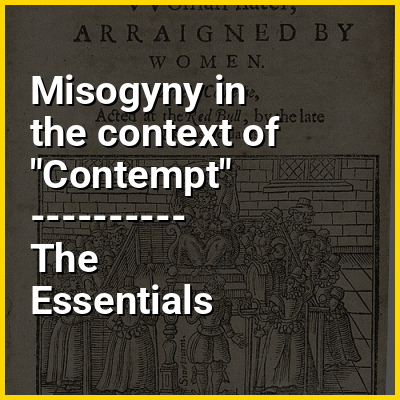
European witchcraft can be traced back to classical antiquity, when magic and religion were closely entwined. During the pagan era of ancient Rome, there were laws against harmful magic. After Christianization, the medieval Catholic Church began to see witchcraft (maleficium) as a blend of black magic and apostasy involving a pact with the Devil. During the early modern period, witch hunts became widespread in Europe, partly fueled by religious tensions, societal anxieties, and economic upheaval. European belief in witchcraft gradually dwindled during and after the Age of Enlightenment.
One text that shaped the witch-hunts was the Malleus Maleficarum, a 1486 treatise that provided a framework for identifying, prosecuting, and punishing witches. During the 16th and 17th centuries, there was a wave of witch trials across Europe, resulting in tens of thousands of executions and many more prosecutions. Usually, accusations of witchcraft were made by neighbours and followed from social tensions. Accusations were most often made against women, the elderly, and marginalized individuals. Women made accusations as often as men. The common people believed that magical healers (called 'cunning folk' or 'wise people') could undo bewitchment. These magical healers were sometimes denounced as harmful witches themselves, but seem to have made up a minority of the accused. This dark period of history reflects the confluence of superstition, fear, and authority, as well as the societal tendency of scapegoating. A feminist interpretation of the witch trials is that misogyny led to the association of women and malevolent witchcraft.