Jallianwala Bagh massacre in the context of Mau Mau rebellion


Jallianwala Bagh massacre in the context of Mau Mau rebellion

⭐ Core Definition: Jallianwala Bagh massacre

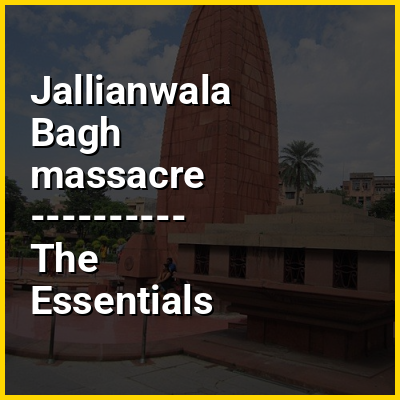
The Jallianwala Bagh massacre (IPA: [dʒəlɪjãːʋaːlaː baːɣ, baːɡ]), also known as the Amritsar massacre, took place on 13 April 1919. A large crowd had gathered at the Jallianwala Bagh in Amritsar, Punjab, British India, during the annual Baisakhi fair to protest against the Rowlatt Act and the arrest of pro-Indian independence activists Saifuddin Kitchlew and Satyapal. In response to the public gathering, Brigadier-General Reginald Dyer surrounded the people with Gurkha and Sikh infantrymen of the Indian Army. The Jallianwala Bagh could only be exited on one side, as its other three sides were enclosed by buildings. After blocking the exit with his troops, Dyer ordered them to shoot at the crowd, continuing to fire even as the protestors tried to flee. The troops kept on firing until their ammunition was low and they were ordered to stop. Estimates of those killed vary from 379 to 1,500 or more people; over 1,200 others were injured, of whom 192 sustained serious injury. Britain has never formally apologised for the massacre but expressed "deep regret" in 2019.

The massacre caused a re-evaluation by the Imperial British military of its role when confronted with civilians to use "minimal force whenever possible" (although the British Army was not directly involved in the massacre; the Indian Army was a separate organisation). However, in the light of later British military actions during the Mau Mau rebellion in the Kenya Colony, historian Huw Bennett has pointed out that this new policy was not always followed. The army was retrained with less violent tactics for crowd control.
↓ Menu
HINT:

In this Dossier

Jallianwala Bagh massacre in the context of Third Anglo-Afghan War

The Third Anglo-Afghan War was a short war which began on 3 May and ended on 8 August 1919. The new Amir of the Emirate of Afghanistan Amanullah Khan declared a Jihad against the British in the hope to proclaim full independence, as well as to strengthen his own legitimacy. Amanullah's forces invaded British India on three fronts taking advantage of the unrest in India, in an effort to seize the old Afghan provinces west of the River Indus.

Initial victories saw the Afghans invade across the border, defeating the British and occupying Bagh. The British retaliated, leading a counterattack that routed the Afghans. Conflict continued in Kurram, which saw the British overwhelmed. Taking their own initiative, the British seized Spin Boldak in the south, while an Afghan offensive in Thal was contained, with the British occupying Dacca in turn by the end of May. The Royal Air Force were also used in bombing and strafing attacks on the frontier tribes as well as targets within Afghanistan, including Kabul and Jalalabad. Although small in scale, it was a contributing force for Amanullah to call for an armistice in June.

View the full Wikipedia page for Third Anglo-Afghan War
↑ Return to Menu

Jallianwala Bagh massacre in the context of S. Srinivasa Iyengar

Seshadri Srinivasa Iyengar CIE (11 September 1874 – 19 May 1941), also seen as Sreenivasa Iyengar and Srinivasa Ayyangar, was an Indian lawyer, freedom-fighter and politician from the Indian National Congress. Iyengar was the Advocate-General of Madras Presidency from 1916 to 1920. He also served as a member of the bar council from 1912 to 1920, the law member of Madras Presidency from 1916 to 1920 and as the president of the madras province Swarajya Party faction of the Indian National Congress from 1923 to 1930. Srinivasa Iyengar was the son-in-law of renowned lawyer and first Indian Advocate-general of Madras, Sir Vembaukum Bhashyam Aiyangar. Iyengar's followers called him Lion of the South.

Iyengar was born in the Ramanathapuram district of Madras Presidency. He graduated in law and practised as a lawyer in the Madras High Court rising to become Advocate-General in 1916. He also served as a member of the bar council and was nominated as the law member of the Governor's executive council. He resigned his Advocate-General post, his seat in the Governor's executive council and returned his C. I. E. in 1920 in protest against the Jallianwala Bagh massacre and joined the Indian National Congress. He participated in the non-cooperation movement. However, in 1923, he broke away along with other leaders as Motilal Nehru and Chittaranjan Das due to differences with Mahatma Gandhi over participating in elections. The breakaway faction later formed the Swarajya Party. Iyengar served as the President of the Tamil Nadu Congress Committee and later, the Madras Province Swarajya Party and was the leader of the party when it refused to form the government in the province despite winning a majority in the 1926 elections. In later life, he established the Independence of India league and organised protests against the Simon Commission. He retired from politics due to differences with other Congress politicians over the goal of Dominion status. He briefly returned to politics in 1938. On 19 May 1941, Iyengar died in his house in Madras.

View the full Wikipedia page for S. Srinivasa Iyengar
↑ Return to Menu

Jallianwala Bagh massacre in the context of Jallianwala Bagh

Jallianwala Bagh (IPA: [dʒəlɪjãːʋaːlaː baːɣ, baːɡ]) is a historic garden and memorial of national importance close to the Golden Temple complex in Amritsar, Punjab, India, preserved in the memory of those wounded and killed in the Jallianwala Bagh Massacre that took place on the site on the festival of Baisakhi Day, 13 April 1919. The 7-acre (28,000 m) site houses a museum, gallery and several memorial structures. It is managed by the Jallianwala Bagh National Memorial Trust, and will be renovated between 2025 and 2027.

View the full Wikipedia page for Jallianwala Bagh
↑ Return to Menu

Jallianwala Bagh massacre in the context of Saifuddin Kitchlew

Dr. Saifuddin Kitchlew (15 January 1888 – 9 October 1963) was an Indian independence activist, barrister, politician and later a leader of the peace movement. A member of Indian National Congress, he first became Punjab Provincial Congress Committee (Punjab PCC) head and later the General Secretary of the All India Congress Committee in 1924. He is most remembered for the protests in Punjab after the implementation of Rowlatt Act in March 1919, after which on 10 April, he and another leader Satyapal, were secretly sent to Dharamsala. A public protest rally against their arrest and that of Gandhi, on 13 April 1919 at Jallianwala Bagh, Amritsar, led to the infamous Jallianwala Bagh massacre. He was also a founding member of Jamia Millia Islamia. He was awarded the Stalin Peace Prize (now known as Lenin Peace Prize) in 1952.

View the full Wikipedia page for Saifuddin Kitchlew
↑ Return to Menu

Jallianwala Bagh massacre in the context of Satyapal

Satyapal also known as Dr Satya Pal (11 May 1885 — 18 April 1954) was a physician and political leader in Punjab, British India, who was arrested along with Saifuddin Kitchlew on 10 April 1919, three days before the Jallianwala Bagh massacre.

View the full Wikipedia page for Satyapal
↑ Return to Menu

Jallianwala Bagh massacre in the context of Reginald Dyer

Colonel Reginald Edward Harry Dyer, CB (9 October 1864 – 23 July 1927) was a British military officer in the Bengal Army and later the newly constituted British Indian Army. His military career began in the regular British Army, but he soon transferred to the presidency armies of India.

As a temporary brigadier-general, he was responsible for the Jallianwala Bagh massacre that took place on 13 April 1919 in Amritsar (in the province of Punjab). He has been called "the Butcher of Amritsar", because of his order to fire on a large gathering of people. The official report stated that this resulted in the killing of at least 379 people and the injuring of over a thousand more. Some submissions to the official inquiry suggested a higher number of deaths. After the massacre, he served in the Third Anglo-Afghan war, where he lifted the siege at Thal and inflicted heavy casualties on Afghans.

View the full Wikipedia page for Reginald Dyer
↑ Return to Menu

Jallianwala Bagh massacre in the context of Noncooperation movement

The non-cooperation movement was a political campaign launched on 4 September 1920 by Mahatma Gandhi to have Indians revoke their cooperation from the British government, with the aim of persuading them to grant self-governance.

This came as result of the Indian National Congress (INC) withdrawing its support for British reforms following the Rowlatt Act of 18 March 1919 – which suspended the rights of political prisoners in sedition trials, and was seen as a "political awakening" by Indians and as a "threat" by the British—which led to the Jallianwala Bagh massacre of 13 April 1919.

View the full Wikipedia page for Noncooperation movement
↑ Return to Menu