Insecta in the context of "Hexapoda"

Play Trivia Questions online!

or

Skip to study material about Insecta in the context of "Hexapoda"

Ad spacer

⭐ Core Definition: Insecta

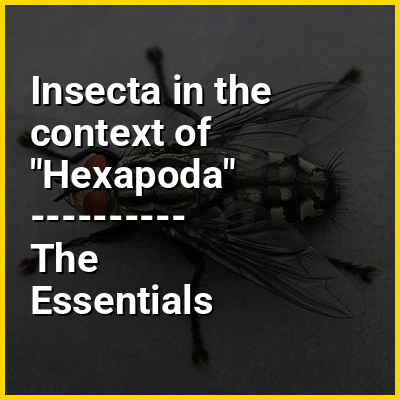
Insects (from Latin insectum) are hexapod invertebrates of the class Insecta. They are the largest group within the arthropod phylum. Insects have a chitinous exoskeleton, a three-part body (head, thorax and abdomen), three pairs of jointed legs, compound eyes, and a pair of antennae. Insects are the most diverse group of animals, with more than a million described species; they represent more than half of all animal species.

The insect nervous system consists of a brain and a ventral nerve cord. Most insects reproduce by laying eggs. Insects breathe air through a system of paired openings along their sides, connected to small tubes that take air directly to the tissues. The blood therefore does not carry oxygen; it is only partly contained in vessels, and some circulates in an open hemocoel. Insect vision is mainly through their compound eyes, with additional small ocelli. Many insects can hear, using tympanal organs, which may be on the legs or other parts of the body. Their sense of smell is via receptors, usually on the antennae and the mouthparts.
↓ Menu

>>>PUT SHARE BUTTONS HERE<<<

👉 Insecta in the context of Hexapoda

The subphylum Hexapoda (from Greek for 'six legs') or hexapods comprises the largest clade of arthropods and includes most of the extant arthropod species. It includes the crown group class Insecta (true insects), as well as the much smaller clade Entognatha, which includes three classes of wingless arthropods that were once considered insects: Collembola (springtails), Protura (coneheads) and Diplura (two-pronged bristletails). The insects and springtails are very abundant and are some of the most important pollinators, basal consumers, scavengers/detritivores and micropredators in terrestrial environments.

Hexapods are named for their most distinctive feature: a three-part body plan with a consolidated thorax and three pairs of legs. Most other arthropods have more than three pairs of legs. Most recent studies have recovered Hexapoda as a subgroup of Pancrustacea.

↓ Explore More Topics
In this Dossier

Insecta in the context of Zygentoma

Zygentoma are an order in the class Insecta, and consist of about 550 known species. The Zygentoma include the silverfishes or fishmoths, and the firebrats. A conspicuous feature of the order are the three long caudal filaments. The two lateral filaments are cerci, and the medial one is an epiproct or appendix dorsalis. In this they resemble the Archaeognatha, although the cerci of Zygentoma, unlike in the latter order, are nearly as long as the epiproct.

Until the late twentieth century the Zygentoma were regarded as a suborder of the Thysanura, until it was recognized that the order Thysanura was paraphyletic, thus raising the two suborders to the status of independent monophyletic orders, with Archaeognatha as sister group to the Dicondylia, including the Zygentoma.

↑ Return to Menu

Insecta in the context of Thysanura

Thysanura is the now deprecated name of what was, for over a century, recognised as an order in the class Insecta. The two constituent groups within the former order, the Archaeognatha (jumping bristletails) and the Zygentoma (silverfish and firebrats), share several characteristics, such as of having three long caudal filaments, the lateral ones being the cerci, while the one between (telson) is a medial cerciform appendage, specifically an epiproct. They are also both wingless, and have bodies covered with fine scales, rather like the scales of the practically unrelated Lepidoptera. In the late 20th century, it was recognized that the two suborders were not sister taxa, therefore Thysanura was paraphyletic, and the two suborders were each raised to the status of an independent monophyletic order, with Archaeognatha sister taxon to the Dicondylia, including the Zygentoma.

Although the group Thysanura is no longer recognized, the name still appears in some published material. Another name used to separate the two groups from winged insects is Apterygota.

↑ Return to Menu