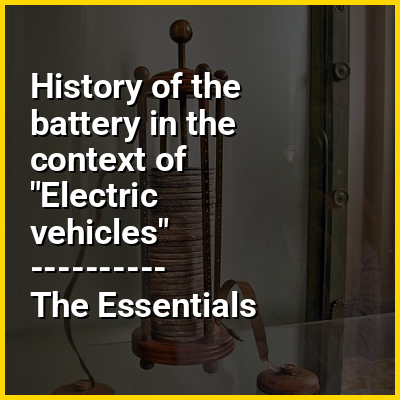
Batteries provided the main source of electricity before the development of electric generators and electrical grids around the end of the 19th century. Successive improvements in battery technology facilitated major electrical advances, from early scientific studies to the rise of telegraphs and telephones, eventually leading to portable computers, mobile phones, electric cars, and many other electrical devices.
Students and engineers developed several commercially important types of battery. "Wet cells" were open containers that held liquid electrolyte and metallic electrodes. When the electrodes were completely consumed, the wet cell was renewed by replacing the electrodes and electrolyte. Open containers are unsuitable for mobile or portable use. Wet cells were used commercially in the telegraph and telephone systems. Early electric cars used semi-sealed wet cells.