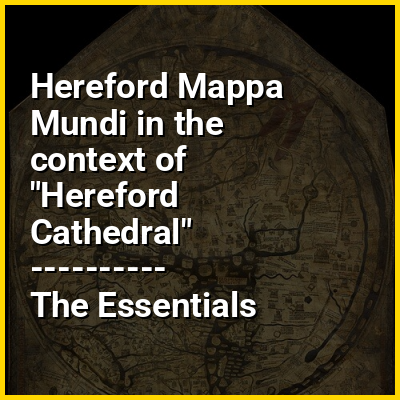
The Hereford Mappa Mundi (Latin: mappa mundi, map of the world) is the largest medieval map still known to exist, depicting the known world. It is a religious rather than literal depiction, featuring heaven, hell and the path to salvation. Dating from c. 1300 AD, the map is drawn in a form deriving from the T and O pattern. It is displayed at Hereford Cathedral in Hereford, England. The map was created as an intricate work of art rather than as a navigational tool. Sources for the information presented on the map include the Alexander tradition, medieval bestiaries and legends of monstrous races, as well as the Bible.
Although the evidence is circumstantial, recent work links the map with the promotion of the cult of Thomas de Cantilupe. Others link the map to a justification of the expulsion of Jewry from England. Potentially antisemitic images include a horned Moses and a depiction of Jews worshipping the Golden Calf in the form of a Saracen devil. The map may also reflect very patriarchal views of women as inherently sinful, including figures such as the wife of Lot being turned into a pillar of salt for gazing at the city of Sodom. Cantilupe was known for his dislike of Jews; in historian Debra Strickland's opinion he was regarded as misogynistic even by the standards of his own time.