
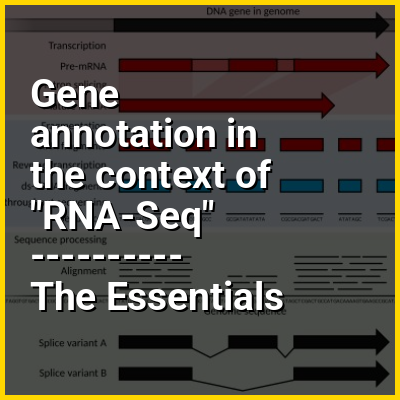
RNA-Seq (short for RNA sequencing) is a next-generation sequencing (NGS) technique used to quantify and identify RNA molecules in a biological sample, providing a snapshot of the transcriptome at a specific time. It enables transcriptome-wide analysis by sequencing cDNA derived from RNA. Modern workflows often incorporate pseudoalignment tools (such as Kallisto and Salmon) and cloud-based processing pipelines, improving speed, scalability, and reproducibility.
RNA-Seq facilitates the ability to look at alternative gene spliced transcripts, post-transcriptional modifications, gene fusion, mutations/SNPs and changes in gene expression over time, or differences in gene expression in different groups or treatments. In addition to mRNA transcripts, RNA-Seq can look at different populations of RNA to include total RNA, small RNA, such as miRNA, tRNA, and ribosomal profiling. RNA-Seq can also be used to determine exon/intron boundaries and verify or amend previously annotated 5' and 3' gene boundaries. Recent advances in RNA-Seq include single cell sequencing, bulk RNA sequencing, 3' mRNA-sequencing, in situ sequencing of fixed tissue, and native RNA molecule sequencing with single-molecule real-time sequencing. Other examples of emerging RNA-Seq applications due to the advancement of bioinformatics algorithms are copy number alteration, microbial contamination, transposable elements, cell type (deconvolution) and the presence of neoantigens.