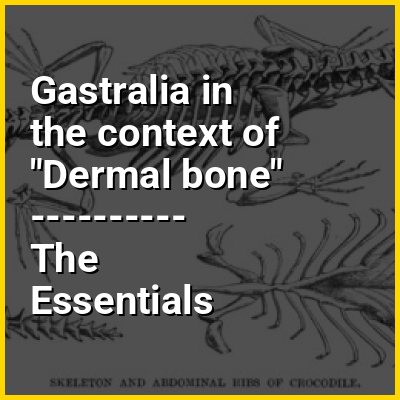
Gastralia (sg.: gastralium) are dermal bones found in the ventral body wall of modern crocodilians and tuatara, and many prehistoric tetrapods. They are found between the sternum and pelvis, and do not articulate with the vertebrae. In these reptiles, gastralia provide support for the abdomen and attachment sites for abdominal muscles.
The possession of gastralia may be ancestral for Tetrapoda and were possibly derived from the ventral scales found in animals like rhipidistians, labyrinthodonts, and Acanthostega, and may be related to ventral elements of turtle plastrons.Similar, but not homologous cartilagenous elements, are found in the ventral body walls of lizards and anurans. These structures have been referred to as inscriptional ribs, based on their alleged association with the inscriptiones tendinae (the tendons that form the six pack in humans). However, the terminology for these gastral-like structures remains confused. Both types, along with sternal ribs (ossified costal cartilages), have been referred to as abdominal ribs, a term with limited usefulness that should be avoided.Gastralia are also present in a variety of extinct animals, including theropod and prosauropod dinosaurs, pterosaurs, plesiosaurs, choristoderes and some primitive pelycosaurs. In dinosaurs, the elements articulate with each other in a sort of zig-zag along the midline and may have aided in respiration. Gastralia are known to be present in primitive ornithischian and sauropodomorph dinosaurs. However gastralia are only known from heterodontosaurid ornithschians, and gastralia are lost in eusauropodan sauropods.