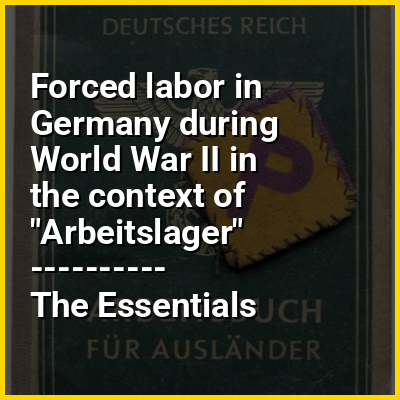
Forced labor in Germany during World War II in the context of "Arbeitslager"

Play Trivia Questions online!

or

Skip to study material about Forced labor in Germany during World War II in the context of "Arbeitslager"

Ad spacer

>>>PUT SHARE BUTTONS HERE<<<

👉 Forced labor in Germany during World War II in the context of Arbeitslager

Arbeitslager (German pronunciation: [ˈʔaʁbaɪtsˌlaːɡɐ]) is a German language word which means labor camp. Under Nazism, the German government (and its private-sector, Axis, and collaborator partners) used forced labor extensively, starting in the 1930s but most especially during World War II. Another term was Zwangsarbeitslager ("forced labor camp").

The Nazis operated several categories of Arbeitslager for different categories of inmates. The largest number of them held civilians forcibly abducted in the occupied countries (see Łapanka for Polish context) to provide labour in the German war industry, repair bombed railroads and bridges, or work on farms and in stone quarries.

↓ Explore More Topics
In this Dossier

Forced labor in Germany during World War II in the context of Service du travail obligatoire

The Service du travail obligatoire (STO; lit.'compulsory work service') was the forced enlistment and deportation of hundreds of thousands of French workers to Nazi Germany to work as forced labour for the German war effort during World War II.

The STO was created under laws and regulations of Vichy France, but it was used by Nazi Germany to compensate for its loss of manpower as it enlisted more and more soldiers for the Eastern Front. The German government promised that for every three French workers sent it would release one French prisoner of war (POW). Those requisitioned under the STO were accommodated in work camps on German soil.

↑ Return to Menu