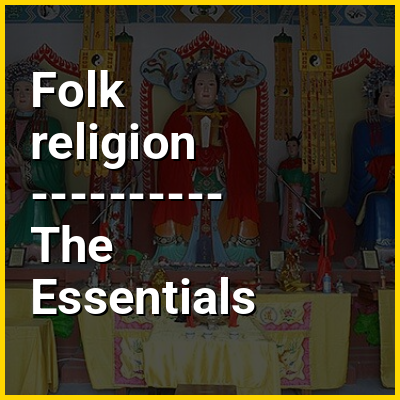
Folk religion, traditional religion, or vernacular religion comprises, according to religious studies and folkloristics, various forms and expressions of religion that are distinct from the doctrines and practices of organized religion. The precise definition of folk religion varies among scholars. Sometimes also termed popular belief, it consists of ethnic or regional religious customs under the umbrella of a religion; but outside doctrine and practices.
The term "folk religion" is generally held to encompass two related but separate subjects. The first is the religious dimension of folk culture (folklore), or the folk-cultural dimensions of religion. The second refers to the study of religious syncretism between two cultures with different stages of formal expression, such as the melange of African folk beliefs and Roman Catholicism that led to the development of Vodun and Santería, and similar mixtures of formal religions with folk cultures. In China, folk Protestantism had its origins with the Taiping Rebellion.