Fish hatchery in the context of "Maramec Spring"

Play Trivia Questions online!

or

Skip to study material about Fish hatchery in the context of "Maramec Spring"


⭐ Core Definition: Fish hatchery

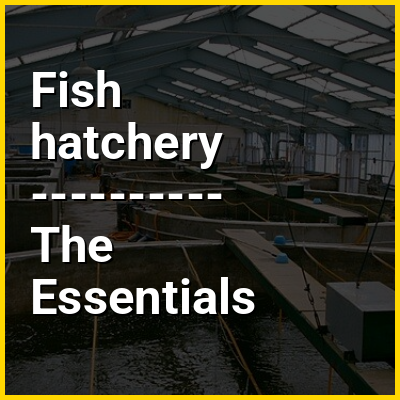
A fish hatchery is a place for artificial breeding, hatching, and rearing through the early life stages of animals—finfish and shellfish in particular. Hatcheries produce larval and juvenile fish, shellfish, and crustaceans, primarily to support the aquaculture industry where they are transferred to on-growing systems, such as fish farms, to reach harvest size. Some species that are commonly raised in hatcheries include Pacific oysters, shrimp, Indian prawns, salmon, tilapia and scallops.

The value of global aquaculture farming is estimated to be US$98.4 billion in 2008 with China significantly dominating the market; however, the value of aquaculture hatchery and nursery production has yet to be estimated. Additional hatchery production for small-scale domestic uses, which is particularly prevalent in South-East Asia or for conservation programmes, has also yet to be quantified.
↓ Menu

👉 Fish hatchery in the context of Maramec Spring

Maramec Spring is located on the Meramec River near St. James in the east-central Ozarks of Missouri. The fifth largest spring in the state with an average discharge of 153 cubic feet (4.3 m) of water per second, it is part of a Karst topographical area, with many springs and caves. The spring and 1800 acres (7.28 km²) are owned by the James Foundation, which maintains the area as a public park, donated by Lucy Wortham James. The Missouri Department of Conservation operates a trout hatchery and fishery at the spring. Ruins of the Maramec Iron Works are still visible at the site; its machinery was partly powered by the spring's waterflow. The spring was declared a National Natural Landmark in October 1971.

↓ Explore More Topics
In this Dossier

Fish hatchery in the context of Fish farming

Fish farming or pisciculture involves commercial breeding of fish, most often for food, in fish tanks or artificial enclosures such as fish ponds. It is a particular type of aquaculture, which is the controlled cultivation and harvesting of aquatic animals such as fish, crustaceans, molluscs and so on, in natural or pseudo-natural environments. A facility that releases juvenile fish into the wild for recreational fishing or to supplement a species' natural numbers is generally referred to as a fish hatchery. Worldwide, the most important fish species produced in fish farming are carp, catfish, salmon and tilapia.

Global demand is increasing for dietary fish protein, which has resulted in widespread overfishing in wild fisheries, resulting in significant decrease in fish stocks and even complete depletion in some regions. Fish farming allows establishment of artificial fish colonies that are provided with sufficient feeding, protection from natural predators and competitive threats, access to veterinarian service, and easier harvesting when needed, while being separate from and thus do not usually impact the sustainable yields of wild fish populations. While fish farming is practised worldwide, China alone provides 62% of the world's farmed fish production. As of 2016, more than 50% of seafood was produced by aquaculture. In the last three decades, aquaculture has been the main driver of the increase in fisheries and aquaculture production, with an average growth of 5.3 percent per year between 2000 and 2018, rising from 32.4 to 82.1 million tonnes.

↑ Return to Menu

Fish hatchery in the context of Fish stocking

Fish stocking is the practice of releasing fish that are artificially raised in a hatchery into a natural body of water (river, lake, or ocean), to supplement existing wild populations or to create a new population where previously none exists. Stocking may be done for the benefit of commercial, recreational or tribal heritage fishing, but may also be done for ecological conservation to restore or increase the population of threatened/endangered fish species that is pressured by prior overfishing, habitat destruction, and/or competition from invasive species.

Fish stocking may be conducted by governmental fisheries management agencies, non-profit organizations, and voluntary associations in public waters, or by for-profit NGOs, clubs and commercial enterprises in privately owned waters. When in public waters, fish stocking creates a common-pool resource which is rivalrous in nature but non-excludable. Thus, on public grounds, all can enjoy the benefits of fishing so long as fish continue to be stocked.

↑ Return to Menu

Fish hatchery in the context of Raceway (aquaculture)

A raceway, also known as a flow-through system, is an artificial channel used in aquaculture to culture aquatic organisms. Raceway systems are among the earliest methods used for inland aquaculture. A raceway usually consists of rectangular basins or canals constructed of concrete and equipped with an inlet and outlet. A continuous water flow-through is maintained to provide the required level of water quality, which allows animals to be cultured at higher densities within the raceway.

Freshwater species such as trout, catfish and tilapia are commonly cultured in raceways. Raceways are also used for some marine species which need a constant water flow, such as juvenile salmon, brackish water sea bass and sea bream and marine invertebrates such as abalone.

↑ Return to Menu