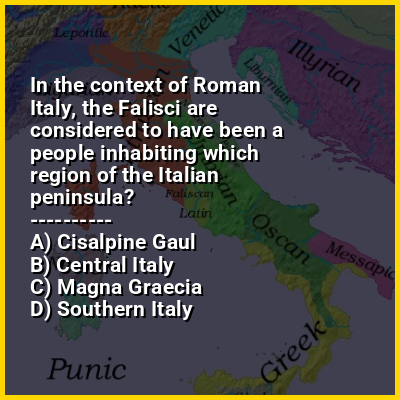
Roman Italy is the period of ancient Italian history going from the founding and rise of Rome to the decline and fall of the Western Roman Empire; the Latin name of the Italian peninsula in this period was Italia (continued to be used in the Italian language). According to Roman mythology, Italy was the ancestral home of Aeneas, being the homeland of the Trojans progenitor, Dardanus; Aeneas, instructed by Jupiter, moved to Italy after the fall of Troy, and his descendants, Romulus and Remus, were the founders of Rome. Aside from the legendary accounts, Rome was an Italic city-state that changed its form of government from Kingdom (ruled, between 753 BC and 509 BC, by seven kings) to Republic, and then grew within the context of a peninsula dominated by the Gauls, Ligures, Veneti, Camunni and Histri in the North; the Etruscans, Latins, Falisci, Picentes, Umbri and Sabines in the Centre; and the Iapygian tribes (such as the Messapians), the Oscan tribes (such as the Samnites) and Greek colonies in the South.
The consolidation of Italy into a single entity occurred during the Roman expansion in the peninsula, when Rome formed a permanent association with most of other the local tribes and cities; and Italy's inhabitants included Roman citizens, communities with Latin Rights, and socii. The strength of the Italian confederacy was a crucial factor in the rise of Rome, starting with the Punic and Macedonian wars between the 3rd and 2nd century BC. As Roman provinces were being established throughout the Mediterranean, Italy maintained a special status with political, religious and financial privileges. In Italy, Roman magistrates exercised the imperium domi (police power), as an alternative to the imperium militiae (military power) exercised in the provinces.