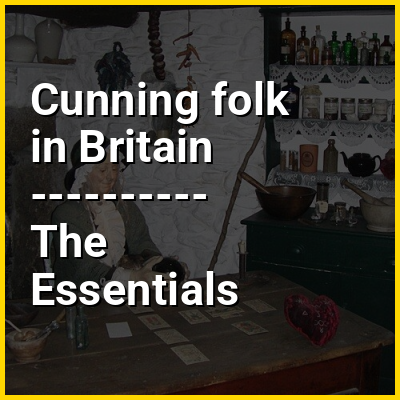
The cunning folk were professional or semi-professional practitioners of magic in Europe from the medieval period through the early 20th century. In Britain they were known by a variety of names in different regions of the country, including wise men and wise women, pellars, wizards, dyn hysbys, and sometimes white witches.
These people practised folk and low magic – although often combined with elements of "high" or ceremonial magic – which they learned through the study of grimoires. Primarily using spells and charms as a part of their profession, they were most commonly employed to use their magic to combat malevolent witchcraft, to locate criminals, missing persons or stolen property, for fortune telling, for healing, for treasure hunting and to influence people to fall in love. Belonging "to the world of popular belief and custom", the cunning folk's magic has been defined as being "concerned not with the mysteries of the universe and the empowerment of the magus [as ceremonial magic usually is], so much as with practical remedies for specific problems." However, other historians have noted that in some cases, there was apparently an "experimental or 'spiritual' dimension" to their magical practices, something which was possibly shamanic in nature.