Coumarin in the context of "Phenylpropanoid"

Play Trivia Questions online!

or

Skip to study material about Coumarin in the context of "Phenylpropanoid"

Ad spacer

⭐ Core Definition: Coumarin

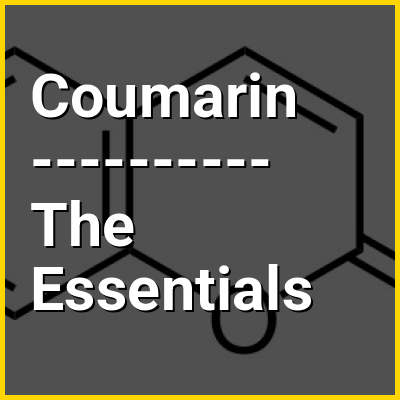
Coumarin (/ˈkmərɪn/) or 2H-chromen-2-one is an aromatic organic chemical compound with formula C9H6O2. Its molecule can be described as a benzene molecule with two adjacent hydrogen atoms replaced by an unsaturated lactone ring −(CH)=(CH)−(C=O)−O−, forming a second six-membered heterocycle that shares two carbons with the benzene ring. It belongs to the benzopyrone chemical class and is considered a lactone.

Coumarin is a colorless crystalline solid with a sweet odor resembling the scent of vanilla and a bitter taste. It is found in many plants, where it may serve as a chemical defense against predators. While coumarin is not an anticoagulant, its 3-alkyl-4-hydroxy derivatives, such as the fungal metabolite dicoumarol, inhibit synthesis of vitamin K, a key component in blood clotting. A related compound, the prescription drug anticoagulant warfarin, is used to inhibit formation of blood clots, deep vein thrombosis, and pulmonary embolism.
↓ Menu

>>>PUT SHARE BUTTONS HERE<<<

👉 Coumarin in the context of Phenylpropanoid

The phenylpropanoids are a diverse family of organic compounds that are biosynthesized by plants from the amino acids phenylalanine and tyrosine in the shikimic acid pathway. Their name is derived from the six-carbon, aromatic phenyl group and the three-carbon propene tail of coumaric acid, which is the central intermediate in phenylpropanoid biosynthesis. From 4-coumaroyl-CoA emanates the biosynthesis of myriad natural products including lignols (precursors to lignin and lignocellulose), flavonoids, isoflavonoids, coumarins, aurones, stilbenes, catechin, and phenylpropanoids. The coumaroyl component is produced from cinnamic acid.

Phenylpropanoids are found throughout the plant kingdom, where they serve as essential components of a number of structural polymers, provide protection from ultraviolet light, defend against herbivores and pathogens, and also mediate plant-pollinator interactions as floral pigments and scent compounds.

↓ Explore More Topics
In this Dossier

Coumarin in the context of Cherry blossom

The cherry blossom, or sakura, is the flower of trees in Prunus subgenus Cerasus. Sakura usually refers to flowers of ornamental cherry trees, such as cultivars of Prunus serrulata, not trees grown for their fruit (although these also have blossoms). Cherry blossoms have been described as having a vanilla-like smell, which is mainly attributed to coumarin.

Wild species of cherry tree are widely distributed, mainly in the Northern Hemisphere. They are common in East Asia, especially in Japan, where they have been cultivated, producing many varieties.

↑ Return to Menu

Coumarin in the context of Perfume

Perfume (UK: /ˈpɜːfjm/, US: /pərˈfjm/ ) is a mixture of fragrant essential oils or aroma compounds (fragrances), fixatives and solvents, usually in liquid form, used to give the human body, animals, food, objects, and living-spaces an agreeable scent. Perfumes can be defined as substances that emit and diffuse a pleasant and fragrant odor. They consist of artificial mixtures of aromatic chemicals and essential oils. The 1939 Nobel Laureate for Chemistry, Leopold Ružička stated in 1945 that "right from the earliest days of scientific chemistry up to the present time, perfumes have substantially contributed to the development of organic chemistry as regards methods, systematic classification, and theory."

Ancient texts and archaeological excavations show the use of perfumes in some of the earliest human civilizations. Modern perfumery began in the late 19th century with the commercial synthesis of aroma compounds such as vanillin and coumarin, which allowed for the composition of perfumes with smells previously unattainable solely from natural aromatics.

↑ Return to Menu

Coumarin in the context of Benzopyrone

Benzopyrone may refer to either of two ketone derivatives of benzopyran which constitute the core skeleton of many flavonoid compounds:

Certain simple benzopyrones have clinical medical value as an edema modifiers. Coumarin and other benzopyrones, such as 5,6 benzopyrone, 1,2 benzopyrone, diosmin and others are known to stimulate macrophages to degrade extracellular albumin, allowing faster resorption of edematous fluids.

↑ Return to Menu

Coumarin in the context of Dicoumarol

Dicoumarol (INN) or dicumarol (USAN) is a naturally occurring anticoagulant drug that depletes stores of vitamin K (similar to warfarin, a drug that dicoumarol inspired). It is also used in biochemical experiments as an inhibitor of reductases.

Dicoumarol is a natural chemical substance of combined plant and fungal origin. It is a derivative of coumarin, a bitter-tasting but sweet-smelling substance made by plants that does not itself affect coagulation, but which is (classically) transformed in mouldy feeds or silages by a number of species of fungi, into active dicoumarol. Dicoumarol does affect coagulation, and was discovered in mouldy wet sweet-clover hay, as the cause of a naturally occurring bleeding disease in cattle. See warfarin for a more detailed discovery history.

↑ Return to Menu