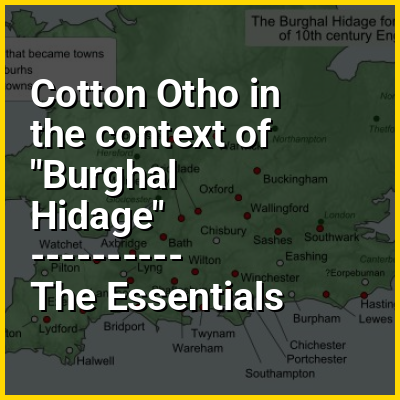
The Burghal Hidage (/ˈbɜːrɡəl ˈhaɪdɪdʒ/) is an Anglo-Saxon document providing a list of over thirty fortified places (burhs), the majority being in the ancient Kingdom of Wessex, and the taxes (recorded as numbers of hides) assigned for their maintenance. The document, so named by Frederic William Maitland in 1897, survives in two versions of medieval and early modern date. Version A, Cotton Otho B.xi was badly damaged in a fire at Ashburnham House in Westminster in 1731, but the body of the text survives in a transcript made by the antiquary Laurence Nowell in 1562. Version B survives as a composite part of seven further manuscripts, usually given the title De numero hydarum Anglie in Britannia. There are several discrepancies in the lists recorded in the two versions of the document: Version A includes references to Burpham, Wareham and Bridport but omits Shaftesbury and Barnstaple which are listed in Version B. Version B also names Worcester and Warwick in an appended list.
The Burghal Hidage offers a detailed picture of the network of burhs that Alfred the Great designed to defend his kingdom from the predations of Viking invaders.