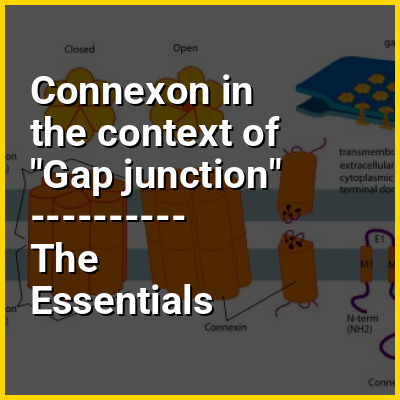
Gap junctions are membrane channels between adjacent cells that allow the direct exchange of cytoplasmic substances, such as small molecules, substrates, and metabolites. Gap junctions were first described as close appositions alongside tight junctions, but later electron microscopy studies saw them renamed as gap junctions to distinguished them from tight junctions. They bridge a 2-4 nm gap between cell membranes.
Gap junctions use protein complexes known as connexons, composed of connexin proteins to connect one cell to another. Gap junction proteins include the more than 26 types of connexin, as well as at least 12 non-connexin components that make up the gap junction complex or nexus, including the tight junction protein ZO-1—a protein that holds membrane content together and adds structural clarity to a cell, sodium channels, and aquaporin.