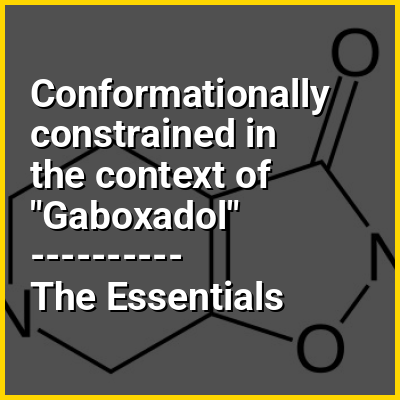
Gaboxadol, also known as 4,5,6,7-tetrahydroisoxazolo(5,4-c)pyridin-3-ol (THIP) and by its former developmental code names Lu-2-030, MK-0928, and OV101, is a GABAA receptor agonist related to muscimol which was investigated for the treatment of insomnia and other conditions like Angelman syndrome but was never marketed. At lower doses, the drug has sedative and hypnotic effects, and at higher doses, it produces hallucinogenic effects. It is taken orally.
The drug acts as a potent and selective partial agonist of the GABAA receptor, the major signaling receptor of the inhibitory endogenous neurotransmitter γ-aminobutyric acid (GABA). However, it acts as a preferential supra-maximal agonist at extrasynaptic δ subunit-containing GABAA receptors. In contrast to GABAA receptor positive allosteric modulators like benzodiazepines and Z drugs, gaboxadol is an orthosteric agonist of the GABAA receptor, acting on the same site as GABA rather than at an allosteric regulatory site. As a result, gaboxadol has differing effects from benzodiazepines and related drugs. Gaboxadol is a conformationally constrained synthetic analogue of GABA and of muscimol, an alkaloid and hallucinogen found in Amanita muscaria (fly agaric) mushrooms. It has greatly improved drug-like properties compared to these compounds.