Cayo District in the context of "San Ignacio, Belize"

Play Trivia Questions online!

or

Skip to study material about Cayo District in the context of "San Ignacio, Belize"


⭐ Core Definition: Cayo District

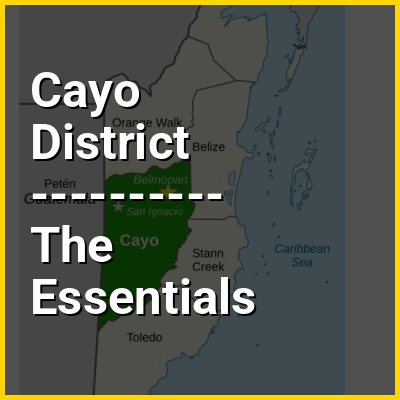
Cayo is a district located in the west part of Belize, and it contains the capital, Belmopan. It is the most extensive, second-most populous and third-most densely populated of the six districts of Belize. The district's capital is the town of San Ignacio.

↓ Menu

👉 Cayo District in the context of San Ignacio, Belize

San Ignacio and Santa Elena are towns in western Belize. San Ignacio serves as the cultural-economic hub of Cayo District. It got its start from mahogany and chicle production during British colonisation. Over time it attracted people from the surrounding areas, which led to the diverse population of the town today. San Ignacio is the second largest settlement in Cayo District after the capital, Belmopan.

↓ Explore More Topics
In this Dossier

Cayo District in the context of Districts of Belize

Belize is divided into six districts: Belize, Cayo, Corozal, Orange Walk, Stann Creek and Toledo.

↑ Return to Menu

Cayo District in the context of Belmopan

Belmopan (/ˌbɛlmˈpɑːn/) is the capital city of Belize. Its population in 2022 was 20,754. Belmopan is the smallest capital city in the continental Americas (by population) and the second-largest settlement in Belize, behind the former capital Belize City. Founded as a planned community in 1970, it is one of the newest national capital cities in the world. Since 2000, Belmopan has been one of two settlements in Belize to hold official city status, along with Belize City.

Belmopan is located in Cayo District at an altitude of 76 metres (249 feet) above sea level. Belmopan was constructed just to the east of the Belize River, 80 km (50 mi) inland from the former capital, the port of Belize City, after that city's near destruction by Hurricane Hattie in 1961. The government was moved to Belmopan in 1970. Its National Assembly Building is designed to resemble a Pre-Columbian Maya temple.

↑ Return to Menu