Carminic acid in the context of "Animal product"

Play Trivia Questions online!

or

Skip to study material about Carminic acid in the context of "Animal product"

Ad spacer

⭐ Core Definition: Carminic acid

Carminic acid (C22H20O13) is a red glucosidal hydroxyanthrapurin that occurs naturally in some scale insects, such as the cochineal, Armenian cochineal, and Polish cochineal. The insects produce the acid as a deterrent to predators. An aluminum salt of carminic acid is the coloring agent in carmine, a pigment. Natives of Peru had been producing cochineal dyes for textiles since at least 700 CE. Synonyms are C.I. 75470 and C.I. Natural Red 4.

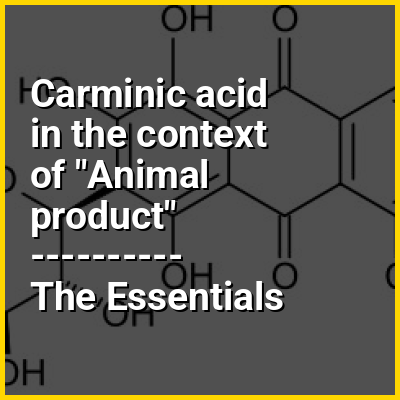
The chemical structure of carminic acid consists of a core anthraquinone structure linked to a glucose sugar unit. Carminic acid was first synthesized in the laboratory by organic chemists in 1991. In 2018, researchers genetically engineered the microbe Aspergillus nidulans to produce carminic acid.
↓ Menu

>>>PUT SHARE BUTTONS HERE<<<

👉 Carminic acid in the context of Animal product

An animal product is any material derived from the body of a non-human animal or their excretions. Examples are meat, fat, blood, milk, eggs, honey, and lesser known products, such as isinglass, rennet, and cochineal.

The word animals includes all species in the biological kingdom Animalia, except humans. This includes, for example, tetrapods, arthropods, and mollusks. Generally, products made from decomposed animals, such as petroleum, or crops grown in soil fertilized with animal remains or manure are not characterized as animal products. Products sourced from humans (e.g. breast milk) are not typically classified as animal products.

↓ Explore More Topics
In this Dossier

Carminic acid in the context of Cochineal

The cochineal (/ˌkɒɪˈnl, ˈkɒɪnl/ KOTCH-in-EEL, -⁠eel, US also /ˌkɪˈnl, ˈkɪnl/ KOH-chin-EEL, -⁠eel; Dactylopius coccus) is a scale insect in the suborder Sternorrhyncha, from which the natural dye carmine is derived. A primarily sessile parasite native to tropical and subtropical South America through North America (Mexico and the Southwest United States), this insect lives on cacti in the genus Opuntia, feeding on plant moisture and nutrients. The insects are found on the pads of prickly pear cacti, collected by brushing them off the plants, and dried.

The insect produces carminic acid that deters predation by other insects. Carminic acid, typically 17–24% of dried insects' weight, can be extracted from the body and eggs, then mixed with aluminium or calcium salts to make carmine dye, also known as cochineal. Today, carmine is primarily used as a colorant in food and in lipstick (E120 or Natural Red 4).

↑ Return to Menu

Carminic acid in the context of Carmine

Carmine (/ˈkɑːrmən, ˈkɑːrmn/) – also called cochineal (when it is extracted from the cochineal insect), cochineal extract, crimson lake, or carmine lake – is a pigment of a bright-red color obtained from the aluminium complex derived from carminic acid. Specific code names for the pigment include natural red 4, C.I. 75470, or E120. Carmine is also a general term for a particularly deep-red color.

↑ Return to Menu