Cantons of the Federation of Bosnia and Herzegovina in the context of "Una-Sana Canton"

Play Trivia Questions online!

or

Skip to study material about Cantons of the Federation of Bosnia and Herzegovina in the context of "Una-Sana Canton"

Ad spacer

⭐ Core Definition: Cantons of the Federation of Bosnia and Herzegovina

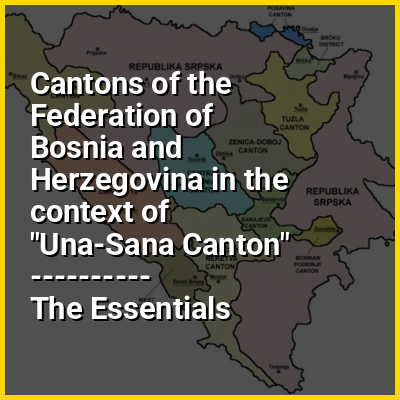
The ten cantons of the Federation of Bosnia and Herzegovina, one of the two political entities of Bosnia and Herzegovina, are its federated states with a high level of autonomy. The cantons were established by the Law on Federal Units (Cantons) on 12 June 1996 as a result of the Washington Agreement of 1994 between the representatives of the Bosnian Croats and Bosniaks.

Five of the cantons have a Bosniak majority: Una-Sana Canton, Tuzla Canton, Zenica-Doboj Canton, Bosnian-Podrinje Canton Goražde and Sarajevo Canton; three have a Croat majority: Posavina Canton, West Herzegovina Canton and Canton 10, and two cantons are regarded as ethnically mixed: Central Bosnia Canton and Herzegovina-Neretva Canton. The most populous canton is Tuzla Canton, while Canton 10 is the largest by geographical area.
↓ Menu

>>>PUT SHARE BUTTONS HERE<<<

👉 Cantons of the Federation of Bosnia and Herzegovina in the context of Una-Sana Canton

The Una-Sana Canton (Bosnian: Unsko-sanski kanton; Croatian: Unsko-sanska županija; Serbian: Унско-сански кантон, romanizedUnsko-sanski kanton) is a federated state and one of the ten cantons of the Federation of Bosnia and Herzegovina in Bosnia and Herzegovina. It is located in the northwest of the country, a region known as Bosanska Krajina, and has been named after the rivers Una and Sana. Its cantonal seat is the city of Bihać.

The canton is bordered by Republika Srpska from the east, the Canton 10 from the southeast, and Croatia from the south, west, and north. The majority of the population is Bosniak (90%).

↓ Explore More Topics
In this Dossier

Cantons of the Federation of Bosnia and Herzegovina in the context of Federation of Bosnia and Herzegovina

The Federation of Bosnia and Herzegovina (Serbo-Croatian: Федерација Босне и Херцеговине, romanizedFederacija Bosne i Hercegovine; pronounced [federǎːtsija bôsneː i xěrtseɡoʋineː] ) is one of the two entities of Bosnia and Herzegovina, the other being Republika Srpska. The Federation of Bosnia and Herzegovina consists of ten autonomous cantons with their governments and legislatures.

The Federation was created by the 1994 Washington Agreement, which ended the Croat–Bosniak War within the Bosnian War, and established a constituent assembly that continued its work until October 1996. The Federation has a capital, government, president, parliament, customs and police departments and two postal systems. It occupies about half of the land of Bosnia and Herzegovina. From 1996 until 2005 it had its own army, the Army of the Federation of Bosnia and Herzegovina, later merged in the Armed Forces of Bosnia and Herzegovina. The capital and largest city is Sarajevo with 275,524 inhabitants.

↑ Return to Menu

Cantons of the Federation of Bosnia and Herzegovina in the context of Herzegovina-Neretva Canton

The Herzegovina-Neretva Canton (Croatian: Hercegovačko-neretvanska županija; Bosnian: Hercegovačko-neretvanski kanton; Serbian: Херцеговачко-неретвански кантон, romanizedHercegovačko-neretvanski kanton) is a federated state and one of ten cantons of the Federation of Bosnia and Herzegovina in Bosnia and Herzegovina.

The canton mainly comprises the Neretva river valley area and parts of Herzegovina west of Mostar, its administrative centre. It is one of the four cantons in the country with a Croatian majority (53.29%). However, in the case of this territory, it is more ethnically divided and is considered to have a mixed population.

↑ Return to Menu

Cantons of the Federation of Bosnia and Herzegovina in the context of Sarajevo Canton

The Sarajevo Canton (Bosnian: Kanton Sarajevo; Croatian: Sarajevska županija; Serbian: Сарајевски кантон) is a federated state and one of the ten cantons of the Federation of Bosnia and Herzegovina in Bosnia and Herzegovina. Its cantonal seat is the city of Sarajevo, also the capital city of Bosnia and Herzegovina.

The canton is bordered by Republika Srpska to the north and east, Bosnian-Podrinje Canton Goražde to the southeast, Herzegovina-Neretva Canton to the south and southwest, and Central Bosnia Canton to the west.

↑ Return to Menu

Cantons of the Federation of Bosnia and Herzegovina in the context of Central Bosnia Canton

The Central Bosnia Canton (Bosnian: Srednjobosanski kanton/Средњобосански кантон, Croatian: Županija Središnja Bosna; Serbian: Средњобосански кантон, romanizedSrednjobosanski kanton) is a federated state and one of ten cantons of the Federation of Bosnia and Herzegovina in Bosnia and Herzegovina.

The most populous settlement in the region is Bugojno, followed by Travnik and Novi Travnik.

↑ Return to Menu

Cantons of the Federation of Bosnia and Herzegovina in the context of Zenica-Doboj Canton

The Zenica-Doboj Canton (Bosnian: Zeničko-dobojski kanton; Croatian: Zeničko-dobojska županija; Serbian: Зеничко-добојски кантон) is a federated state and one of ten cantons in Bosnia and Herzegovina. It is part of the entity of Federation of Bosnia and Herzegovina. The seat and largest city is Zenica.

Spread over an area of 3,415 km (1,319 sq mi), the canton roughly occupies the central areas of the country. With a population of over 0.35 million inhabitants in 2013, it is the third most populous canton in the entity.

↑ Return to Menu