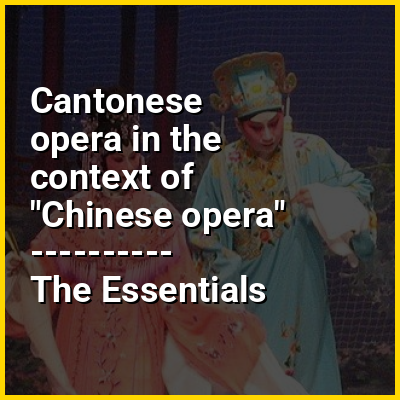
Traditional Chinese opera (traditional Chinese: 戲曲; simplified Chinese: 戏曲; pinyin: xìqǔ; Jyutping: hei3 kuk1), or Xiqu, is a form of musical theatre in China with roots going back to the early periods in China. It is an amalgamation of various art forms that existed in ancient China, and evolved gradually over more than a thousand years, reaching its mature form in the 13th century, during the Song dynasty (960–1279 AD). Early forms of Chinese theater are simple; however, over time, various art forms such as music, song and dance, martial arts, acrobatics, costume and make-up art, as well as literary art forms were incorporated to form traditional Chinese opera. Performers had to practice for many years to gain an understanding of the roles. Exaggerated features and colors made it easier for the audience to identify the roles portrayed by the performers.
There are over a hundred regional branches of traditional Chinese opera today. In the 20th century, the Peking opera emerged in popularity and has come to be known as the "national theatre" of China, but other genres like Yue opera, Cantonese opera, Yu opera, kunqu, qinqiang, Huangmei opera, pingju, and Sichuan opera are also performed regularly before dedicated fans. Their differences are mainly found in the music and topolect; the stories are often shared and borrowed. With few exceptions (such as revolutionary operas and to some extent Shanghai operas) the vast majority of Chinese operas (including Taiwanese operas) are set in China before the 17th century, whether they are traditional or newly written.