Beijing Subway in the context of Guangyang District


Beijing Subway in the context of Guangyang District

⭐ Core Definition: Beijing Subway

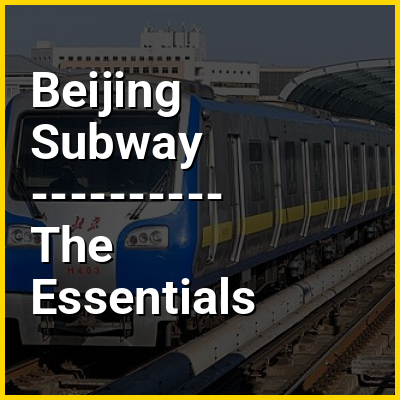
The Beijing Subway is the rapid transit system of Beijing Municipality that consists of 29 lines including 24 rapid transit lines, two airport rail links, one maglev line and two light rail tram lines, and 524 stations. The rail network extends 879 km (546 mi) across 12 urban and suburban districts of Beijing and into one district of Langfang in neighboring Hebei province. In December 2023, Beijing Subway became the world's longest metro system by route length, surpassing the Shanghai Metro. With 3.8484 billion trips delivered in 2018 (10.544 million trips per day) and single-day ridership record of 13.7538 million set on July 12, 2019, the Beijing Subway was the world's busiest metro system in the years immediately prior to the outbreak of the COVID-19 pandemic.

The Beijing Subway opened in 1971 and is the oldest metro system in China and on the mainland of East Asia. Before the system began its rapid expansion in 2002, the subway had only two lines. The existing network still cannot adequately meet the city's mass transit needs. Beijing Subway's extensive expansion plans call for 998.5 km (620.4 mi) of lines serving a projected 18.5 million trips every day when Phase 2 Construction Plan finished (around 2025). The most recent expansion came into effect on December 15, 2024, with the openings of Line 3 and Line 12 and an extension of the Changping line.
↓ Menu
HINT:

In this Dossier

Beijing Subway in the context of New York City Subway

The New York City Subway is a rapid transit system in New York City, serving four of the city's five boroughs: Manhattan, Brooklyn, Queens, and the Bronx. It is owned by the government of New York City and leased to the New York City Transit Authority, an affiliate agency of the state-run Metropolitan Transportation Authority (MTA). Opened on October 27, 1904, the New York City Subway is one of the world's oldest public transit systems, one of the most-used, and the one with the second-most stations after the Beijing Subway, with 472 stations in operation (423, if stations connected by transfers are counted as single stations).

The system has operated 24/7 service every day of the year throughout most of its history, barring emergencies and disasters. By annual ridership, the New York City Subway is the busiest rapid transit system in both the Western Hemisphere and the Western world, as well as the ninth-busiest rapid transit rail system in the world. The subway carried 2,040,132,000 unlinked, non-unique riders in 2024. Daily ridership has been calculated since 1985; the record, over 6.2 million, was set on October 29, 2015.

View the full Wikipedia page for New York City Subway
↑ Return to Menu

Beijing Subway in the context of Beijing

Beijing, previously romanized as Peking, is the capital city of China. With more than 22 million residents, it is the world's most populous national capital city, as well as China's second largest city by urban area, after Shanghai. It is located in Northern China, and is governed as a municipality under the direct administration of the State Council with 16 urban, suburban, and rural districts. Beijing is mostly surrounded by Hebei Province and neighbors Tianjin to the southeast; together, the three divisions form the Jing-Jin-Ji cluster.

Beijing is a global city and one of the world's leading centres for culture, diplomacy, politics, finance, business and economics, education, research, language, tourism, media, sport, science and technology, transportation, and art. It is home to the headquarters of most of China's largest state-owned companies and houses the largest number of Fortune Global 500 companies in the world, as well as the world's four biggest financial institutions by total assets. It is also a major hub for the national highway, expressway, railway, and high-speed rail networks. For a decade before the COVID-19 pandemic, Beijing Capital International Airport was Asia's busiest airport (2009–2019) and the second busiest airport in the world (2010–2019). In 2020, the Beijing subway was the fourth busiest and second longest in the world. Beijing Daxing International Airport, Beijing's second international airport, is the largest single-structure airport terminal in the world. The city has hosted numerous international and national sporting events, the most notable being the 2008 Summer Olympics and 2008 Summer Paralympics Games. In 2022, Beijing became the first city ever to host both the Summer and Winter Olympics, and also the Summer and Winter Paralympics.

View the full Wikipedia page for Beijing
↑ Return to Menu

Beijing Subway in the context of List of metro systems

This list of metro systems includes electrified rapid transit train systems worldwide. In some parts of the world, metro systems are referred to as subways, undergrounds, tubes, mass rapid transit (MRT), metrô or U-Bahn. As of 6 October 2025, 205 cities in 65 countries operate 920 metro lines.

The London Underground first opened as an underground railway in 1863 and its first electrified underground line, the City and South London Railway, opened in 1890, making it the world's first deep-level electric metro system. The Budapest Millennium Underground Railway, which opened in 1896, was the world's first electric underground railway specifically designed for urban transportation and is still in operation today. The Beijing Subway is both the world's longest metro network at 879 kilometres (546 mi) and the busiest with the highest annual ridership reaching approximately 2.83 billion passenger trips. The Beijing Subway has the greatest number of stations, with 424. As of 2024, the country with the most metro systems is China, with 54 in operation, including 11 of the 12 longest networks in the world.

View the full Wikipedia page for List of metro systems
↑ Return to Menu

Beijing Subway in the context of Line 10, Beijing Subway

Line 10 of the Beijing Subway (Chinese: 北京地铁10号线; pinyin: běijīng dìtiě shíhào xiàn) is the second loop line in Beijing's rapid transit network as well as the second longest and most widely used line. The line is 57.024 km (35.433 mi) in length, and runs entirely underground through Haidian, Chaoyang and Fengtai Districts, either directly underneath or just beyond the 3rd Ring Road. The Line 10 loop is situated between 2 and 6 kilometres (1.243 and 3.728 mi) outside the Line 2 loop, and intersects with every subways line through the city centre, with 24 transfer stations and 45 stations in all. The line's color is capri.

Upon completion in May 2013, it held the record as the world's longest rapid transit loop line, an accolade it held until March 2023. It remains one of the longest entirely underground subway lines in the world, requiring 104 minutes to complete one full journey in either direction.

View the full Wikipedia page for Line 10, Beijing Subway
↑ Return to Menu

Beijing Subway in the context of Line 13, Beijing Subway

Line 13 of the Beijing Subway (Chinese: 北京地铁13号线; pinyin: běijīng dìtiě shísānhào xiàn) is a metro line that serves the northern suburbs of Beijing. On a map, Line 13's route is shaped like an inverted U that arcs north of the city and connects residential suburbs in Haidian, Changping, and Chaoyang Districts with the 2nd Ring Road and Line 2 at Xizhimen and Dongzhimen. With the exception of Dongzhimen and a tunnel between Xi'erqi and Longze, all of Line 13's tracks and stations are located on the surface or elevated above ground. The line is 40.85 km (25.38 mi) and 16 of its 17 stations are on the surface. Line 13's color is yellow. During rush hour, the section between Xizhimen and Wudaokou Stations was reported in 2013 to be the second most congested section in the Beijing subway network, operating at 130% capacity.

View the full Wikipedia page for Line 13, Beijing Subway
↑ Return to Menu

Beijing Subway in the context of List of Beijing Subway stations

The following is a list of stations found within the Beijing Subway.

Stations opened after 2007 have no official station codes.

View the full Wikipedia page for List of Beijing Subway stations
↑ Return to Menu

Beijing Subway in the context of Metro systems by annual passenger rides

This list of metro systems includes electrified rapid transit train systems worldwide. In some parts of the world, metro systems are referred to as subways, undergrounds, tubes, mass rapid transit (MRT), metrô or U-Bahn. As of 6 October 2025, 205 cities in 65 countries operate 919 metro lines.

The London Underground first opened as an underground railway in 1863 and its first electrified underground line, the City and South London Railway, opened in 1890, making it the world's first deep-level electric metro system. The Budapest Millennium Underground Railway, which opened in 1896, was the world's first electric underground railway specifically designed for urban transportation and is still in operation today. The Beijing Subway is both the world's longest metro network at 879 kilometres (546 mi) and the busiest with the highest annual ridership reaching approximately 2.83 billion passenger trips. The Beijing Subway has the greatest number of stations, with 424. As of 2024, the country with the most metro systems is China, with 54 in operation, including 11 of the 12 longest networks in the world.

View the full Wikipedia page for Metro systems by annual passenger rides
↑ Return to Menu

Beijing Subway in the context of Line 3 (Beijing Subway)

Line 3 of the Beijing Subway (Chinese: 北京地铁3号线; pinyin: běijīng dìtiě sān hàoxiàn) is a rapid transit line in Beijing, China. It opened on December 15, 2024. It is colored rose red in system maps.

View the full Wikipedia page for Line 3 (Beijing Subway)
↑ Return to Menu

Beijing Subway in the context of Line 12 (Beijing Subway)

Line 12 of the Beijing Subway (Chinese: 北京地铁12号线; pinyin: běijīng dìtiě shí'èr hàoxiàn) is rapid transit line in Beijing. The line is 27.5 km (17.1 mi) with 20 stations. It is fully underground and is colored brown on maps. The line between Sijiqing Qiao and Dongbabei opened on December 15, 2024.

View the full Wikipedia page for Line 12 (Beijing Subway)
↑ Return to Menu