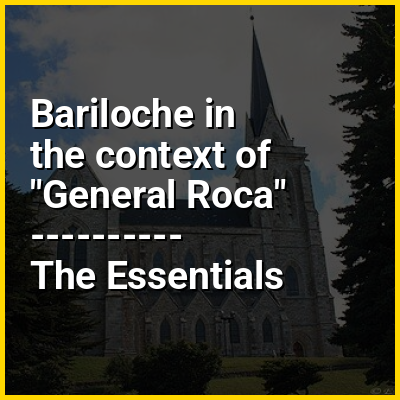
San Carlos de Bariloche (from the Mapuche name Vuriloche, meaning "people from the other side of the mountain"), commonly known simply as Bariloche (Spanish pronunciation: [baɾiˈlotʃe]), is the largest city in the Argentine province of Río Negro and the seat of the department of the same name. It is located in the foothills of the Patagonian Andes on the southern shore of Nahuel Huapi Lake, near the border with Chile. With a population of 135,755 according to the 2022 census, Bariloche is a mid-sized city by national standards but holds significant regional importance. It is not only the most populous city in its province but also the largest in the Patagonian Andes, and the third largest in the entire Argentine Patagonia, following Neuquén and Comodoro Rivadavia. Its urban zone is characterized by its low density and has an area of more than 220 square kilometres (85 sq mi), extending longitudinally from east to west for about 50 kilometres (31 mi).
Bariloche's economy is strongly based on tourism; it is the country's third most visited destination after Buenos Aires and Mar del Plata. It is the most popular city in all of Patagonia. It attracts visitors year-round for its scenic natural setting including Nahuel Huapi National Park and other reserves, offering a range of activities such as skiing in winter and water sports and hiking in summer, alongside diverse accommodations and dining options. The nearby Cerro Catedral is the largest ski resort in South America.