Atropine in the context of "Tropane alkaloid"

Play Trivia Questions online!

or

Skip to study material about Atropine in the context of "Tropane alkaloid"


⭐ Core Definition: Atropine

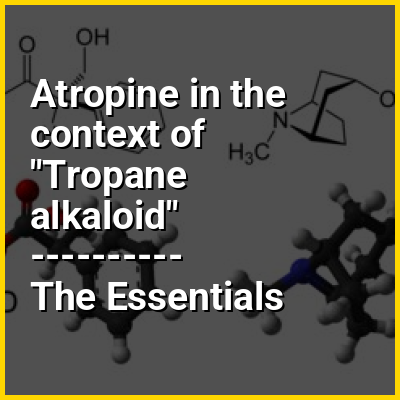
Atropine is a tropane alkaloid and anticholinergic medication used to treat certain types of nerve agent and pesticide poisonings as well as some types of slow heart rate, and to decrease saliva production during surgery. It is typically given intravenously or by injection into a muscle. Eye drops are also available which are used to treat uveitis and early amblyopia. The intravenous solution usually begins working within a minute and lasts half an hour to an hour. Large doses may be required to treat some poisonings.

Common side effects include dry mouth, abnormally large pupils, urinary retention, constipation, and a fast heart rate. It should generally not be used in people with closed-angle glaucoma. While there is no evidence that its use during pregnancy causes birth defects, this has not been well studied so sound clinical judgment should be used. It is likely safe during breastfeeding. It is an antimuscarinic (a type of anticholinergic) that works by inhibiting the parasympathetic nervous system.
↓ Menu

In this Dossier

Atropine in the context of Deadly nightshade

Atropa bella-donna, commonly known as deadly nightshade or belladonna, is a toxic perennial herbaceous plant in the nightshade family Solanaceae, which also includes tomatoes, potatoes and eggplant. It is native to Europe and Western Asia, including Turkey, its distribution extending from England in the west to western Ukraine and the Iranian province of Gilan in the east. It is also naturalised or introduced in some parts of Canada, North Africa and the United States.

The foliage and berries are extremely toxic when ingested, containing tropane alkaloids. It can also be harmful to handle and/or touch these plants. These toxins include atropine, scopolamine, and hyoscyamine, which cause delirium and hallucinations, and are also used as pharmaceutical anticholinergics. Tropane alkaloids are of common occurrence not only in the Old World tribes Hyoscyameae (to which the genus Atropa belongs) and Mandragoreae, but also in the New World tribe Datureae—all of which belong to the subfamily Solanoideae of the plant family Solanaceae.

↑ Return to Menu

Atropine in the context of Alkaloid

Alkaloids are a broad class of naturally occurring organic compounds that contain at least one nitrogen atom. Some synthetic compounds of similar structure may also be termed alkaloids.

Alkaloids are produced by a large variety of organisms including bacteria, fungi, plants, and animals. They can be purified from crude extracts of these organisms by acid-base extraction, or solvent extractions followed by silica-gel column chromatography. Alkaloids have a wide range of pharmacological activities including antimalarial (e.g. quinine), antiasthma (e.g. ephedrine), anticancer (e.g. homoharringtonine), cholinomimetic (e.g. galantamine), vasodilatory (e.g. vincamine), antiarrhythmic (e.g. quinidine), analgesic (e.g. morphine), antibacterial (e.g. chelerythrine), and antihyperglycemic activities (e.g. berberine). Many have found use in traditional or modern medicine, or as starting points for drug discovery. Other alkaloids possess psychotropic (e.g. psilocin) and stimulant activities (e.g. cocaine, caffeine, nicotine, theobromine), and have been used in entheogenic rituals or as recreational drugs. Alkaloids can be toxic (e.g. atropine, tubocurarine). Although alkaloids act on a diversity of metabolic systems in humans and other animals, they almost uniformly evoke a bitter taste.

↑ Return to Menu

Atropine in the context of Deliriant

Deliriants are a subclass of hallucinogen. The term was coined in the early 1980s to distinguish these drugs from psychedelics such as LSD and dissociatives such as ketamine, due to their primary effect of causing delirium, as opposed to the more lucid and less disturbed states produced by other types of hallucinogens, where rational thought is better preserved (including the ability to distinguish hallucinations from reality). The term generally refers to anticholinergic drugs, which are substances that inhibit the function of the neurotransmitter acetylcholine.

Common examples of deliriants include plants of the genera Datura and Brugmansia, both containing scopolamine, as well as higher than recommended dosages of diphenhydramine (Benadryl). A number of plant deliriants such as that of the Solanaceae family, particularly in the Americas, have been used by some indigenous cultures to reach delirious and altered states of consciousness for traditions or rituals, such as rites of passage, divination or communicating with the ancestors. Despite their long history of use, deliriants are the least-studied class of hallucinogens in terms of their behavioral and neurological effects.

↑ Return to Menu

Atropine in the context of Hyoscyamine

Hyoscyamine (also known as daturine or duboisine) is a naturally occurring tropane alkaloid and plant toxin. It is a secondary metabolite found in certain plants of the family Solanaceae, including henbane, mandrake, angel's trumpets, jimsonweed, the sorcerers' tree, and Atropa belladonna (deadly nightshade). It is the levorotary isomer of atropine (third of the three major nightshade alkaloids) and thus sometimes known as levo-atropine.

In 2021, it was the 272nd most commonly prescribed medication in the United States, with more than 900,000 prescriptions.

↑ Return to Menu

Atropine in the context of Cycloplegia

Cycloplegia is paralysis of the ciliary muscle of the eye, resulting in a loss of accommodation. Because of the paralysis of the ciliary muscle, the curvature of the lens can no longer be adjusted to focus on nearby objects. This results in similar problems as those caused by presbyopia, in which the lens has lost elasticity and can also no longer focus on close-by objects. Cycloplegia with accompanying mydriasis (dilation of pupil) is usually due to topical application of muscarinic antagonists such as atropine and cyclopentolate.

Belladonna alkaloids are used for testing the error of refraction and examination of eye.

↑ Return to Menu