Animal testing in the context of "Veganism"

Play Trivia Questions online!

or

Skip to study material about Animal testing in the context of "Veganism"

Ad spacer

⭐ Core Definition: Animal testing

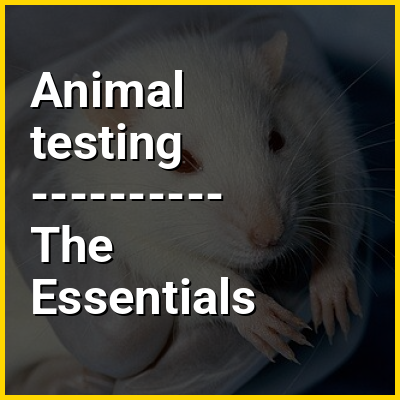
Animal testing, also known as animal experimentation, animal research, and in vivo testing, is the use of non-human animals, as model organisms, in experiments that seek answers to scientific and medical questions. This approach can be contrasted with field studies in which animals are observed in their natural environments or habitats. Experimental research with animals is usually conducted in universities, medical schools, pharmaceutical companies, defense establishments, and commercial facilities that provide animal-testing services to the industry. The focus of animal testing varies on a continuum from pure research, focusing on developing fundamental knowledge of an organism, to applied research, which may focus on answering some questions of great practical importance, such as finding a cure for a disease. Examples of applied research include testing disease treatments, breeding, defense research, and toxicology, including cosmetics testing. In education, animal testing is sometimes a component of biology or psychology courses.

Research using animal models has been central to most of the achievements of modern medicine. It has contributed to most of the basic knowledge in fields such as human physiology and biochemistry, and has played significant roles in fields such as neuroscience and infectious disease. The results have included the near-eradication of polio and the development of organ transplantation, and have benefited both humans and animals. From 1910 to 1927, Thomas Hunt Morgan's work with the fruit fly Drosophila melanogaster identified chromosomes as the vector of inheritance for genes, and Eric Kandel wrote that Morgan's discoveries "helped transform biology into an experimental science". Research in model organisms led to further medical advances, such as the production of the diphtheria antitoxin and the 1922 discovery of insulin and its use in treating diabetes, which was previously fatal. Modern general anaesthetics such as halothane were also developed through studies on model organisms, and are necessary for modern, complex surgical operations. Other 20th-century medical advances and treatments that relied on research performed in animals include organ transplant techniques, the heart-lung machine, antibiotics, and the whooping cough vaccine.
↓ Menu

>>>PUT SHARE BUTTONS HERE<<<

👉 Animal testing in the context of Veganism

Veganism is the practice of abstaining from the use of animal products and the consumption of animal source foods, and an associated philosophy that rejects the commodity status of animals. A person who practices veganism is known as a vegan; the word is also used to describe foods and materials that are compatible with veganism.

Ethical veganism excludes all forms of animal use, whether in agriculture for labour or food (e.g., meat, fish and other animal seafood, eggs, honey, and dairy products such as milk or cheese), in clothing and industry (e.g., leather, wool, fur, and some cosmetics), in entertainment (e.g., zoos, exotic pets, and circuses), or in services (e.g., mounted police, working animals, and animal testing). People who follow a vegan diet for the benefits to the environment, their health or for religion are regularly also described as vegans.

↓ Explore More Topics
In this Dossier

Animal testing in the context of Treatment of animals

Animal welfare is the quality of life and overall well-being of animals. Formal standards of animal welfare vary between contexts, but are debated mostly by animal welfare groups, legislators, and academics. Animal welfare science uses measures such as longevity, disease, immunosuppression, behavior, physiology, and reproduction, although there is debate about which of these best indicate animal welfare.

Respect for animal welfare is often based on the belief that nonhuman animals are sentient and that consideration should be given to their well-being or suffering, especially when they are under the care of humans. These concerns can include how animals are slaughtered for food, how they are used in scientific research, how they are kept (as pets, in zoos, farms, circuses, etc.), and how human activities affect the welfare and survival of wild species.

↑ Return to Menu

Animal testing in the context of Experimental psychology

Experimental psychology is the work done by those who apply experimental methods to psychological study and the underlying processes. Experimental psychologists employ human participants and animal subjects to study a great many topics, including (among others) sensation, perception, memory, cognition, learning, motivation, emotion; developmental processes, social psychology, and the neural substrates of all of these.

↑ Return to Menu

Animal testing in the context of Research ethics

Research ethics is a discipline within the study of applied ethics. Its scope ranges from general scientific integrity and misconduct to the treatment of human and animal subjects. The social responsibilities of scientists and researchers are not traditionally included and are less well defined.

The discipline is most developed in medical research. Beyond the issues of falsification, fabrication, and plagiarism that arise in every scientific field, research design in human subject research and animal testing are the areas that raise ethical questions most often.

↑ Return to Menu

Animal testing in the context of Toxic

Toxicity is the degree to which a chemical substance or a particular mixture of substances can damage an organism. Toxicity can refer to the effect on a whole organism, such as an animal, bacterium, or plant, as well as the effect on a substructure of the organism, such as a cell (cytotoxicity) or an organ such as the liver (hepatotoxicity). Sometimes the word is more or less synonymous with poisoning in everyday usage.

A central concept of toxicology is that the effects of a toxicant are dose-dependent; even water can lead to water intoxication when taken in too high a dose, whereas for even a very toxic substance such as snake venom there is a dose below which there is no detectable toxic effect. Toxicity is species-specific, making cross-species analysis problematic. Newer paradigms and metrics are evolving to bypass animal testing, while maintaining the concept of toxicity endpoints.

↑ Return to Menu

Animal testing in the context of Vivisection

Vivisection (from Latin vivus 'alive' and sectio 'cutting') is surgery conducted for experimental purposes on a living organism, typically animals with a central nervous system, to view living internal structure. The word is, more broadly, used as a pejorative catch-all term for experimentation on live animals by organizations opposed to animal experimentation, but the term is rarely used by practicing scientists. Human vivisection, such as live organ harvesting, has been perpetrated as a form of torture.

↑ Return to Menu

Animal testing in the context of Animal rights movement

The animal rights movement, sometimes called the animal liberation, animal personhood, or animal advocacy movement, is a social movement that advocates an end to the rigid moral and legal distinction drawn between human and non-human animals, an end to the status of animals as property, and an end to their use in the research, food, clothing, and entertainment industries. The argument from marginal cases is often used in animal rights advocacy which asserts that if certain humans with limited cognitive capacities are granted moral consideration, then non-human animals, who may possess different forms of intelligence or sentience, should also be afforded similar negative rights and moral consideration.

↑ Return to Menu