Alzheimer's disease in the context of "Hippocampus"

Play Trivia Questions online!

or

Skip to study material about Alzheimer's disease in the context of "Hippocampus"

Ad spacer

⭐ Core Definition: Alzheimer's disease

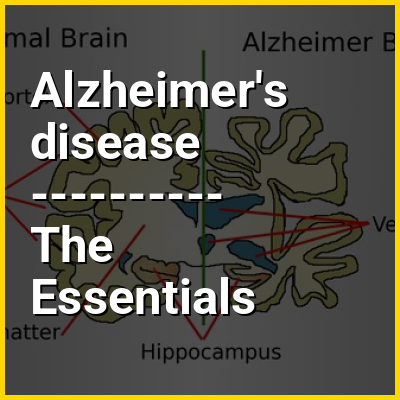
Alzheimer's disease (AD) is a neurodegenerative disease and is the most common form of dementia, accounting for around 60–70% of cases. The most common early symptom is difficulty in remembering recent events. As the disease advances, symptoms can include problems with language, disorientation (including easily getting lost), mood swings, loss of motivation, self-neglect, and behavioral issues. As a person's condition declines, they often withdraw from family and society. Gradually, bodily functions are lost, ultimately leading to death. Although the speed of progression can vary, the average life expectancy following diagnosis is three to twelve years.

The causes of Alzheimer's disease remain poorly understood. There are many environmental and genetic risk factors associated with its development. The strongest genetic risk factor is from an allele of apolipoprotein E. Other risk factors include a history of head injury, clinical depression, and high blood pressure. The progression of the disease is largely characterised by the accumulation of malformed protein deposits in the cerebral cortex, called amyloid plaques and neurofibrillary tangles. These misfolded protein aggregates interfere with normal cell function, and over time lead to irreversible degeneration of neurons and loss of synaptic connections in the brain. A probable diagnosis is based on the history of the illness and cognitive testing, with medical imaging and blood tests to rule out other possible causes. Initial symptoms are often mistaken for normal brain aging. Examination of brain tissue is needed for a definite diagnosis, but this can only take place after death.
↓ Menu

>>>PUT SHARE BUTTONS HERE<<<
In this Dossier

Alzheimer's disease in the context of Self

In philosophy, the self is an individual's own being, knowledge, and values, and the relationship between these attributes.

The first-person perspective distinguishes selfhood from personal identity. Whereas "identity" is (literally) sameness and may involve categorization and labeling,selfhood implies a first-person perspective and suggests potential uniqueness. Conversely, "person" is used as a third-person reference. Personal identity can be impaired in late-stage Alzheimer's disease and in other neurodegenerative diseases. Finally, the self is distinguishable from "others". Including the distinction between sameness and otherness, the self versus other is a research topic in contemporary philosophy and contemporary phenomenology (see also psychological phenomenology), psychology, psychiatry, neurology, and neuroscience.

↑ Return to Menu

Alzheimer's disease in the context of Neurology

Neurology (from Greek: νεῦρον (neûron), "string, nerve" and the suffix -logia, "study of") is the branch of medicine dealing with the diagnosis and treatment of all categories of conditions and disease involving the nervous system, which comprises the brain, the spinal cord and the peripheral nerves. Neurological practice relies heavily on the field of neuroscience, the scientific study of the nervous system, using various techniques of neurotherapy.

A neurologist is a physician specializing in neurology and trained to investigate, diagnose and treat neurological disorders. Neurologists diagnose and treat myriad neurologic conditions, including stroke, epilepsy, movement disorders such as Parkinson's disease, brain infections, autoimmune neurologic disorders such as multiple sclerosis, sleep disorders, brain injury, headache disorders like migraine, tumors of the brain and dementias such as Alzheimer's disease. Neurologists may also have roles in clinical research, clinical trials, and basic or translational research. Neurology is a nonsurgical specialty, its corresponding surgical specialty is neurosurgery.

↑ Return to Menu

Alzheimer's disease in the context of Abdominal obesity

Abdominal obesity, also known as central obesity and truncal obesity, is the human condition of an excessive concentration of visceral fat around the stomach and abdomen to such an extent that it is likely to harm its bearer's health. Abdominal obesity has been strongly linked to cardiovascular disease, Alzheimer's disease, and other metabolic and vascular diseases.

Visceral fat, central abdominal fat, and waist circumference show a strong association with type 2 diabetes.

↑ Return to Menu

Alzheimer's disease in the context of Neurodegenerative disease

A neurodegenerative disease is caused by the progressive loss of neurons, in the process known as neurodegeneration. Neuronal damage may also ultimately result in their death. Neurodegenerative diseases include amyotrophic lateral sclerosis, multiple sclerosis, Parkinson's disease, Alzheimer's disease, Huntington's disease, multiple system atrophy, tauopathies, and prion diseases. Neurodegeneration can be found in the brain at many different levels of neuronal circuitry, ranging from molecular to systemic. Because there is no known way to reverse the progressive degeneration of neurons, these diseases are considered to be incurable; however research has shown that the two major contributing factors to neurodegeneration are oxidative stress and inflammation. Biomedical research has revealed many similarities between these diseases at the subcellular level, including atypical protein assemblies (like proteinopathy) and induced cell death. These similarities suggest that therapeutic advances against one neurodegenerative disease might ameliorate other diseases as well.

Within neurodegenerative diseases, it is estimated that 55 million people worldwide had dementia in 2019, and that by 2050 this figure will increase to 139 million people.

↑ Return to Menu

Alzheimer's disease in the context of Awareness ribbon

Awareness ribbons are symbols meant to show support or raise consciousness for a cause. Different colors and patterns are associated with different issues. Awareness ribbons can be worn on clothing like pins, they can be appear on bumper stickers in vehicles, or they can be on arm wristbands, among many other ways. The ribbon is a symbol of awareness and support.

Of the uses of ribbons to draw awareness to health issues, perhaps the best-known is the pink ribbon for support of those with breast cancer. Other health and social concerns which have adopted colored ribbons include Alzheimer's disease and pancreatic cancer (purple), HIV/AIDS (red), mental health and mental illness (green), suicide prevention and for brain disorder or disability (silver).

↑ Return to Menu

Alzheimer's disease in the context of Human behavior genetics

Human behaviour genetics is an interdisciplinary subfield of behaviour genetics that studies the role of genetic and environmental influences on human behaviour. Classically, human behavioural geneticists have studied the inheritance of behavioural traits. The field was originally focused on determining the importance of genetic influences on human behaviour (for e.g., do genes regulate human behavioural attributes). It has evolved to address more complex questions such as: how important are genetic and/or environmental influences on various human behavioural traits; to what extent do the same genetic and/or environmental influences impact the overlap between human behavioural traits; how do genetic and/or environmental influences on behaviour change across development; and what environmental factors moderate the importance of genetic effects on human behaviour (gene-environment interaction). The field is interdisciplinary, and draws from genetics, psychology, and statistics. Most recently, the field has moved into the area of statistical genetics, with many behavioural geneticists also involved in efforts to identify the specific genes involved in human behaviour, and to understand how the effects associated with these genes changes across time, and in conjunction with the environment.

Traditionally, the human behavioural genetics were a psychology and phenotype based studies including intelligence, personality and grasping ability. During the years, the study developed beyond the classical traits of human behaviour and included more genetically associated traits like genetic disorders (such as fragile X syndrome, Alzheimer's disease and obesity). The traditional methods of behavioural-genetic analysis provide a quantitative evaluation of genetic and non-genetic influences on human behaviour. The family, twin and adoption studies marks the huge contribution for laying down the foundation for current molecular genetic studies to study human behaviour.

↑ Return to Menu

Alzheimer's disease in the context of Dementia

Dementia is a syndrome associated with many neurodegenerative diseases, characterized by a general decline in cognitive abilities that affects a person's ability to perform everyday activities. This typically involves problems with memory, thinking, behavior, and motor control. Aside from memory impairment and a disruption in thought patterns, the most common symptoms of dementia include emotional problems, difficulties with language, and decreased motivation. The symptoms may be described as occurring in a continuum over several stages. Dementia is a life-limiting condition, having a significant effect on the individual, their caregivers, and their social relationships in general. A diagnosis of dementia requires the observation of a change from a person's usual mental functioning and a greater cognitive decline than might be caused by the normal aging process.

Several diseases and injuries to the brain, such as a stroke, can give rise to dementia. However, the most common cause is Alzheimer's disease, a neurodegenerative disorder. Dementia is a neurocognitive disorder with varying degrees of severity (mild to major) and many forms or subtypes. Dementia is an acquired brain syndrome, marked by a decline in cognitive function, and is contrasted with neurodevelopmental disorders. It has also been described as a spectrum of disorders with subtypes of dementia based on which known disorder caused its development, such as Parkinson's disease for Parkinson's disease dementia, Huntington's disease for Huntington's disease dementia, vascular disease for vascular dementia, HIV infection causing HIV dementia, frontotemporal lobar degeneration for frontotemporal dementia, Lewy body disease for dementia with Lewy bodies, and prion diseases. Subtypes of neurodegenerative dementias may also be based on the underlying pathology of misfolded proteins, such as synucleinopathies and tauopathies. The coexistence of more than one type of dementia is known as mixed dementia.

↑ Return to Menu

Alzheimer's disease in the context of Degenerative disease

Degenerative disease is the result of a continuous process based on degenerative cell changes, affecting tissues or organs, which will increasingly deteriorate over time.

In neurodegenerative diseases, cells of the central nervous system stop working or die via neurodegeneration. An example of this is Alzheimer's disease. The other two common groups of degenerative diseases are those that affect circulatory system (e.g. coronary artery disease) and neoplastic diseases (e.g. cancers).

↑ Return to Menu