Materials covered in this trivia questions quiz
Study Hint 1
Question: In the context of Pragmatics, Semantics is considered…
Trivia Question Study Fact: Pragmatics, a field within linguistics and the philosophy of language, investigates how context influences meaning, focusing on language use in social interactions. It is closely linked to semantics, which studies meaning itself, and syntax, which examines sentence structure, all falling under the broader discipline of semiotics.
Trivia Question Explanation: Pragmatics, semantics, and syntax all exist as parts of semiotics, and semantics specifically deals with the aspects of meaning, which are then interpreted within the pragmatic context to understand the speaker's intention.
Return to Question
Study Hint 2
Question: In the context of asemic writing, semantics is considered…
Trivia Question Study Fact: Asemic writing is a form of communication that intentionally avoids conveying specific meaning through traditional linguistic structures. It operates within the realm of semantics by deliberately minimizing the use of recognizable symbols and gestures, instead relying on the reader's individual interpretation to generate meaning, potentially transcending language barriers.
Trivia Question Explanation: Asemic writing intentionally lacks specific semantic content, prompting viewers to create their own interpretations, making meaning a dynamic and personal experience rather than a fixed element.
Return to Question
Study Hint 3
Question: In the context of functional literacy, semantics is considered essential for what key ability?
Trivia Question Study Fact: Functional literacy extends beyond simply being able to decode words; it encompasses the ability to understand the meaning of written text – a core aspect of semantics – to effectively navigate daily life and employment. This differs from illiteracy, which is the complete inability to read or write, and is culturally defined based on the reading and writing skills needed for a society's functioning.
Trivia Question Explanation: Functional literacy isn't just about recognizing words, but about comprehending their meaning within a broader context, which is the central focus of semantics and crucial for navigating everyday tasks.
Return to Question
Study Hint 4
Question: In the context of elaborative encoding, semantic connections are utilized to enhance memory recall. How are these semantic connections best described within this system?
Trivia Question Study Fact: Elaborative encoding is a mnemonic technique designed to improve memory retention by associating new information with existing knowledge or cues. This process can involve linking memories to emotional responses, visual imagery, spatial relationships, semantic meaning, or even acoustic qualities, ultimately making recall more efficient by creating richer, more interconnected memory traces.
Trivia Question Explanation: Elaborative encoding strengthens memories by connecting new information to existing knowledge, making it easier to retrieve because it's integrated into a broader network of understanding.
Return to Question
Study Hint 5
Question: In the context of philosophy of language, semantics is considered…
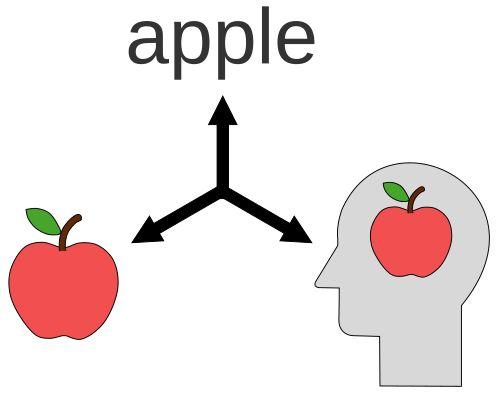
Trivia Question Study Fact: Within the philosophy of language, semantics specifically investigates meaning as a relationship between signs – such as words or symbols – and the entities, concepts, or ideas those signs are meant to represent, express, or signify. This field doesn't focus on the signs themselves, but on how they connect to what they point to.
Trivia Question Explanation: Semantics, as a branch of the philosophy of language, centers on understanding how signs function as connections to the things they signify, rather than focusing on the signs' inherent qualities or the speaker's experience.
Return to Question
Study Hint 6
Question: In the context of logical positivism, semantics is considered crucial for determining…
Trivia Question Study Fact: Logical positivism, a 20th-century philosophical movement, directly linked the meaningfulness of a statement to its verifiability through empirical observation or its status as a tautology. This approach to semantics fundamentally excluded areas of inquiry like metaphysics, ethics, and aesthetics from being considered cognitively meaningful because they lacked such verifiable content.
Trivia Question Explanation: Logical positivists believed a statement’s meaning was determined by its verifiability, which relies on understanding the statement’s semantic structure to assess if it’s either empirically verifiable or a logical tautology.
Return to Question
Study Hint 7
Question: In the context of philosophy of science, semantics is considered primarily concerned with…
Trivia Question Study Fact: Within the philosophy of science, semantics plays a crucial role in analyzing the meaning and interpretation of scientific concepts, theories, and statements. It examines how language is used to represent the world in scientific contexts, focusing on the relationship between linguistic expressions and the phenomena they describe, and how this impacts our understanding of truth and knowledge claims within science.
Trivia Question Explanation: Semantics, as a branch of philosophy, investigates meaning and interpretation, and its application to science centers on how language is used to describe and understand the natural world, impacting how scientific knowledge is constructed and evaluated.
Return to Question
Study Hint 8
Question: In the context of Etymology, Semantics is considered a crucial tool for understanding…
Trivia Question Study Fact: Etymology, a subfield of linguistics, investigates the origins and historical development of words, examining not only their meanings but also the evolution of their sound components (phonemes) and meaningful units (morphemes) over time. It utilizes comparative semantics, morphology, and other linguistic disciplines to create a detailed record of a word's changing meanings and forms throughout history.
Trivia Question Explanation: Etymology specifically examines how word meanings change over time, and comparative semantics is used to trace these shifts by analyzing related languages and their semantic evolution.
Return to Question
Study Hint 9
Question: In the context of markedness, semantics is considered to categorize oppositions based on…
Trivia Question Study Fact: Within the framework of markedness, a concept originating in linguistics and extending to social sciences, semantic oppositions are categorized based on typicality. The 'unmarked' term represents the broader, default meaning, requiring less specification, while the 'marked' term denotes a deviation from this norm, often requiring additional context or morphological indicators to be understood.
Trivia Question Explanation: Markedness differentiates between linguistic units based on how common or expected they are, with unmarked terms representing the default and marked terms representing deviations from that default.
Return to Question
Study Hint 10
Question: In the context of philosophy of language, semantics is considered the study of…
Trivia Question Study Fact: Semantics, as a field of study, focuses on meaning as a relationship between signs – like words or symbols – and the things those signs represent, intending to express or signify those things. This investigation falls within the broader discipline of the philosophy of language.
Trivia Question Explanation: Semantics specifically examines how signs, such as words, connect to the concepts, objects, or ideas they are meant to convey, establishing a link between expression and the things expressed.
Return to Question