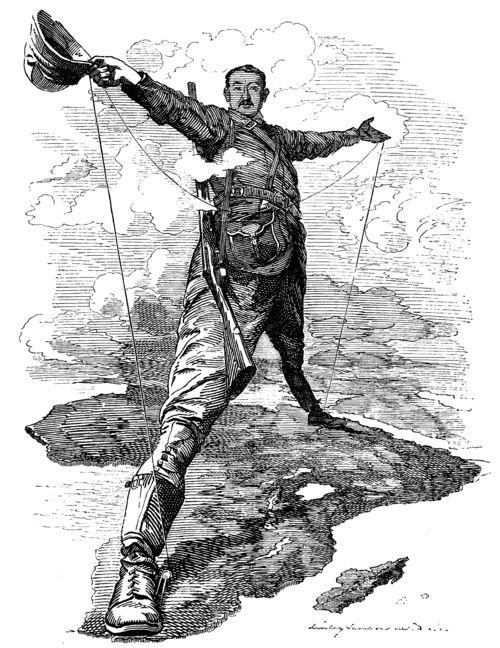
Materials covered in this trivia questions quiz
Study Hint 1
Question: In the context of the early modern period, the initial wave of European colonization is most directly linked to the subsequent rise of what later historical phenomenon?
Trivia Question Study Fact: The early modern period, generally spanning from the 16th to 18th/19th centuries, witnessed the initial stages of European colonization, often referred to as the 'first wave,' which laid some of the groundwork for the later, more intensive period of 'New Imperialism' that marked a distinct shift in global power dynamics.
Trivia Question Explanation: The early modern period’s first wave of European colonization established patterns of control and resource extraction that were expanded upon and intensified during the later period known as New Imperialism, characterized by more aggressive and widespread colonial endeavors.
Return to Question
Study Hint 2
Question: In the context of Decolonization, New_Imperialism is considered…
Trivia Question Study Fact: Decolonization is fundamentally defined as the dismantling of colonial empires, which were established through the practice of imperialism. While imperialism involves the domination of foreign territories, decolonization represents the process by which those territories regain independence, beginning with events like the American Revolution and continuing through the end of the Cold War.
Trivia Question Explanation: Decolonization is defined as the undoing of colonialism, and colonialism is a direct result of imperial nations establishing dominance over foreign territories. Therefore, decolonization is inherently a reaction against and an attempt to dismantle the systems created by imperialism.
Return to Question
Study Hint 3
Question: In the context of the Scramble for Africa, New Imperialism is considered a key driver of which significant change during the late 19th and early 20th centuries?
Trivia Question Study Fact: Driven by the Second Industrial Revolution, the Scramble for Africa saw a rapid increase in European control of the continent during the New Imperialism era. While only 10% of Africa was under European control in 1870, nearly 90% was colonized by 1914, leaving only a handful of states retaining their sovereignty.
Trivia Question Explanation: The period of New Imperialism coincided with the Scramble for Africa, and was characterized by a dramatic expansion of European colonial holdings on the continent, increasing from 10% in 1870 to almost 90% by 1914.
Return to Question
Study Hint 4
Question: In the context of World War I, the exacerbation of imperial rivalries, a hallmark of New Imperialism, is best understood as a contributing factor to…
Trivia Question Study Fact: World War I was significantly influenced by the intensification of imperial rivalries among the great powers, a key characteristic of New Imperialism. The decline of the Ottoman Empire created power vacuums and increased competition for colonies and resources, contributing to the tensions that ultimately led to the outbreak of war.
Trivia Question Explanation: The decline of the Ottoman Empire created opportunities for European powers to expand their colonial holdings, intensifying competition and disrupting the existing balance of power, which ultimately contributed to the outbreak of World War I.
Return to Question
Study Hint 5
Question: In the context of World War I, the exacerbation of imperial rivalries, a key characteristic of what earlier period, is considered a contributing factor to the war’s outbreak?
Trivia Question Study Fact: The outbreak of World War I was significantly influenced by the intensification of imperial rivalries among the great powers, stemming from the period of New Imperialism. This competition for colonies and resources created tensions that contributed to the destabilization of the European balance of power and ultimately played a role in the escalation to global conflict.
Trivia Question Explanation: The rise of the German Empire and the decline of the Ottoman Empire, combined with intensified competition for colonies and resources during New Imperialism, disrupted the existing balance of power in Europe and fueled tensions that ultimately contributed to the outbreak of World War I.
Return to Question
Study Hint 6
Question: In the context of the European colonization of Africa, New Imperialism is considered a primary driver of which significant change during the late 19th and early 20th centuries?
Trivia Question Study Fact: During the late 19th and early 20th centuries, the 'Scramble for Africa' saw a rapid increase in European control over the continent, driven by the Second Industrial Revolution and the era of New Imperialism. While only 10% of Africa was under European control in 1870, this figure surged to nearly 90% by 1914, with only a handful of states managing to maintain their independence.
Trivia Question Explanation: The period of New Imperialism coincided with the 'Scramble for Africa,' resulting in a rapid expansion of European colonial holdings from approximately 10% of the continent in 1870 to almost 90% by 1914.
Return to Question
Study Hint 7
Question: In the context of the Early Modern Period, New Imperialism is considered…
Trivia Question Study Fact: The early modern period, generally spanning from the 16th to 18th/19th centuries, witnessed the initial stages of European colonization, often referred to as the 'first wave,' which laid some of the groundwork for the later, more intensive period of 'New Imperialism' that emerged as the early modern period concluded.
Trivia Question Explanation: The source text indicates that New Imperialism emerged with the advent of the second wave of modern colonization, often marking the end of the early modern period following events like the French and American Revolutions.
Return to Question
Study Hint 8
Question: In the context of the first wave of European colonization, New Imperialism is considered…
Trivia Question Study Fact: The initial phase of European colonization, beginning with Spanish and Portuguese explorations, largely concentrated on the Americas and establishing trade posts in Asia and Africa, particularly for the slave trade. This first wave concluded in the early 19th century, directly preceding and giving way to a subsequent period known as New Imperialism, which shifted its focus towards Africa and Asia.
Trivia Question Explanation: Following the first wave of European colonization, which centered on the Americas and trade in Asia and Africa, New Imperialism marked a change in strategy, concentrating colonial efforts on the continents of Africa and Asia.
Return to Question
Study Hint 9
Question: In the context of Decolonisation, New_Imperialism is considered…
Trivia Question Study Fact: Decolonization is fundamentally defined as the dismantling of colonial structures, which were established through the process of imperialism where nations exerted dominance over foreign lands. While beginning with events like the American Revolution, decolonization experienced significant waves following both World Wars and the end of the Cold War, leading to the independence of numerous territories and a continuing status for some as non-self-governing territories.
Trivia Question Explanation: Imperialism, through the establishment of colonial empires, created the conditions that necessitated and prompted decolonization as colonized peoples sought to regain sovereignty and self-determination.
Return to Question
Study Hint 10
Question: In the context of the early modern period, the initial wave of European colonization is most directly linked to the subsequent rise of…
Trivia Question Study Fact: The early modern period, generally spanning from 1500 to the 18th or 19th century, witnessed the initial stages of European colonization, often referred to as the 'first wave,' which laid some of the groundwork for the later, more intensive period of 'New Imperialism' that emerged as the early modern era concluded.
Trivia Question Explanation: The source text indicates that the end of the early modern period is often associated with the advent of a second wave of modern colonization, known as New Imperialism, building upon the foundations established during the first wave of European colonization within the early modern period.
Return to Question