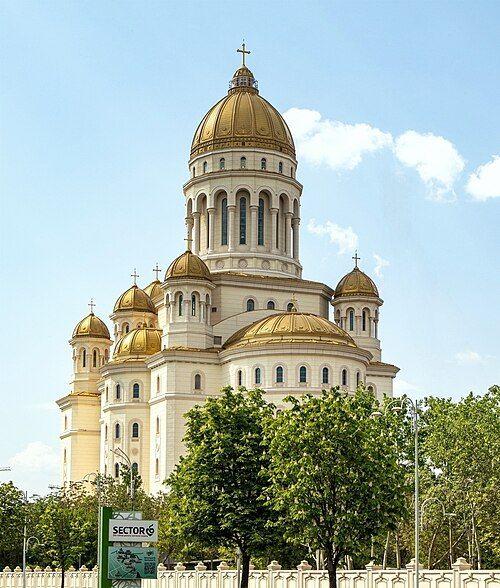
Materials covered in this trivia questions quiz
Study Hint 1
Question: In the context of treasure binding, Eastern Orthodoxy is considered…
Trivia Question Study Fact: Treasure bindings, elaborate book covers adorned with precious materials like gold, silver, and jewels, experienced continued production in regions where Eastern Orthodoxy was prevalent, even as their use declined in Western Europe by the end of the Middle Ages. These bindings were primarily reserved for significant illuminated manuscripts, particularly Gospel books intended for liturgical use.
Trivia Question Explanation: The source text states that treasure bindings continued to be produced in areas where Eastern Orthodoxy predominated, even after their use decreased in the West, indicating a sustained tradition within that cultural sphere.
Return to Question
Study Hint 2
Question: In the context of Christianity in Italy, Eastern Orthodoxy is considered…
Trivia Question Study Fact: Following the East-West Schism, Italy became predominantly Catholic, but still maintains a presence of other Christian denominations, including Eastern Orthodox Christians, who represent a notable minority within the country's religious landscape.
Trivia Question Explanation: While Catholicism has historically been dominant in Italy since the East-West Schism, the country also recognizes and includes other Christian groups like Eastern Orthodox Christians as a notable minority population.
Return to Question
Study Hint 3
Question: In the context of Belarus, the continued presence of a substantial non-religious population, especially in the east, is most directly attributed to…
Trivia Question Study Fact: Following the collapse of the Soviet Union, Belarus experienced a resurgence of religious practice, including Eastern Orthodoxy, but a significant portion of the population, particularly in eastern Belarus, remains non-religious due to the lasting impact of state-sponsored atheism during the Soviet period.
Trivia Question Explanation: The source text explicitly states that the legacy of state atheism from the Soviet era explains why a proportion of Belarusians, particularly in the east, are not religious.
Return to Question
Study Hint 4
Question: In the context of Christianity in Switzerland, Eastern Orthodoxy is considered…
Trivia Question Study Fact: In Switzerland, while Christianity is the predominant religion, a small but notable percentage of the Christian population identifies with denominations other than Catholicism or Swiss Protestantism. Approximately 5.8% of Swiss Christians fall into this 'other Christian denominations' category, with roughly half of those identifying as Orthodox Christians.
Trivia Question Explanation: According to data from 2023, 5.8% of Swiss Christians identify with denominations other than Catholicism or Swiss Protestantism, and half of that 5.8% are Orthodox Christians, making it a notable minority.
Return to Question
Study Hint 5
Question: In the context of Slovenia, Eastern Orthodoxy is considered…
Trivia Question Study Fact: While Catholicism is the dominant religion in Slovenia, Eastern Orthodoxy represents a notable, though smaller, Christian presence within the country, alongside Protestantism and other minority faiths like Islam, Judaism, and Hinduism.
Trivia Question Explanation: The source text indicates that while Catholicism is the largest Christian denomination in Slovenia, Eastern Orthodoxy is among the other Christian groups with a significant following in the country.
Return to Question
Study Hint 6
Question: In the context of North Macedonia, Eastern Orthodoxy is primarily distinguished by its organizational structure through affiliation with which church?
Trivia Question Study Fact: Eastern Orthodoxy is the predominant religion in North Macedonia, with the majority of adherents identifying as Macedonian, Serbian, or Aromanian. Importantly, most Orthodox Christians in North Macedonia are affiliated with the Macedonian Orthodox Church, which gained independence from the Serbian Orthodox Church in 1967 by declaring autocephaly.
Trivia Question Explanation: The Macedonian Orthodox Church is the primary affiliation for the vast majority of Eastern Orthodox Christians in North Macedonia, having declared autocephaly from the Serbian Orthodox Church in 1967.
Return to Question
Study Hint 7
Question: In the context of Christianity in Turkey, what significant outcome for Eastern Orthodox Christians was established by the Treaty of Lausanne following World War I?
Trivia Question Study Fact: Following the First World War and the establishment of the Republic of Turkey, the Treaty of Lausanne specifically addressed the status of religious minorities within the country. This treaty uniquely guaranteed the security and official recognition of institutions belonging to both Greek and Armenian Orthodox Christian communities, acknowledging their presence and safeguarding their religious practices.
Trivia Question Explanation: The Treaty of Lausanne, signed after World War I, explicitly ensured the protection and official status of both Greek and Armenian Orthodox Christian institutions within the newly formed Republic of Turkey, representing a specific legal safeguard for these communities.
Return to Question
Study Hint 8
Question: In the context of Saint Peter, Eastern Orthodoxy and the Catholic Church share a belief regarding his early leadership role, but differ on what key aspect?
Trivia Question Study Fact: Within both Catholic and Eastern Orthodox traditions, Saint Peter is considered foundational to the early Church, being regarded as the first Bishop of Rome and the first Bishop of Antioch. However, these traditions diverge in their interpretations of the authority inherited by his successors, particularly concerning the concept of papal primacy.
Trivia Question Explanation: While both traditions venerate Peter as a foundational leader and the first Bishop of Rome and Antioch, they hold differing views on the authority and implications of his position for subsequent leadership within the Church.
Return to Question
Study Hint 9
Question: In the context of John the Baptist, Eastern Orthodoxy specifically venerates him under which distinct title reflecting his prophetic role?
Trivia Question Study Fact: Within Eastern Orthodox tradition, John the Baptist holds a special designation as 'Saint John the Forerunner,' recognizing his role as the one who spiritually prepared the way for Jesus Christ. This title emphasizes his prophetic function and his proclamation of the coming Messiah, a concept central to Orthodox theology.
Trivia Question Explanation: Eastern Orthodox Christians refer to John the Baptist as 'Saint John the Forerunner' because he was believed to have spiritually prepared the path for Jesus Christ, proclaiming his coming and fulfilling prophecies.
Return to Question
Study Hint 10
Question: In the context of Simon Peter, Eastern Orthodoxy and the Catholic Church share a belief regarding his early leadership role, but differ on what key aspect of that legacy?
Trivia Question Study Fact: Both Catholic and Eastern Orthodox traditions recognize Saint Peter as a foundational figure in the early Church, specifically identifying him as the first Bishop of Rome (Pope) and the first Bishop of Antioch. However, these traditions diverge in their interpretations of the authority inherited by his successors, particularly concerning the concept of papal primacy.
Trivia Question Explanation: While both traditions venerate Peter as the first Bishop of Rome and Antioch, they hold differing views on the authority and power inherited by subsequent bishops, particularly regarding the Pope’s universal jurisdiction.
Return to Question