Materials covered in this trivia questions quiz
Study Hint 1
Question: In the context of the Achaemenid Empire, which geographical region, alongside Anatolia and Central Asia, was included within its territorial boundaries?
Trivia Question Study Fact: During the reign of the Achaemenid Empire, which spanned from the Balkans to the Indus Valley, Eastern Arabia was incorporated into the empire's vast territory, demonstrating the empire's extensive reach across the ancient Near East and Central Asia.
Trivia Question Explanation: The provided text explicitly states that Eastern Arabia was part of the Achaemenid Empire's territory, which stretched from the Balkans to the Indus Valley, alongside Anatolia and Central Asia, highlighting the empire's expansive control.
Return to Question
Study Hint 2
Question: In the context of Eastern Arabia, what historical designation was applied to the coastal region stretching from the Shatt al-Arab to the Hajar Mountains, reflecting a period of fluid movement and settlement among its inhabitants?
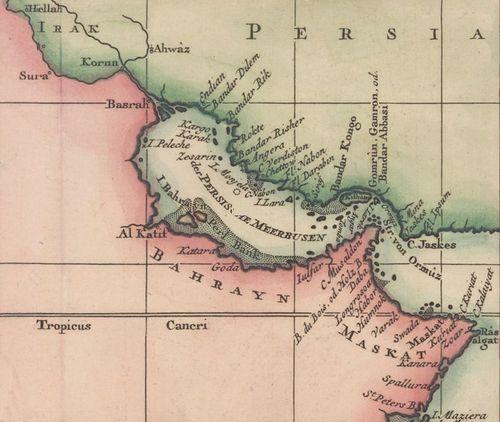
Trivia Question Study Fact: For over a thousand years, the entire coastal region of Eastern Arabia, extending from the Shatt al-Arab to the Hajar Mountains, was collectively referred to as 'Bahrain,' signifying a period where inhabitants freely traversed and settled within the area without regard for modern national boundaries.
Trivia Question Explanation: Historical records indicate that the extensive coastal area of Eastern Arabia, encompassing a wide range of modern-day territories, was commonly known as 'Bahrain' for approximately a millennium, highlighting a time of interconnectedness and shared culture.
Return to Question
Study Hint 3
Question: In the context of the United Arab Emirates, the historical region of Eastern Arabia is best characterized by its longstanding connection to…
Trivia Question Study Fact: The United Arab Emirates is situated within the historical region of Eastern Arabia, an area historically focused on maritime trade and seafaring. Prior to becoming a British protectorate, the region experienced periods of control by the Portuguese and Dutch, and faced challenges like piracy, ultimately leading to agreements with the British to form the Trucial States.
Trivia Question Explanation: Eastern Arabia, the region encompassing the UAE, historically thrived as a hub for maritime trade due to its strategic location and access to seafaring routes, influencing its economic and cultural development.
Return to Question
Study Hint 4
Question: In the context of Aramaic, Eastern Arabia is notable as a region where the language…
Trivia Question Study Fact: Aramaic, originating in ancient Syria, experienced significant geographical spread, extending as far east as Eastern Arabia over 3,000 years ago. This expansion wasn't limited to simple communication; Aramaic became a language of administration for empires like the Neo-Assyrian and Neo-Babylonian, and held religious importance in Judaism, Christianity, and Gnosticism.
Trivia Question Explanation: The source text indicates that Aramaic spread to Eastern Arabia and has been continually written and spoken in different varieties there for over 3,000 years, demonstrating its enduring presence in the region.
Return to Question
Study Hint 5
Question: In the context of the Persian Empire, Eastern Arabia is considered…
Trivia Question Study Fact: The Achaemenid Empire, originating on the Iranian plateau, extended its influence across a vast territory including parts of Eastern Arabia, encompassing regions from the Balkans and Egypt in the west to the Indus Valley and Central Asia in the east. This expansion occurred primarily under Cyrus the Great and his successors, establishing a dominant power in the ancient Near East.
Trivia Question Explanation: The Achaemenid Empire stretched across a massive area, and while originating in Persia, it incorporated regions like Eastern Arabia as part of its broader territorial control, though not as a central or originating area.
Return to Question
Study Hint 6
Question: In the context of Pre-Islamic Arabia, Eastern Arabia is considered particularly significant due to its role as…
Trivia Question Study Fact: Prior to the rise of Islam in the 7th century, the Arabian Peninsula experienced a diverse history encompassing prehistoric settlements, the development of writing and recorded history, and the emergence of various kingdoms and civilizations. Notably, Eastern Arabia was an early center of civilization, hosting the Dilmun civilization and later falling under the influence of Iranian empires like the Parthians and Sasanians.
Trivia Question Explanation: Eastern Arabia was home to the Dilmun civilization, a prominent trade partner of Mesopotamia during the Bronze Age, and later experienced governance under Parthian and Sasanian Iranian empires, establishing it as a key area for early civilizations and intercultural exchange.
Return to Question
Study Hint 7
Question: In the context of the Achaemenid Empire, Eastern Arabia is considered…
Trivia Question Study Fact: The Achaemenid Empire, originating from the Iranian plateau in 550 BC, extended its influence across a vast territory, encompassing regions like Egypt, Anatolia, and even parts of Eastern Arabia. This expansion marked a significant period of Persian dominance in the ancient Near East, though attempts to conquer Greece ultimately proved unsuccessful.
Trivia Question Explanation: The source text indicates that the Achaemenid Empire stretched to include parts of Eastern Arabia, but does not suggest it was a central or strategically vital area like Egypt or Anatolia; rather, it was one of the more distant regions within its vast domain.
Return to Question
Study Hint 8
Question: In the context of Achaemenid military expansion, what geographical area represents the easternmost extent of the empire's control?
Trivia Question Study Fact: The Achaemenid Empire, originating from the Iranian plateau, extended its influence across a vast territory including parts of Eastern Arabia, encompassing regions from the Balkans and Egypt in the west to the Indus Valley and Central Asia in the east. This expansion occurred primarily through the conquests initiated by Cyrus the Great and his successors.
Trivia Question Explanation: The Achaemenid Empire stretched as far east as the Indus Valley, demonstrating the significant reach of their military campaigns and imperial control under rulers like Cyrus the Great.
Return to Question
Study Hint 9
Question: In the context of Dilmun civilization, Eastern Arabia is considered to have been most important for what reason?
Trivia Question Study Fact: The civilization of Dilmun, flourishing in Eastern Arabia from the 3rd millennium BC, held a significant position as a crucial trade hub connecting Mesopotamia and the Indus Valley Civilization. This strategic location, coupled with access to resources like artesian springs, fostered extensive commercial ties that even influenced Mesopotamian mythology, portraying Dilmun as a paradisiacal realm.
Trivia Question Explanation: Dilmun’s position in the Persian Gulf made it a vital link in the trade network between Mesopotamia and the Indus Valley Civilization, allowing for the exchange of goods and ideas.
Return to Question
Study Hint 10
Question: In the context of Bani Utbah, which of the following tribes represents an exception to the predominant Anizah lineage found among most of its constituent clans?
Trivia Question Study Fact: The Bani Utbah, also known as Utub, are a tribal confederation originating from Najd who migrated to Eastern Arabia between the late 17th and early 18th centuries. While most clans within the confederation trace their ancestry to the Anizah tribe, the Al Bin Ali clan has a different origin, descending from the Banu Sulaym tribe and playing a significant role in the federation's leadership alongside the future ruling families of Bahrain and Kuwait.
Trivia Question Explanation: The Al Bin Ali clan, a part of the Bani Utbah confederation, traces its origins to the Banu Sulaym tribe, differentiating it from the majority of Utub clans who claim descent from the Anizah tribe.
Return to Question