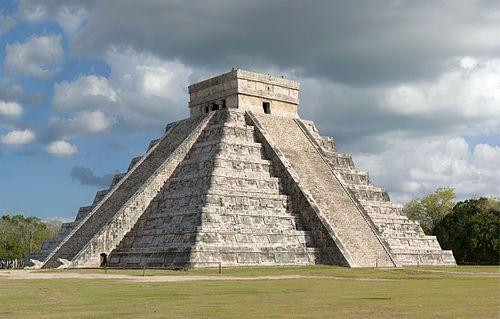
Materials covered in this trivia questions quiz
Study Hint 1
Question: In the context of historiography, the study of the pre-Columbian Americas is primarily concerned with:
Trivia Question Study Fact: Historiography, as an academic discipline, examines the methods historians use to develop history. The historiography of a specific topic, such as the pre-Columbian Americas, encompasses how historians have studied that topic, including the sources they utilized, research techniques, and theoretical approaches to interpreting historical documents. This approach began in the 5th century BC with Herodotus and has evolved through various cultures and eras, including the Han Empire in Ancient China.
Trivia Question Explanation: Historiography, by definition, focuses on the methods and approaches historians use when studying a particular subject. Therefore, the historiography of the pre-Columbian Americas examines how historians have analyzed sources and developed interpretations of that period, rather than the political, economic, or colonial aspects themselves.
Return to Question
Study Hint 2
Question: In the context of the Caral–Supe civilization, what characteristic most distinguishes its societal development from many other early civilizations?
Trivia Question Study Fact: The Caral–Supe civilization, recognized as the oldest-known civilization in the Americas and one of only six independent origins of civilization globally, thrived in north-central coastal Peru between the fourth and second millennia BCE. Its development involved large-scale communal construction projects beginning around 3100 BCE, demonstrating a sophisticated level of social organization and resource management.
Trivia Question Explanation: Archaeological evidence reveals that the Caral–Supe civilization began undertaking significant communal building projects as early as 3100 BCE, indicating a highly organized society capable of coordinating labor and resources on a large scale, a feature not commonly observed in other early civilizations.
Return to Question
Study Hint 3
Question: In the context of Peru, the Pre-Columbian era is characterized by what significant historical development?
Trivia Question Study Fact: Peru boasts a remarkably long history of civilization, beginning with the Caral–Supe civilization around the 10th millennium BCE. This makes Peru home to one of the oldest civilizations in the Americas and a significant 'cradle of civilization,' predating many other well-known ancient societies. Throughout the Pre-Columbian era, Peru was a center for numerous cultures, including the Nazca, Moche, Wari, Tiwanaku, Kingdom of Cusco, and the expansive Inca Empire.
Trivia Question Explanation: Peru is recognized as the location of the Caral–Supe civilization, which flourished around the 10th millennium BCE, making it one of the oldest civilizations in the Americas and a foundational culture of the Pre-Columbian period.
Return to Question
Study Hint 4
Question: In the context of the pre-Columbian era, what characterized the period *before* significant European influence on the Indigenous peoples of the Americas?
Trivia Question Study Fact: The pre-Columbian era in the Americas refers to the period before substantial European contact, beginning with the initial peopling of the continents in the Upper Paleolithic and extending until the arrival of explorers like Christopher Columbus in 1492. This era saw the development of diverse Indigenous cultures, some of which flourished for centuries and left behind complex societies, monumental architecture, and, in some cases, written records that offer insights into their histories and knowledge.
Trivia Question Explanation: The pre-Columbian era was marked by the development of numerous Indigenous civilizations that established permanent settlements, practiced agriculture, and created complex social hierarchies, demonstrating a wide array of cultural and technological advancements.
Return to Question
Study Hint 5
Question: In the context of prehistory, the end of this period for societies within the Pre-Columbian era of the Americas is generally characterized by…
Trivia Question Study Fact: Prehistory, encompassing the period before the advent of writing systems, concluded at different times across the globe. While many Eurasian and North African societies transitioned out of prehistory with the development of Bronze and Iron Age technologies, regions like Oceania, Sub-Saharan Africa, and the Americas—including those within the Pre-Columbian era—maintained a prehistoric state until much more recent periods, often coinciding with contact with Eurasian cultures or, in the case of Australia, 1788.
Trivia Question Explanation: The source text indicates that many areas, including Pre-Columbian civilizations in the Americas, did not develop writing systems before contact with Eurasian cultures, meaning their prehistory extended into relatively recent times with the arrival of these cultures.
Return to Question
Study Hint 6
Question: In the context of the Iron Age, how did technological development in the Pre-Columbian era differ regarding metal usage?
Trivia Question Study Fact: While the Iron Age marked a significant technological shift in Europe and the Near East with the widespread use of iron and steel, cultures in the Americas during the Pre-Columbian era did not develop an iron-based economy. Instead, they primarily worked with other metals like copper and silver, and relied on different technologies for tools and weapons.
Trivia Question Explanation: The Americas during the Pre-Columbian era did not develop an iron economy, instead focusing on working with metals like copper and silver, as iron smelting wasn't a part of their technological development.
Return to Question
Study Hint 7
Question: In the context of the Caral–Supe civilization, pre-Columbian era societal development is considered…
Trivia Question Study Fact: The Caral–Supe civilization, flourishing in present-day Peru between roughly 3500 and 1800 BCE, is recognized as the oldest known civilization in the Americas and one of the world’s independent centers of civilization, predating the Inca and other later Andean cultures by millennia.
Trivia Question Explanation: Archaeological evidence indicates that the Caral–Supe civilization developed independently, alongside other early civilizations in places like Mesopotamia and Egypt, representing one of the six separate origins of civilization globally.
Return to Question
Study Hint 8
Question: In the context of Mesoamerica, the pre-Columbian era is considered significant due to its role in which of the following historical developments?
Trivia Question Study Fact: Mesoamerica, encompassing parts of modern-day Mexico and Central America, is recognized as one of the six independent origins of civilization globally, alongside places like ancient Egypt and Sumer. Notably, it also stands as one of only five regions where writing systems developed independently, a feat shared with civilizations in Egypt, India, Sumer, and China.
Trivia Question Explanation: Mesoamerica is identified as one of the six regions where civilization arose independently, meaning it developed complex urban centers without external influence, a process known as primary urban generation.
Return to Question
Study Hint 9
Question: In the context of Pre-historic_times, the widespread adoption of writing systems is most directly associated with the conclusion of prehistory for which of the following regions?
Trivia Question Study Fact: While the transition from prehistory to recorded history occurred at different times globally, the development of writing systems marked this shift. Civilizations in Mesopotamia, the Indus Valley, and ancient Egypt were among the first to adopt writing during the Bronze Age, initiating the end of their prehistory, while many regions, including parts of Oceania, Sub-Saharan Africa, and the Americas, did not develop writing until after contact with Eurasian cultures, extending their prehistory into more recent periods.
Trivia Question Explanation: The text explicitly states that Sumer in Mesopotamia, along with the Indus Valley Civilization and ancient Egypt, were among the first civilizations to develop writing systems and keep historical records, marking the end of their prehistory during the Bronze Age. The other regions listed did not develop writing until much later, after contact with Eurasian cultures.
Return to Question
Study Hint 10
Question: In the context of the Pre-Columbian era, the Maya civilization is considered notable primarily for what achievement?
Trivia Question Study Fact: During the Pre-Columbian era, the Maya civilization, flourishing across southeastern Mexico, Guatemala, and Belize, developed the most sophisticated writing system in the Americas. This script, alongside their advancements in art, architecture, mathematics, and astronomy, demonstrates a high level of cultural and intellectual development within the region.
Trivia Question Explanation: The provided text explicitly states that the Maya script was the most sophisticated and highly developed writing system in the pre-Columbian Americas, highlighting this as a key characteristic of their civilization.
Return to Question