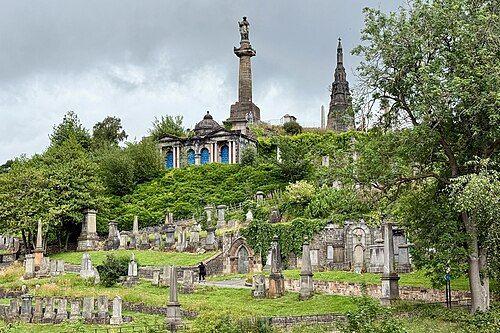
Materials covered in this trivia questions quiz
Study Hint 1
Question: In the context of the Founding_of_Rome, a necropolis is considered significant because it demonstrates:
Trivia Question Study Fact: Prior to the formal founding of Rome in 753 BC, the valley that would later become the Roman Forum contained a developed necropolis, or burial ground, dating back to at least 1000 BC. This indicates that the area was already a site of significant settlement and activity long before the traditionally accepted date of Rome's establishment.
Trivia Question Explanation: The text explicitly states that a necropolis existed in the Roman Forum valley by 1000 BC, indicating a pre-existing settlement long before the traditionally accepted founding date of Rome.
Return to Question
Study Hint 2
Question: In the context of the Catacombs of Kom El Shoqafa, a necropolis considered one of the Seven Wonders of the Middle Ages, what primary characteristic distinguishes its artistic style?
Trivia Question Study Fact: The Catacombs of Kom El Shoqafa, a significant necropolis in Alexandria, Egypt, are recognized as one of the Seven Wonders of the Middle Ages. This complex of tombs showcases a unique blend of cultural influences, integrating Egyptian artistic styles with Roman clothing and hairstyles, reflecting the Hellenistic and early Imperial Roman periods.
Trivia Question Explanation: The catacombs demonstrate a deliberate merging of artistic traditions, with Egyptian-styled statues adorned with Roman clothing and hairstyles, highlighting the cultural exchange during the Hellenistic and Roman periods.
Return to Question
Study Hint 3
Question: In the context of ancient urban planning, a necropolis is considered…
Trivia Question Study Fact: The term 'necropolis' originates from Ancient Greek, literally translating to 'city of the dead,' and historically refers to large, planned cemeteries situated outside of city limits, distinguished by elaborate tomb monuments rather than simple grave markers.
Trivia Question Explanation: Historically, necropolises were established as distinct burial sites away from urban centers, differing from tombs found within cities and simple grave fields lacking above-ground structures.
Return to Question
Study Hint 4
Question: In the context of Saqqara, a necropolis is best understood as a site primarily dedicated to…
Trivia Question Study Fact: Saqqara served as the primary necropolis for the ancient Egyptian capital of Memphis, functioning as a burial ground for royalty and high officials for over 3,000 years, spanning from the Third Dynasty through the Ptolemaic and Roman periods. Within this vast area, numerous pyramids and mastaba tombs were constructed, including the Pyramid of Djoser, the oldest complete stone building complex known to exist.
Trivia Question Explanation: Saqqara functioned as a large burial ground for royalty and officials for over 3,000 years, making it a significant necropolis – a place specifically designed for burials and remembering the deceased.
Return to Question
Study Hint 5
Question: In the context of Dahshur, a necropolis is best understood as…
Trivia Question Study Fact: Dahshur is an ancient Egyptian site functioning as both a pyramid complex and a necropolis, meaning a large, designed area for burial sites. It's part of a larger network of pyramid fields alongside Saqqara, Abusir, and Giza, all contributing to the Memphite Necropolis associated with the ancient capital of Memphis.
Trivia Question Explanation: A necropolis is specifically designed as a place for burials, and Dahshur is identified as both a pyramid complex and a necropolis, indicating its primary function as a burial site for ancient Egyptians.
Return to Question
Study Hint 6
Question: In the context of Zawyet El Aryan, a necropolis is considered…
Trivia Question Study Fact: The necropolis at Zawyet El Aryan, situated in the Giza Governorate of Egypt, served as a burial ground closely associated with the ancient city of Memphis, and contains both pyramid complexes and mastaba cemeteries, indicating a significant funerary landscape for the region's inhabitants.
Trivia Question Explanation: The Zawyet El Aryan necropolis, as defined by archaeological findings, functioned as a dedicated area for burying individuals, evidenced by the presence of pyramid complexes and mastaba cemeteries.
Return to Question
Study Hint 7
Question: In the context of Burgstallkogel, a substantial necropolis is considered notable primarily due to its…
Trivia Question Study Fact: The Burgstallkogel in Styria, Austria, was a central settlement during the Iron Age, and its significance is underscored by the extensive necropolis surrounding it – one of the largest in continental Europe, initially containing at least 2,000 burial mounds known as tumuli.
Trivia Question Explanation: The necropolis associated with Burgstallkogel is remarkable for being one of the largest in continental Europe, originally comprising at least 2,000 tumuli, indicating a large population and significant cultural practices.
Return to Question
Study Hint 8
Question: In the context of the Basilica of Saint-Denis, a necropolis is most notably characterized by…
Trivia Question Study Fact: The Basilica of Saint-Denis evolved beyond a religious site to become a significant necropolis, serving as the burial place for the majority of French kings from the 10th century through the 19th century, solidifying its role as a royal mausoleum and a symbol of French monarchy.
Trivia Question Explanation: The Basilica of Saint-Denis became a prominent necropolis because it housed the tombs of almost all French kings from the 10th to the 19th centuries, establishing it as a royal burial ground.
Return to Question
Study Hint 9
Question: In the context of grave fields, a necropolis is considered…
Trivia Question Study Fact: Both grave fields and necropoleis serve as ancient cemeteries, but a key distinction lies in their visible remains: grave fields, common in the Bronze and Iron Ages of Europe, lack the above-ground structures and markers characteristic of necropoleis.
Trivia Question Explanation: Unlike grave fields which are defined by their lack of visible structures, necropoleis are characterized by the presence of remaining buildings, grave markers, or other above-ground features.
Return to Question
Study Hint 10
Question: In the context of the Foundation of Rome, the presence of a necropolis near the future Roman Forum by 1000 BC suggests what about the area’s early development?
Trivia Question Study Fact: Before Rome was a city of hilltop villages and a unified polity, the area of the future Roman Forum contained a developed necropolis, or burial ground, dating back to at least 1000 BC. This indicates a settled population in the region centuries before the traditionally recognized founding of the city.
Trivia Question Explanation: The development of a necropolis signifies a community that had been living in the area for a considerable period, establishing traditions around death and burial, and thus demonstrating a settled population.
Return to Question