Épée in the context of "Fencing"

Play Trivia Questions online!

or

Skip to study material about Épée in the context of "Fencing"

Ad spacer

⭐ Core Definition: Épée

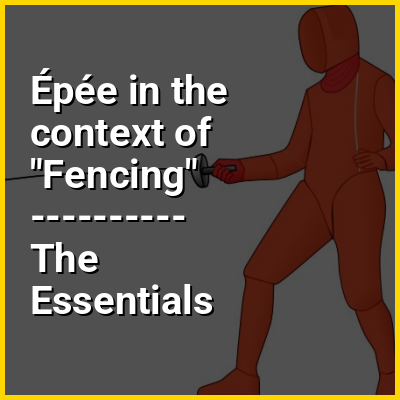
The épée (/ˈɛp, ˈ-/, French: [epe]; lit.'sword'), also rendered as epee in English, is the largest and heaviest of the three weapons used in the sport of fencing. The modern épée derives from the 19th-century épée de combat, a weapon which itself derives from the French small sword.

As a thrusting weapon, the épée is similar to a foil (contrasted with a sabre, which is designed for slashing). It has a stiffer blade than a foil. It is triangular in cross-section with a V-shaped groove called a fuller. The épée also has a larger bell guard designed to protect the user’s arm. In addition to the larger "bell" guard and blade, the épée weighs more than the foil and sabre which contributes to its reputation of being the slowest form of fencing. The techniques of use differ, as there are no rules regarding priority and a lack of right of way. Thus, immediate counterattacks are a common feature of épée fencing. The entire body is a valid target area.
↓ Menu

>>>PUT SHARE BUTTONS HERE<<<

👉 Épée in the context of Fencing

Fencing is a combat sport that features sword fighting. It consists of three primary disciplines: foil, épée, and sabre (also spelled saber), each with its own blade and set of rules. Most competitive fencers specialise in one of these disciplines. The modern sport gained prominence near the end of the 19th century, evolving from historical European swordsmanship. The Italian school altered the historical European martial art of classical fencing, and the French school later refined that system. Scoring points in a fencing competition is done by making contact with the opponent with one's sword.

The 1904 Olympic Games featured a fourth discipline of fencing known as singlestick, but it was dropped after that year and is not a part of modern fencing. Competitive fencing was one of the first sports to be featured in the Olympics and, along with athletics, cycling, swimming, and gymnastics, has been featured in every modern Olympics.

↓ Explore More Topics
In this Dossier

Épée in the context of Foil (fencing)

A foil is one of the three weapons used in the sport of fencing. It is a flexible sword of total length 110 cm (43 in) or under, rectangular in cross section, weighing under 500 g (18 oz), with a blunt tip. As with the épée, points are only scored by making contact with the tip. The foil is the most commonly used weapon in fencing.

↑ Return to Menu

Épée in the context of Sabre (fencing)

The sabre (US English: saber, both pronounced /ˈsbər/) is one of the three disciplines of modern fencing alongside foil & epee. The sabre weapon is for thrusting and cutting with both the cutting edge and the back of the blade (unlike the other modern fencing weapons, the épée and foil, where a touch is scored only using the point of the blade).

The informal term sabre fencer refers to sabre fencers of both genders.

↑ Return to Menu