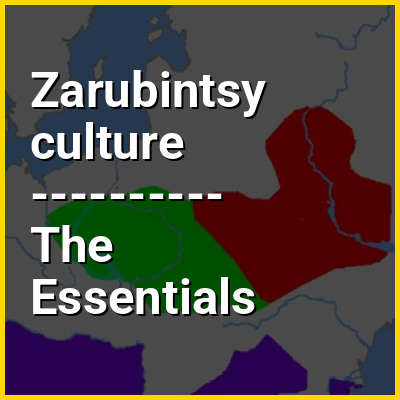
The Zarubintsy, Zarubyntsi or Zarubinets culture was a culture that, from the 3rd century BC until the 1st century AD, flourished in the area north of the Black Sea along the upper and middle Dnieper and Pripyat Rivers, stretching west towards the Southern Bug river. Zarubintsy sites were particularly dense between the Rivers Desna and Ros as well as along the Pripyat river. It was identified around 1899 by the Czech-Ukrainian archaeologist Vikentiy Khvoyka and is now attested by about 500 sites. The culture was named after finds of cremated remains in the village of Zarubyntsi on the Dnieper.
The Zarubintsy culture is possibly connected to the pre-Slavic ancestors of early Slavs (proto-Slavs), with possible links to the peoples of the Dnieper basin. The culture was influenced by the La Tène culture and the nomads of the steppes (the Scythians and the Sarmatians). The Scythian and Sarmatian influence is evident especially in pottery, weaponry, and domestic and personal objects.