Worm in the context of "Host plant"

Play Trivia Questions online!

or

Skip to study material about Worm in the context of "Host plant"


⭐ Core Definition: Worm

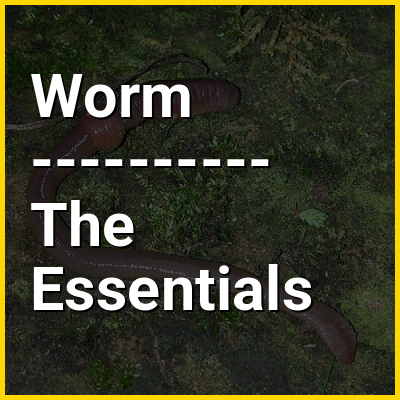
Worms are many different distantly related bilateral animals that typically have a long cylindrical tube-like body, no limbs, and usually no eyes.

Worms vary in size from microscopic to over 1 metre (3.3 ft) in length for marine polychaete worms (bristle worms); 6.7 metres (22 ft) for the African giant earthworm, Microchaetus rappi; and 58 metres (190 ft) for the marine nemertean worm (bootlace worm), Lineus longissimus. Various types of worm occupy a small variety of parasitic niches, living inside the bodies of other animals. Free-living worm species do not live on land but instead live in marine or freshwater environments or underground by burrowing.

↓ Menu

In this Dossier

Worm in the context of Helminthiasis

Helminthiasis, also known as worm infection, is any macroparasitic disease of humans and other animals in which a part of the body is infected with parasitic worms, known as helminths. There are numerous species of these parasites, which are broadly classified into tapeworms, flukes, and roundworms. They often live in the gastrointestinal tract of their hosts, but they may also burrow into other organs, where they induce physiological damage.

Soil-transmitted helminthiasis and schistosomiasis are the most important helminthiases, and are among the neglected tropical diseases. These group of helminthiases have been targeted under the joint action of the world's leading pharmaceutical companies and non-governmental organizations through a project launched in 2012 called the London Declaration on Neglected Tropical Diseases, which aimed to control or eradicate certain neglected tropical diseases by 2020.

↑ Return to Menu

Worm in the context of Host (biology)

In biology and medicine, a host is a larger organism that harbours a smaller organism; whether a parasitic, a mutualistic, or a commensalist guest (symbiont). The guest is typically provided with nourishment and shelter. Examples include animals playing host to parasitic worms (e.g. nematodes), cells harbouring pathogenic (disease-causing) viruses, or a bean plant hosting mutualistic (helpful) nitrogen-fixing bacteria. More specifically in botany, a host plant supplies food resources to micropredators, which have an evolutionarily stable relationship with their hosts similar to ectoparasitism. The host range is the collection of hosts that an organism can use as a partner.

↑ Return to Menu

Worm in the context of Leech

Leeches are segmented parasitic or predatory worms that comprise the subclass Hirudinea within the phylum Annelida. They are closely related to the oligochaetes, which include the earthworm, and like them have soft, muscular segmented bodies that can lengthen and contract. Both groups are hermaphrodites and have a clitellum, but leeches typically differ from the oligochaetes in having suckers at both ends and ring markings that do not correspond with their internal segmentation. The body is muscular and relatively solid; the coelom, the spacious body cavity found in other annelids, is reduced to small channels.

The majority of leeches live in freshwater habitats, while some species can be found in terrestrial or marine environments. The best-known species, such as the medicinal leech, Hirudo medicinalis, are hematophagous, attaching themselves to a host with a sucker and feeding on blood, having first secreted the peptide hirudin to prevent the blood from clotting. The jaws used to pierce the skin are replaced in other species by a proboscis which is pushed into the skin. A minority of leech species are predatory, mostly preying on small invertebrates.

↑ Return to Menu

Worm in the context of Nematomorpha

Nematomorpha (sometimes called Gordiacea, and commonly known as horsehair worms, hairsnakes, or Gordian worms) are a phylum of parasitoid animals superficially similar to nematode worms in morphology, hence the name. Most species range in size from 5 to 10 centimetres (2 to 4 in), reaching 2 metres (6 ft 7 in) in extreme cases, and 1 to 3 millimetres (0.039 to 0.118 in) in diameter. Horsehair worms can be discovered in damp areas, such as watering troughs, swimming pools, streams, puddles, and cisterns. The adult worms are free-living, but the larvae are parasitic on arthropods, such as beetles, cockroaches, mantises, orthopterans, and crustaceans. About 351 freshwater species are known and a conservative estimate suggests that there may be about 2000 freshwater species worldwide. The name "Gordian" stems from the legendary Gordian knot. This relates to the fact that nematomorphs often coil themselves in tight balls that resemble knots.

↑ Return to Menu

Worm in the context of Hematophagy

Hematophagy (sometimes spelled haematophagy or hematophagia) is the practice by certain animals of feeding on blood (from the Greek words αἷμα haima "blood" and φαγεῖν phagein "to eat"). Since blood is a fluid tissue rich in nutritious proteins and lipids that can be taken without great effort, hematophagy is a preferred form of feeding for many small animals, such as worms and arthropods. Some intestinal nematodes, such as Ancylostomatids, feed on blood extracted from the capillaries of the gut, and about 75 percent of all species of leeches (e.g., Hirudo medicinalis) are hematophagous. The spider Evarcha culicivora feeds indirectly on vertebrate blood by specializing on blood-filled female mosquitoes as their preferred prey. Some fish, such as lampreys and candirus; mammals, especially vampire bats; and birds, including the vampire finch, Hood mockingbird, Tristan thrush, and oxpeckers, also practice hematophagy.

↑ Return to Menu

Worm in the context of Fishing bait

Fishing bait is any luring substance used specifically to attract and catch fish, typically when angling with a hook and line. There are generally two types of baits used in angling: hookbaits, which are directly mounted onto fish hooks and are what the term "fishing bait" typically refers to; and groundbaits, which are scattered separately into the water as an "appetizer" to attract the fish nearer to the hook. Despite the bait's sole importance is to provoke a feeding response out of the target fish, the way how fish react to different baits is quite poorly understood.

Fishing baits can be grouped into two broad categories: natural baits and artificial baits. Traditionally, fishing baits are natural food or prey items (live or dead) that are already present in the fish's normal diet (e.g. worms, insects, crustaceans and smaller bait fish), and such baits are both procured from and used within the same environment. Artificial baits, conversely, are not naturally acquired and must involve some kind of production process. These can be processed foods (e.g. bread, cheese, dough, cutlets, fish food or pet food pellets, etc.), commercially made feed mixtures (e.g. boilies), or imitative replica "fake foods" made of inedible materials known as lures (e.g plastic worm, swimbaits, spoons, stickbaits, hybrid spinners or even bionic robot fish). The variety of baits that a fisherman may choose is dictated mainly by the target species and by its habitat, as well as personal preference. Both natural and artificial baits frequently demonstrate similar efficiency if chosen adequately for the target fish. The overall bait type, size and techniques used will affect the efficiency and yield when fishing.

↑ Return to Menu

Worm in the context of Artificial fly

An artificial fly or fly lure is a type of fishing lure, usually used in the sport of fly fishing (although they may also be used in other forms of angling). In general, artificial flies are an imitation of aquatic insects that are natural food of the target fish species the fly fishers try to catch. Artificial flies are constructed by fly tying, in which furs, feathers, thread or any of very many other materials are tied onto a fish hook.

Artificial flies may be constructed to represent all manner of potential preys to freshwater and saltwater fish, including aquatic and terrestrial insects, crustaceans, worms, spawn, small baitfish, reptiles, amphibians, mammals and even birds. Effective artificial fly patterns are said to be killing flies because of their ability to put fish in the creel for the fly fisher. There are thousands of artificial fly patterns, many of them with descriptive and often idiosyncratic names.

↑ Return to Menu